


Partnership: the winning card
Article published in Public Service Review: Science and Technology, Issue 7 Summer Edition 2010.
For Europe, NASA has always provided the benchmark for space activities; it will remain ‘the space agency that landed men on the moon’. Our technical culture at the European Space Agency (ESA) is to a large extent inspired from NASA culture and our cooperation with them has grown to the point where many, if not the majority, of our science missions have developed in cooperation with our American partners.
In 1957, the USSR sent the first satellite ever into orbit (Sputnik), the first man in space was a Russian (Yuri Gagarin in 1961), as was the first human being to conduct a ‘spacewalk’ outside a spaceship (Alexei Leonov in 1965). The Russians will be remembered for all these firsts. But they have also taught us many things in space activities; ESA’s cooperation with Russia is long lasting. We have flown several ESA astronauts on Russian space capsules and unmanned Soyuz launchers will soon lift off from Europe’s spaceport in French Guiana.
Probably less well known around the world, in over 40 years of existence, ESA has also had its share of firsts of which Europeans can be very proud: Ariane is leader on the global commercial launcher market; ESA’s Envisat satellite is second to none at delivering environment related data; ESA safely landed its Huygens probe on Titan – the most distant landing ever achieved – to unveil the secrets of Saturn’s largest moon; ESA is orbiting Mars and Venus, chasing comets with its Rosetta mission; while water on Mars was first discovered by a European probe (Mars Express) only a few years ago.
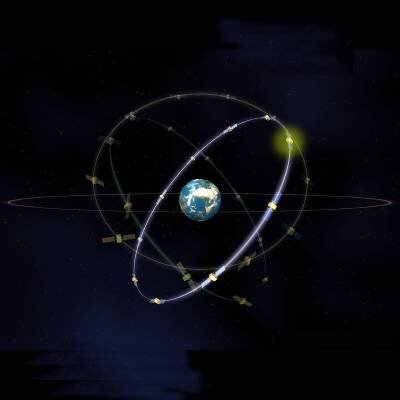
All these achievements are based on a highly competitive space industry, operators and scientific community in Europe. European industry and operators are extremely successful on the global commercial market. All these achievements have been obtained with a yearly budget of the order of €3bn, whereas NASA has a budget of about $18bn per year. ESA is increasingly working hand-in-hand with the EU to deliver the objectives set out in the European Space Policy: projects like Galileo and GMES are becoming a reality – and this is only the beginning. This funding does not bring Europe to a budgetary level comparable to that of the US, but it gives greater visibility to space in Europe and ensures that space is fully used as a strategic tool for EU policies, on the environment, security, transport, research, etc. Of course, we have a different political setup and different priorities when compared to the US. NASA devotes almost 50% of its budget to human spaceflight, while at ESA that figure stands at less than 10% of the annual budget.

As a matter of fact, partnership in space is the winning card: ESA, which today comprises 18 European member states, has a long-lasting cooperation experience and culture, supplemented by agreements with Canada, and has recently opened its doors to Poland, Hungary and Romania. It is a remarkable example of international cooperation which goes beyond the boundaries of our continent; the International Space Station partnership includes the US, Europe, Russia, Canada and Japan and is an operational ‘G5’ working day-in, day-out in pursuit of common objectives. I believe that new partners could join in the process we started back in the 80s: I am thinking of India, South Korea and China, who have already given proof of their savoir faire in space. The ‘giant leaps’ in future space exploration will only be done in partnership.
Based on the successes of ESA and national space agencies in Europe, the EU member states have granted the EU specific competence in space through the Lisbon Treaty, which entered into force in December 2009. This new EU competence will certainly reinforce the strategic and economic value of space in European policy and will certainly reinforce the role of Europe in the world in addressing global issues.
Jean-Jacques-Dordain
Director General
European Space Agency

