• → European Space Agency

      • Space for Europe
      • Space News
      • Space in Images
      • Space in Videos
    • About Us

      • Welcome to ESA
      • DG's News and Views
      • For Member State Delegations
      • Business with ESA
      • ESA Exhibitions
      • ESA Publications
      • Careers at ESA
    • Our Activities

      • Space News
      • Observing the Earth
      • Human Spaceflight
      • Launchers
      • Navigation
      • Space Science
      • Space Engineering
      • Operations
      • Technology
      • Telecommunications & Integrated Applications
    • For Public

    • For Media

      • Media
      • ESA TV
      • Videos for professionals
      • Photos
    • For Educators

    • For Kids

    • ESA

    • ESA Publications

    • ESA Bulletin

    • Brochures

    • Annual Report

    • Monographs

    • General Products
    • All About ESA
    • ESA Bulletin
    • Brochures
    • Annual Report
    • History Study Reports
    • Scientific & Technical Products
    • Monographs
    • Conference Proceedings
    • Reports & Memoranda
    • Training and Technical Manuals
    • Services
    • Copyright
    • Contact us
    • Subscribe

    ESA > About Us > ESA Publications

    ESA Bulletin 141 (February 2010)

    8 February 2010

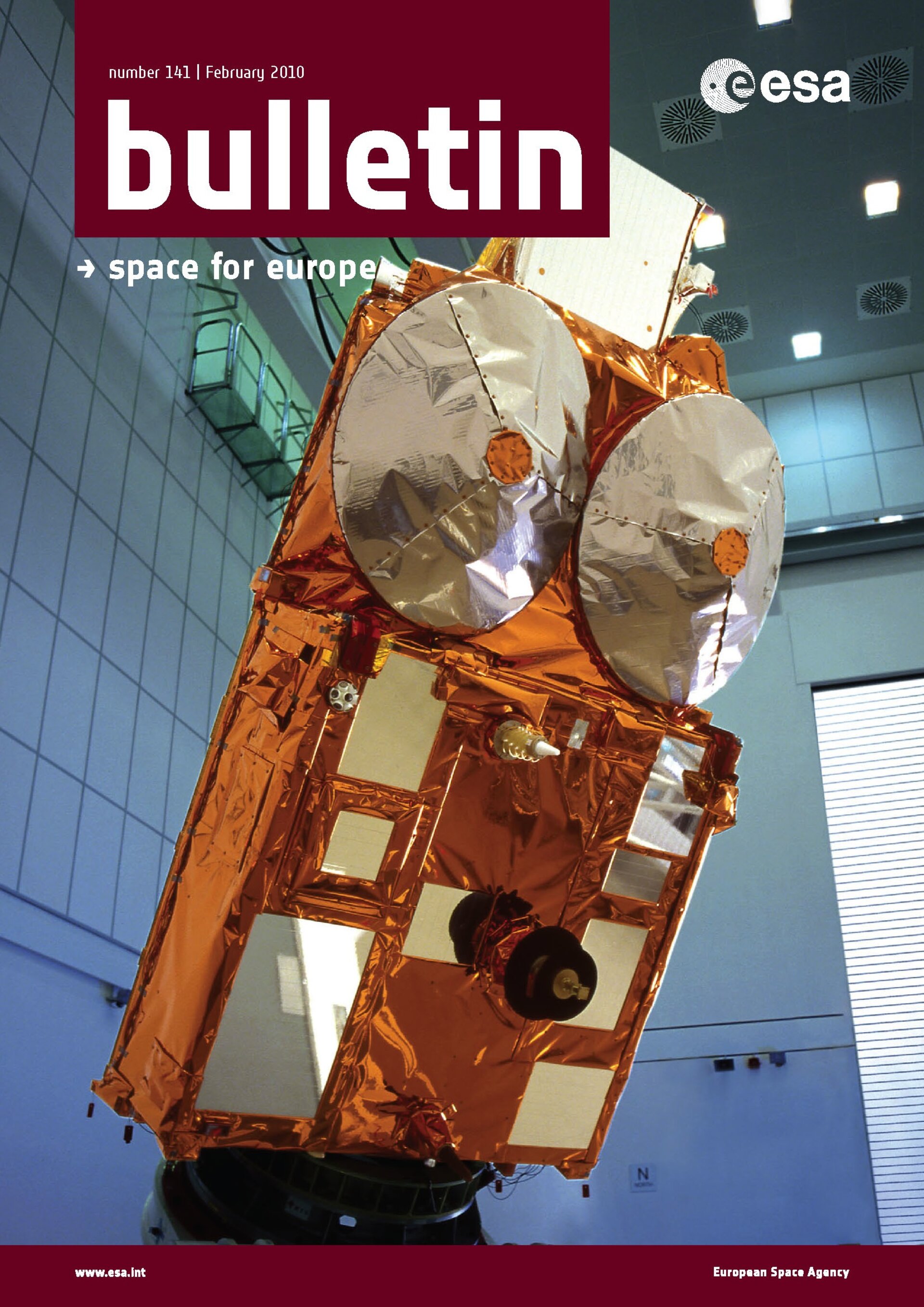
    On the cover this month, CryoSat-2 is shown here complete, and now on schedule for launch later in February. Read the Bulletin and other publications online, with our visualiser tool.
    Read online

    CryoSat-2 carries sophisticated technologies to measure changes in the vast ice sheets that cover Greenland and Antarctica, and sea ice floating in the polar oceans. By accurately measuring thickness change in both types of ice, CryoSat-2 will help us to understand better the role that ice plays in the Earth system.

    Also in this issue of ESA's flagship magazine, we look at the European-built Node-3, the last of the three International Space Station Nodes, launched into space this week on the US Space Shuttle. This story features a timeline of events for the Node-3 installation mission.

    Node-3 is the most modern pressurised element of the ISS, significantly different to the Node-3 that Europe initially agreed to develop back in 1997. It has evolved over the years from a connecting module into a complex element, able to accommodate sophisticated crew- and life-support equipment. One of the new features is the Cupola observation module.

    In December, ESA’s XMM-Newton X-ray observatory celebrated its 10th anniversary. During its decade of operation, this remarkable space observatory has supplied new data for every aspect of astronomy. From our cosmic backyard to the further reaches of the Universe, this article describes how XMM-Newton has changed the way we think of space.

    Completing this issue, we have the Matroshka project - helping to quantify radiation risk and make space travel safer for astronauts, a look at the role of space in meeting Europe's security needs, and we round off with a colourful look at ESA's new visual identity.

    The Bulletin is published four times a year to inform the space-interested public of ESA’s activities. In addition to a wide range of articles, every issue provides an overview of the status of ESA's major space projects.

    Rate this

    Views

    Share

    • Currently 0 out of 5 Stars.
    • 1
    • 2
    • 3
    • 4
    • 5
    Rating: 0/5 (0 votes cast)

    Thank you for rating!

    You have already rated this page, you can only rate it once!

    Your rating has been changed, thanks for rating!

    80
    Tweet
    • Order online

    Connect with us

    • RSS
    • Youtube
    • Twitter
    • Flickr
    • G+
    • Facebook
    • Livestream
    • Subscribe
    • App Store
    • LATEST ARTICLES
    • · Rare merger reveals secrets of gal…
    • · Watching for hazards: ESA opens as…
    • · ESA astronaut Timothy Peake set fo…
    • · Space drives e-mobility
    • · Proba-V opens its eyes
    • FAQ

    • Jobs at ESA

    • Site Map

    • Contacts

    • Terms and conditions