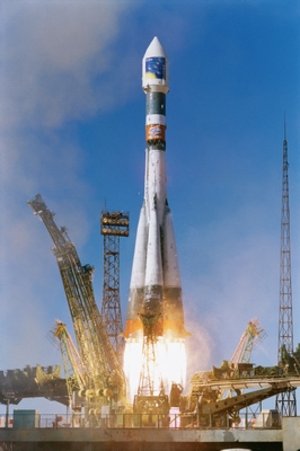
Europe’s new MetOp weather satellite reaches polar orbit
ESA PR 38-2006. For 28 years, Europe has been operating its famous Meteosat weather satellites in geostationary orbit. Today, they were joined by the first of a brand new generation of meteorological satellites. MetOp is designed to provide a closer view of the atmosphere from low earth orbit, delivering data that will improve global weather prediction and enhance our understanding of climate change.
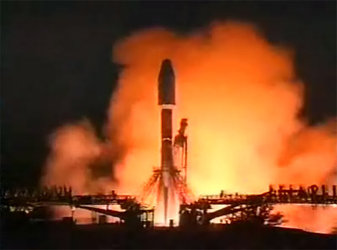
The first of three satellites developed under a joint programme being carried out by the European Space Agency and the European Meteorological Satellite Organisation (EUMESAT), MetOp-A was successfully launched from Baikonur, Kazakhstan by a Russian
The Soyuz 2 launcher, on its first operational mission, lifted off at 18:28 CEST (16:28 UT) with the 4093kg spacecraft encapsulated in a new 4.1m diameter payload fairing, similar in shape and size to that of Ariane 4. The newest member of the nearly 50-year old Semyorka family of boosters, Soyuz 2 is due to be launched from French Guiana from 2008 onwards.
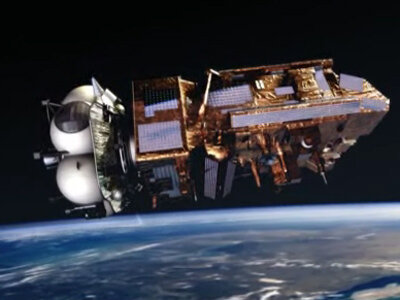
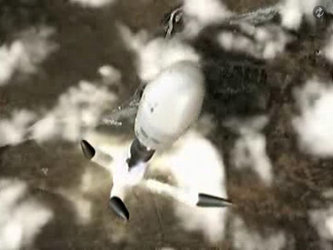
Some 69 minutes after launch, the Fregat upper stage released the first MetOp satellite into a circular orbit at an altitude of 837km over the Kerguelen archipelago in the South Indian Ocean.
With a slightly retrograde 98.7° inclination, this orbit will enable MetOp-A to circle the globe from pole to pole while always crossing the equator at the same local time, i.e. 9:30 am. Known as ‘sun-synchronous’, this type of orbit allows revisits to almost each point of the Earth’s surface under similar solar illumination conditions on an approximately daily basis.
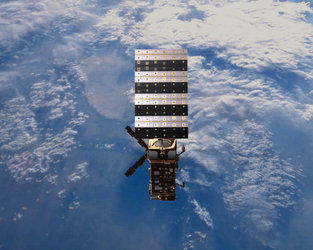
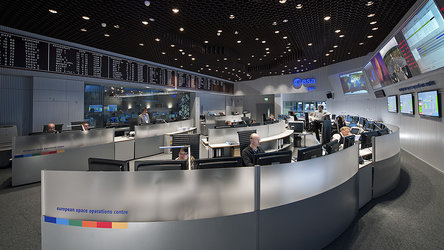
The satellite is now under the control of ESA’s European Space Operations Centre (ESOC) in Darmstadt, Germany, and has deployed its solar array. Over the coming days, it will undergo the first technical check-outs of its systems and will deploy its antennas. Handover to EUMETSAT is expected on 22 October for full satellite commissioning and routine operations.
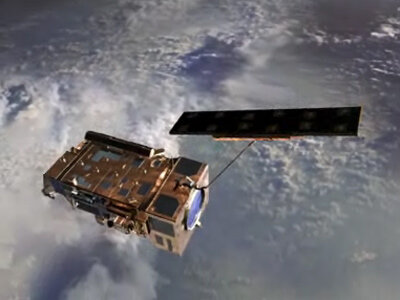
MetOp-A will form the space segment of the EUMETSAT Polar System (EPS), designed to collect atmospheric and environmental data to complement the hemispheric survey conducted from geostationary orbit by the Meteosat system. EPS will be operated in coordination with the US Polar Operational Environmental Satellite (POES) system managed by the National Oceanic and Atmospheric Administration. While NOAA satellites are deployed in an ‘afternoon’ orbit (i.e. crossing the equator in the afternoon, local time), Europe’s MetOp will take up service in a ‘morning’ orbit.
The most complete atmospheric probe ever
To fulfil its ambitious mission, MetOp-A incorporates a comprehensive remote-sensing payload consisting of a set of new-generation European instruments, plus a set of ‘heritage’ instruments provided by the United States similar to those flown on current NOAA satellites.
Supplied by the French space agency CNES, the Infrared Atmospheric Sounding Interferometer (IASI) will take measurements in more than 8000 channels to provide temperature and water vapour profiles with unprecedented accuracy to feed numerical weather-prediction models. Its soundings will be complemented by measurements from the US heritage instruments and the Microwave Humidity Sounder (MHS), a five-channel radiometer developed for EUMETSAT but also planned to fly on future NOAA satellites.

Jointly developed by ESA and EUMETSAT, the second-generation Global Ozone Monitoring Experiment (GOME-2) is an improved version of a scanning spectrometer already flown on ERS-2 which is designed to probe the atmosphere for profiles of ozone concentrations as well as other trace gases.
Another ESA/EUMETSAT instrument with a strong ERS programme legacy is the Advanced Scatterometer (ASCAT). This enhanced C-band radar will measure the speed and direction of winds over the surface of the oceans, also to feed numerical weather prediction models, but in addition providing useful information on ice, snow and soil moisture.
One new instrument developed by ESA and EUMETSAT is the GNSS Receiver for Atmospheric Sounding (GRAS), which will use occultation of satellite navigation signals through the atmospheric limb to derive atmospheric temperature and humidity profiles.
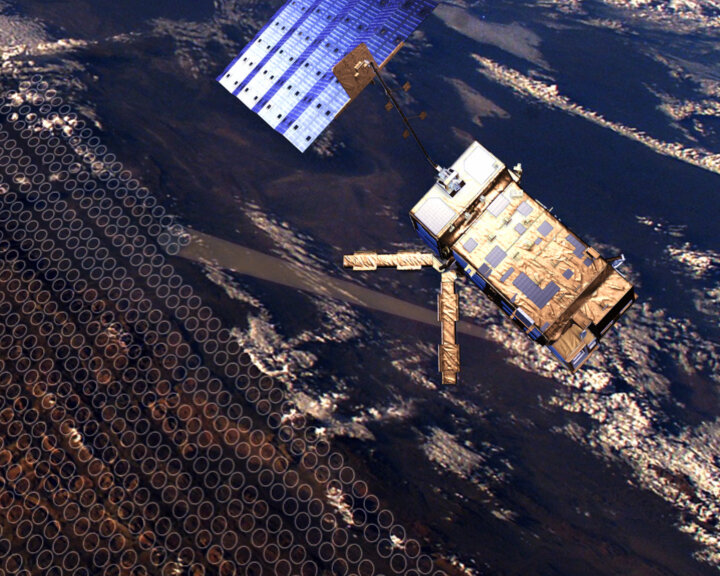
NOAA-supplied instruments include: the third-generation Advanced Very High Resolution Radiometer (AVHRR-3) to acquire global imagery of cloud cover as well as of ocean and land surfaces; two 15-channel Advanced Microwave Sounding Units (AMSU/A) to scan atmospheric temperature profiles; and the fourth-generation High Resolution Infrared Radiation Sounder (HIRS), a 20-channel equivalent of the IASI interferometer which will support validation of data collected by the European instrument and serve as a back-up afterwards.
In addition, MetOp-A carries an advanced Argos data collection system supplied by CNES to locate and communicate with automated stations, whether fixed or mobile; two search & rescue payloads respectively provided by the Canadian Space Agency and CNES to support the international Cospas-Sarsat network by picking up and retransmitting distress signals; and a US-supplied Space Environment Monitor (SEM-2), a spectrometer to survey the charged particle flux in space.
A major boost to weather forecasting

Approved back in 1992, MetOp is a meteorological operational satellite programme like Meteosat. ESA’s contribution to its inception is being managed through the Earth Watch component of its Living Planet Programme. ESA is in charge of the satellite’s development and procurement. In that capacity, it funded most of the first flight model manufacturing. EUMETSAT is in charge of the operational system and is funding the development of the ground segment and follow-on satellites, the launchers and operations.
Three flight models have been ordered from an industrial team led by EADS Astrium. The spacecraft, integrated in Toulouse, France, are based on a bus derived from ESA's Envisat and France's Spot 5 satellites and incorporate advanced equipment to ensure flexible operations, with more than 36 hours’ autonomy and a 24 Gbit data storage capability.
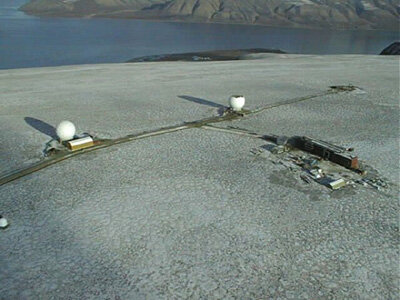
MetOp satellites will circle the planet some 14 times a day, gathering data that they will download to the EPS Command & Data Acquisition (CDA) ground station located in the Svalbard archipelago, North of Norway. Due to its high latitude (78°N), the CDA station will be visible to MetOp on each of its orbits, as the satellite flies over the Arctic.
Once collected, MetOp data will be transmitted to EUMETSAT’s facilities in Darmstadt for processing and distribution. In addition, some real-time Polar System data will be broadcast directly to regional meteorological organisations whenever the satellite comes into visibility in terms of their receiving stations.
Thanks to its advanced payload and broadcast capacity, MetOp will be able to detect and report the early development of localised severe weather conditions, such as violent thunderstorms, which cannot be observed from geostationary orbit. The satellite will thus make it possible to issue weather alerts at much earlier notice than at present.

"I congratulate our friends and partners from EUMETSAT, NOAA, CNES, Starsem, the European space industry and the international meteorological community on this successful launch", said ESA Director General Jean-Jacques Dordain. "Like the two generations of Meteosat, this programme is more than a success story for international cooperation; it is the perfect illustration of what priceless benefits space can bring to all citizens.
"The harvest of data expected from MetOp-A and its follow-on satellites will provide a new dimension to our knowledge of the Earth’s atmosphere and climate. Not only will these data lead to tremendous improvements in the accuracy of weather forecasting in Europe and worldwide; they will also enable the science community to develop more complex models of our planet’s climate in order to better understand ongoing global change and steer international environmental policies accordingly."
For further information, please contact :
ESA Media Relations Division
Tel: +33(0)1.53.69.7155
Fax: +33(0)1.53.69.7690