• → European Space Agency

      • Space for Europe
      • Space News
      • Space in Images
      • Space in Videos
    • About Us

      • Welcome to ESA
      • DG's News and Views
      • For Member State Delegations
      • Business with ESA
      • ESA Exhibitions
      • ESA Publications
      • Careers at ESA
    • Our Activities

      • Space News
      • Observing the Earth
      • Human Spaceflight
      • Launchers
      • Navigation
      • Space Science
      • Space Engineering
      • Operations
      • Technology
      • Telecommunications & Integrated Applications
    • For Public

    • For Media

      • Media
      • ESA TV
      • Videos for professionals
      • Photos
    • For Educators

    • For Kids

    • ESA

    • ESOC

    • ESOC history

    • Background
    • ESOC overview
    • ESOC mission history and status
    • Multimedia

      • Images
      • Videos
    • At ESOC
    • Mission operations
    • Estrack tracking stations
    • Ground Systems Engineering
    • Ground Systems Engineering
    • Research and Technology Development
    • European software excellence
    • Flight Dynamics
    • ESA Navigation Facility
    • ESA Space Debris Office
    • Ground Station Engineering
    • Activities
    • External services
    • EGOS - Ground operation system
    • Visiting ESOC
    • Getting to ESOC
    • Guided tours
    • Contact ESOC

    ESA > About Us > ESOC

    minigallery: Space debris - evolution in pictures

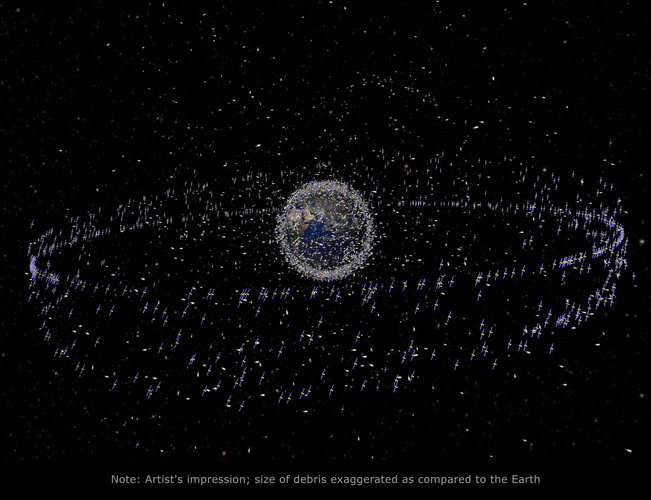
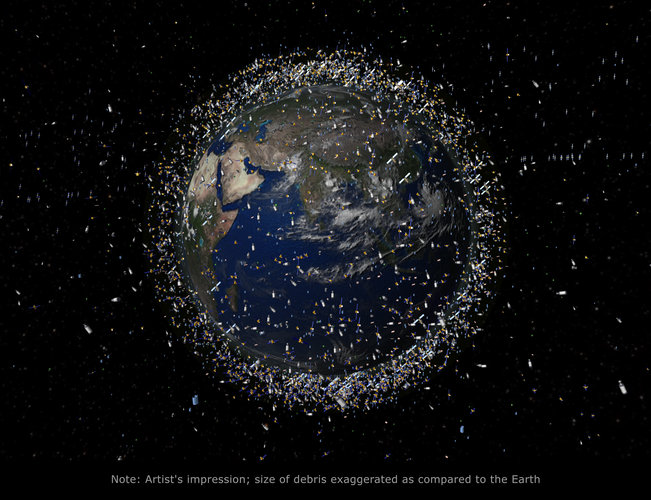
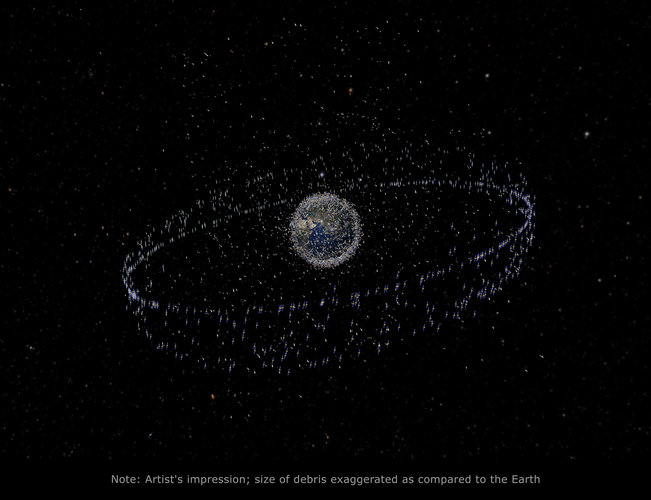
    Since 1957, more than 4900 space launches have led to an orbital population today of more than 23 000 trackable objects with sizes larger than 10 cm. Some 1000 of these are operational satellites. The remaining 94% are space debris – objects that no longer serve any useful purpose.  About 64% of the routinely tracked objects are fragments from some 250 breakups, mainly explosions and collisions of satellites or rocket bodies. In addition, an estimated 670 000 objects larger than 1 cm and 170 million objects larger than 1 mm are expected to be in orbit.

    Owing to relative orbital velocities of up 56 000 km/hr, centimetre-sized debris can seriously damage or disable an operational spacecraft. Collisions with objects larger than 10 cm will lead to catastrophic break-ups, releasing hazardous debris clouds of which some fragments can cause further catastrophic collisions that may lead to an unstable debris environment in some orbit regions – the ‘Kessler syndrome’.

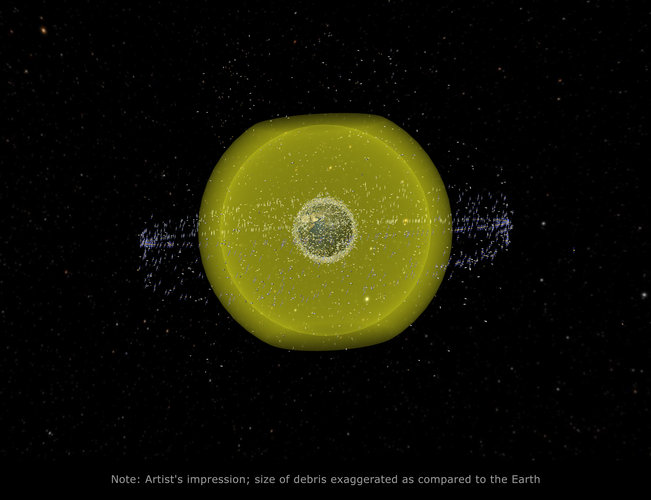
    Note: Images in this gallery are artist's impressions; the sizes of debris objects are exaggerated as compared to the Earth.
    • 1
    • |2
    • |3
    • |>
    Trackable objects in orbit around Earth
    Trackable objects in orbit around Earth
    Debris objects in low-Earth orbit (LEO)
    Debris objects in low-Earth orbit (LEO)
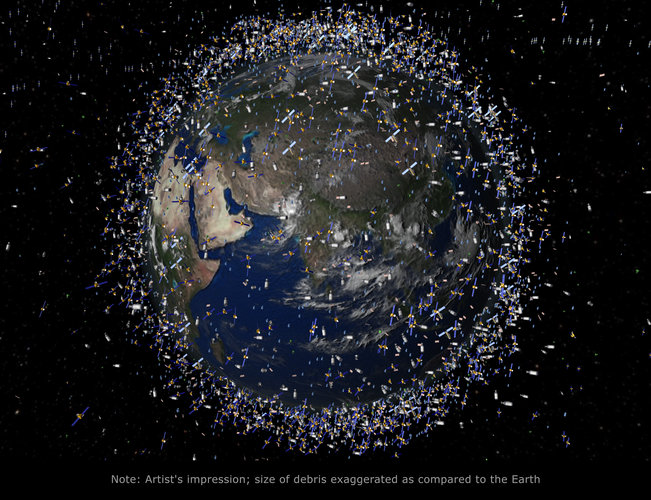
    Objects in Low Earth Orbit (LEO) - view over the North Pole
    Debris objects - mostly debris - in low Earth orbit (LEO) - view over the equator
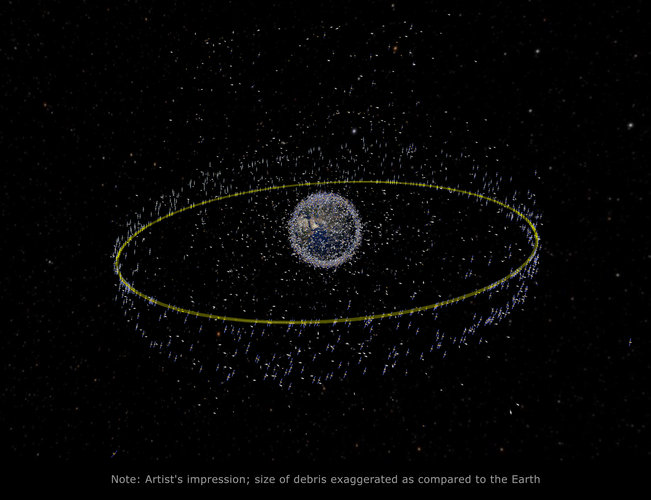
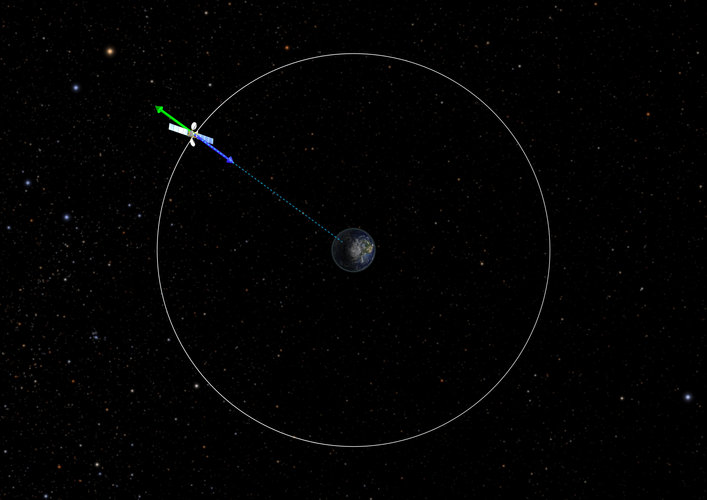
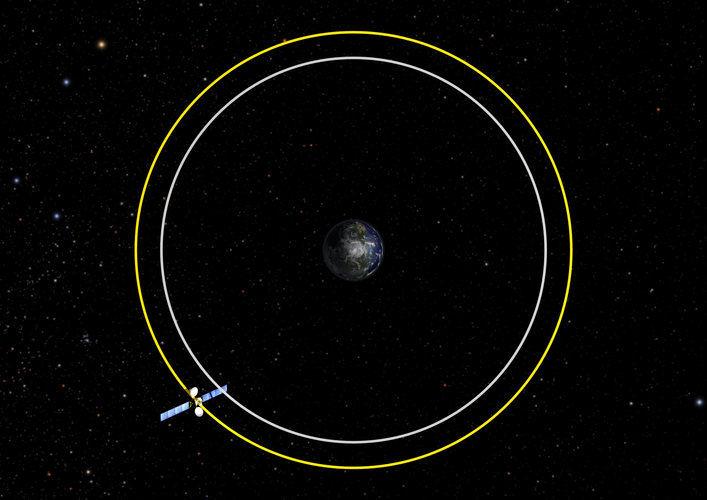
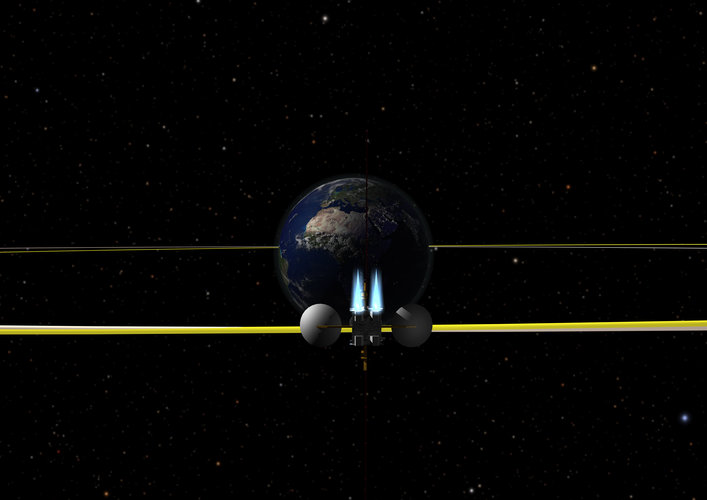
    The geostationary ring
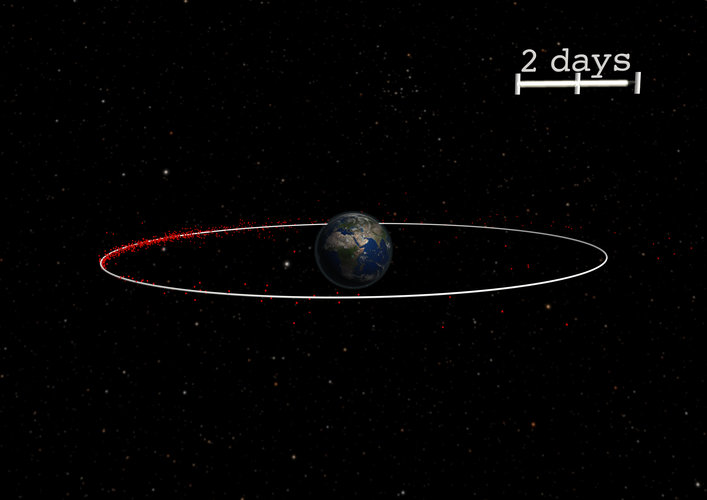
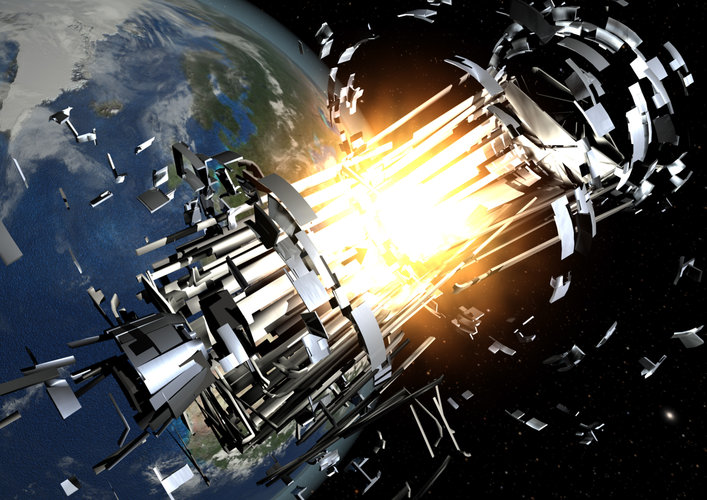
    Simulation of an explosion in GEO
    Simulation of an explosion in GEO (after 2 days)
    • 1
    • |2
    • |3
    • |>
    • Related
      • ESA expert highlights space debris issues
        • Space debris spotlight

    Connect with us

    • RSS
    • Youtube
    • Twitter
    • Flickr
    • G+
    • Facebook
    • Livestream
    • Subscribe
    • App Store
    • LATEST ARTICLES
    • · Rare merger reveals secrets of gal…
    • · Watching for hazards: ESA opens as…
    • · ESA astronaut Timothy Peake set fo…
    • · Space drives e-mobility
    • · Proba-V opens its eyes
    • FAQ

    • Jobs at ESA

    • Site Map

    • Contacts

    • Terms and conditions