• → European Space Agency

      • Space for Europe
      • Space News
      • Space in Images
      • Space in Videos
    • About Us

      • Welcome to ESA
      • DG's News and Views
      • For Member State Delegations
      • Business with ESA
      • ESA Exhibitions
      • ESA Publications
      • Careers at ESA
    • Our Activities

      • Space News
      • Observing the Earth
      • Human Spaceflight
      • Launchers
      • Navigation
      • Space Science
      • Space Engineering
      • Operations
      • Technology
      • Telecommunications & Integrated Applications
    • For Public

    • For Media

      • Media
      • ESA TV
      • Videos for professionals
      • Photos
    • For Educators

    • For Kids

    • ESA

    • United Kingdom

    • All about ESA
    • ESA facts and figures
    • ESA's Director General
    • Frequently asked questions
    • Business with ESA
    • ESA in the UK
    • ECSAT in Harwell
    • ESERO UK
    • Publications
    • United Kingdom Space Activity 1957-1987
    • Multimedia
    • Multimedia gallery
    • Online videos
    • Earth images gallery
    • Press
    • Press releases
    • Resources
    • UK Space Directory
    • Follow us
    • ESA on Twitter
    • ESA on Flickr
    •  ESA on YouTube
    • ESA on Livestream
    • Services
    • RSS feeds

    ESA > ESA in your country > United Kingdom

    Space science joins battle against cancer

    ESA research can lead to better medical equipment
    19 November 2003

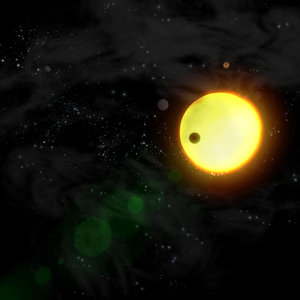
    Ground-breaking techniques which will be used to find tiny planets orbiting stars outside our Solar System are already being developed to help scientists detect cells in the early stages of cancer.

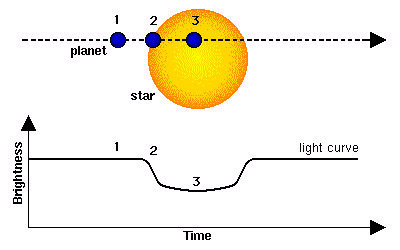
    The enormous amount of light emitted by a star makes it extremely difficult to spot a planet in orbit around it. By using a technique that combines signals from two or more telescopes, ESA astronomers are able to create an artificial solar eclipse, ‘neutralising’ the effects of the bright starlight so that the fainter light from a planet can be detected.
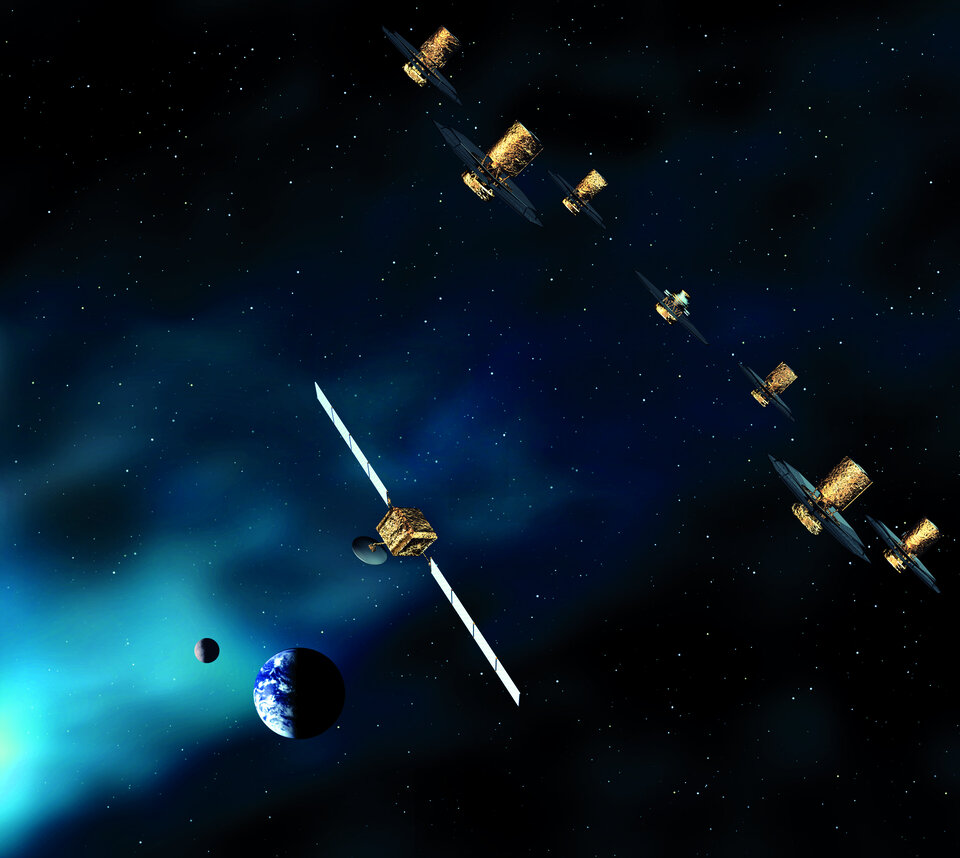
    Darwin's flotilla
    Darwin's flotilla of telescopes look for Earth-like planets

    European space scientists have now developed the technique even further so that they can even study the atmospheres of such planets.

    ESA’s Darwin mission, which will study up to 1000 nearby stars, will be one of the first to use this technique to take us a step further towards answering the question 'Are we alone in the Universe?'

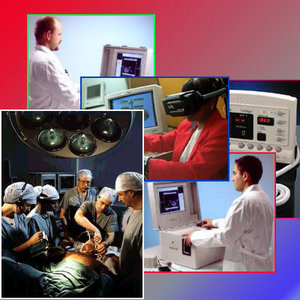
    But scientists in the Netherlands are excited about another application for this revolutionary technique. The national research organisation TNO/TPD has developed this imaging technology for medical use.

    Using this technique, scientists can now obtain images of skin or tissue that are of much higher resolution than currently available. The technique is already being used to study changes in blood vessels and the retina, but it could be used as an early detection method for cancerous growths.

    This will not be the first time that space technology has been used in the fight against cancer. A computer program originally developed by European scientists to find the sources of X-rays in deep space has been modified to produce a computer-aided early recognition system for skin melanomas.

    The original software was used to block out background ‘noise’ in signals coming from space in order to detect weaker signals emitted from the remnants of supernova explosions.

    Here on Earth, a sample of the surface of skin can be scanned and then magnified 10 times. The computer program then picks out the tiniest variations in colour, allowing doctors to see much more clearly whether there are any irregularities in cell growth, associated with malignant melanomas.

    Rate this

    Views

    Share

    • Currently 0 out of 5 Stars.
    • 1
    • 2
    • 3
    • 4
    • 5
    Rating: 0/5 (0 votes cast)

    Thank you for rating!

    You have already rated this page, you can only rate it once!

    Your rating has been changed, thanks for rating!

    24
    Tweet
    • More about...
      • COROT overview
        • Darwin overview
          • XMM-Newton overview
            • Hubble overview
            • Related articles
              • How many planets are outside our Solar System?
                • How far can a dentist's drill go?
                  • Passion for life: An interview with Malcolm Fridlund
                    • How to find an extrasolar planet
                      • Searching for planets with life
                      • Related links
                        • Medical links

    Connect with us

    • RSS
    • Youtube
    • Twitter
    • Flickr
    • G+
    • Facebook
    • Livestream
    • Subscribe
    • App Store
    • LATEST ARTICLES
    • · Earth Explorers take centre stage …
    • · The fast winds of Venus are gettin…
    • · ExoMars 2016 set to complete const…
    • · Herschel ends operations as orbiti…
    • · Europe’s largest spaceship reache…
    • FAQ

    • Jobs at ESA

    • Site Map

    • Contacts

    • Terms and conditions