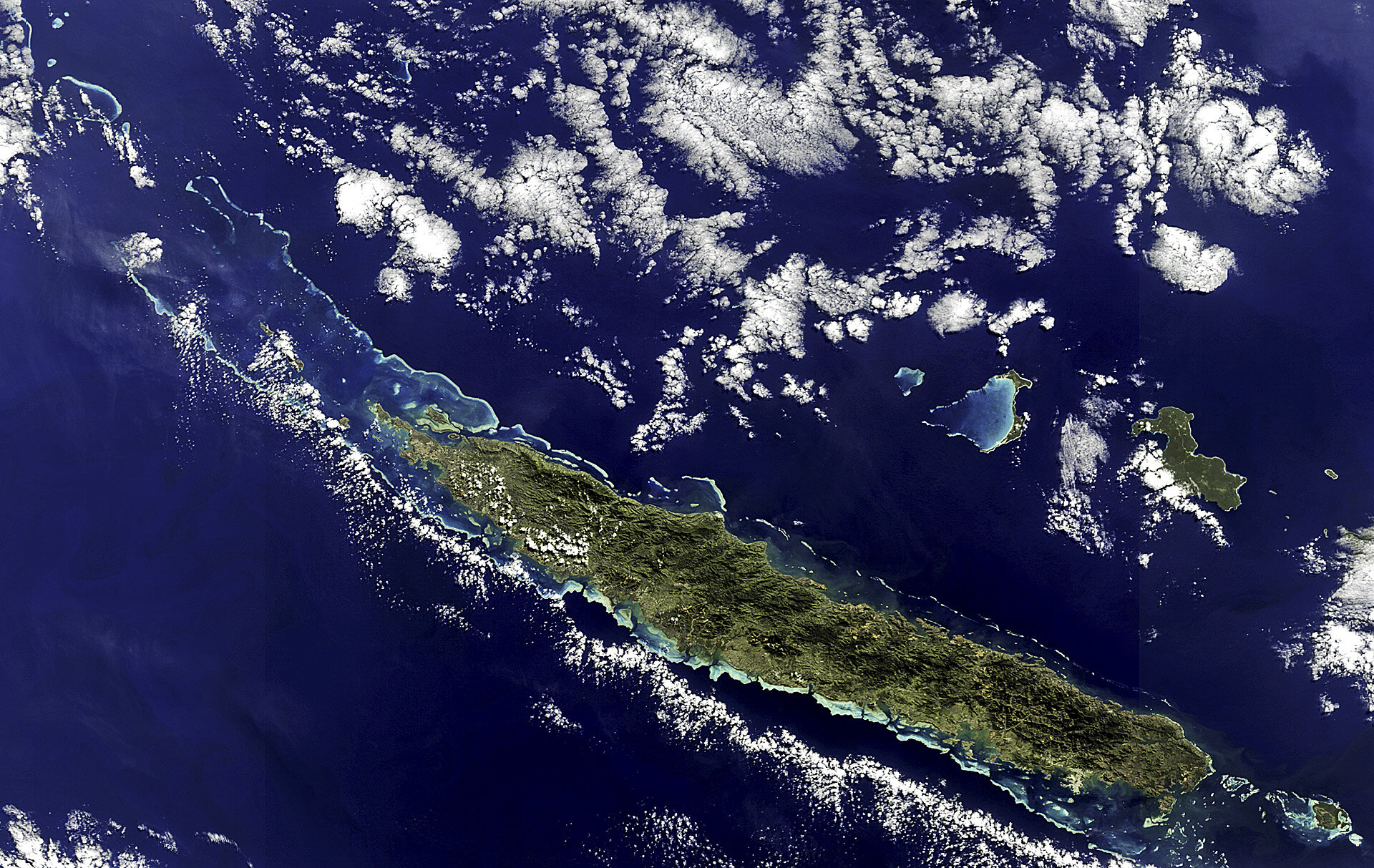
The New Caledonia archipelago, 1210 km east of Australia, is captured in this Envisat image, acquired on 5 July 2011. The main island, Grande Terre, dominates the image, stretching 350 km long from northwest to southeast. A mountain range runs the length of the island – its highest point reaching over 1620 m – and divides the land’s lush east from the savannahs in the west. A coral reef surrounds the main island and stretches into the Coral Sea to the northwest. The reef provides an important nesting site for green sea turtles and is home to endangered dugongs.
This image is featured on the Earth from Space video programme.
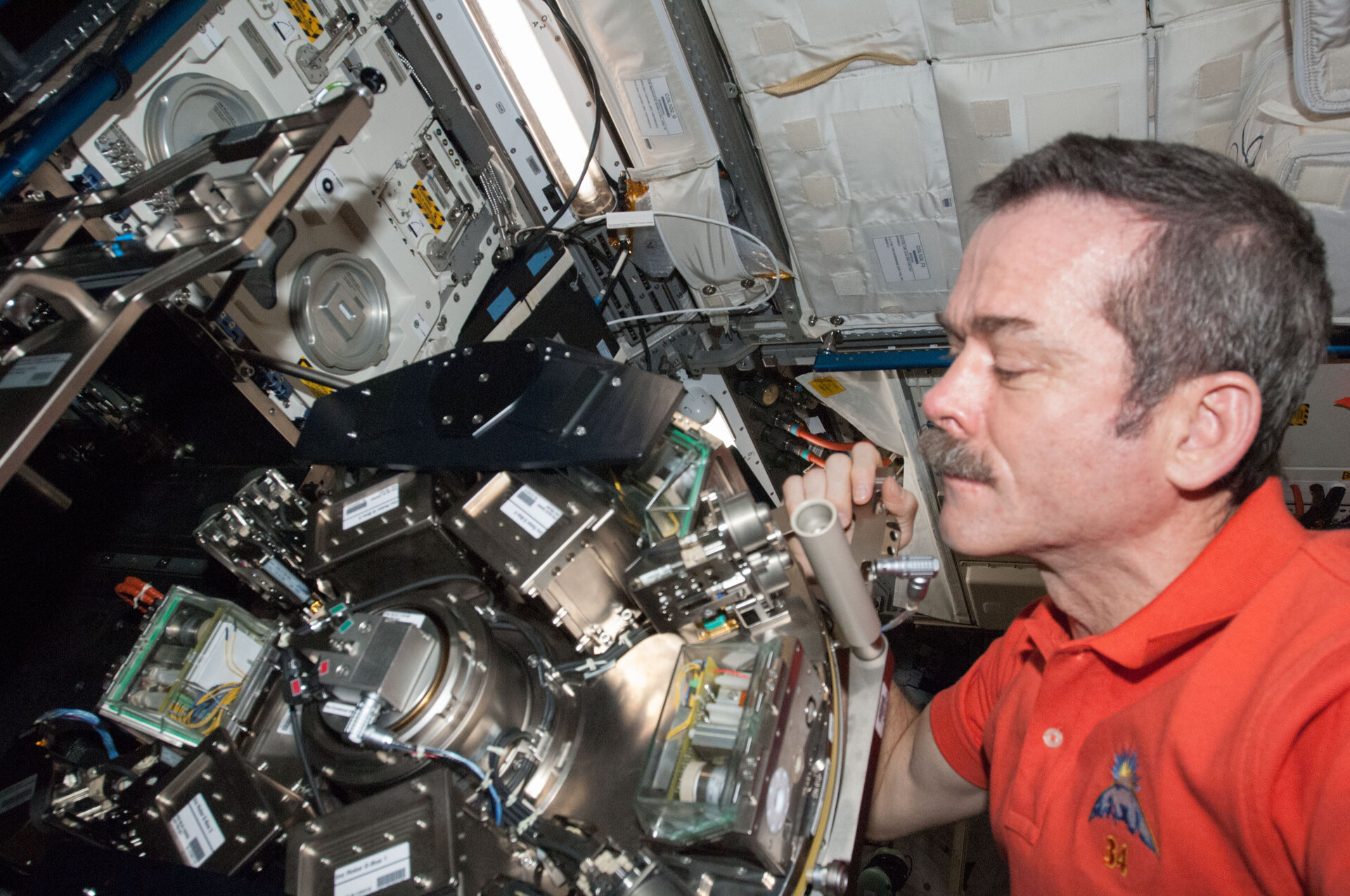
Canadian Space Agency astronaut Chris Hadfield conducting routine maintenance on Biolab in Europe’s Columbus laboratory on the International Space Station.
Biolab is an experiment workstation tailored for research on biological samples such as micro-organisms, cells, tissue cultures, plants and small invertebrates.
The unit features a centrifuge that creates simulated gravity to compare how samples react to weightlessness and artificial gravity.
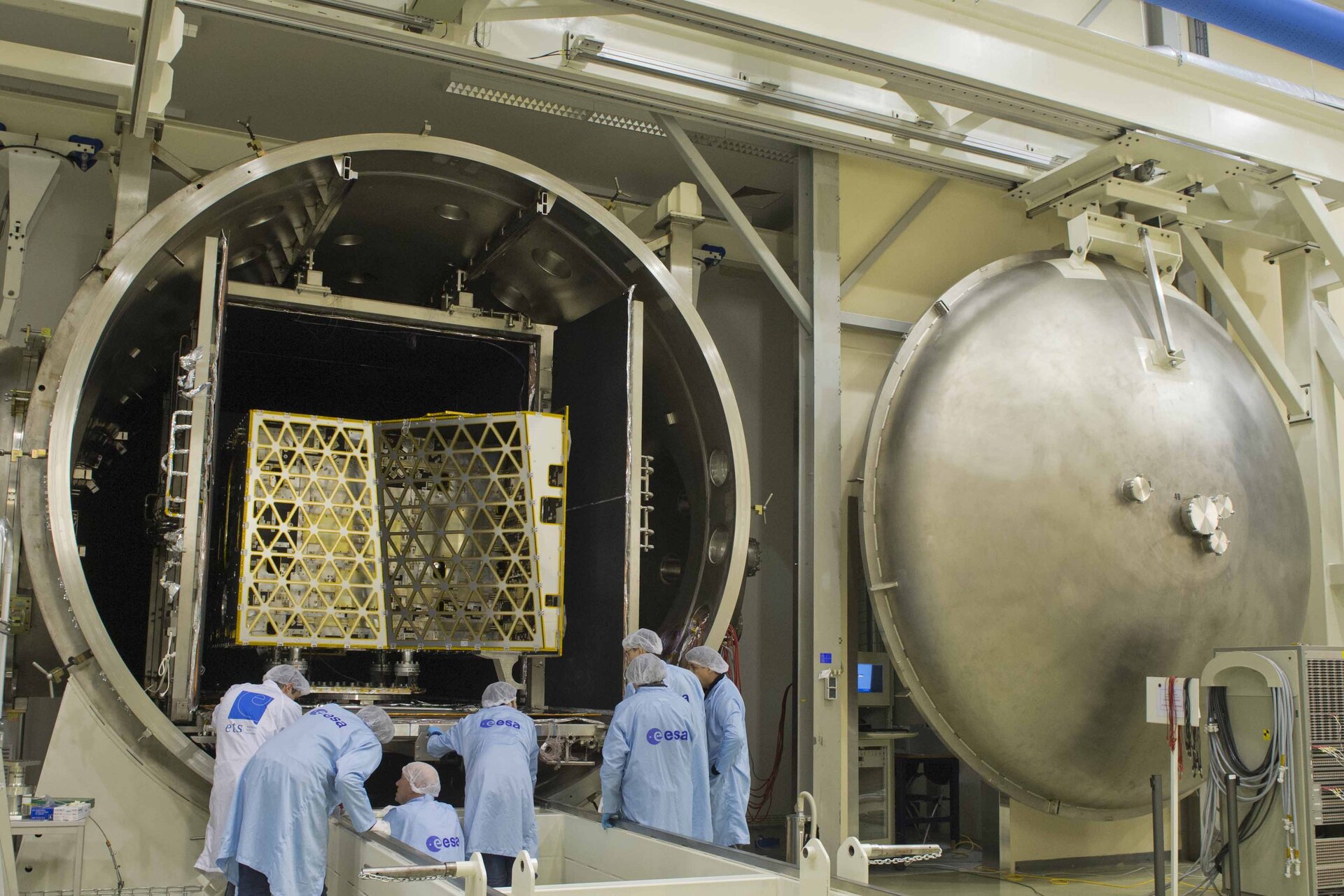
The Mercury Planetary Orbiter, part of ESA's BepiColombo mission to Mercury, placed in the Phenix thermal vacuum facility on 17 January 2012 in preparation for its 'bake-out'. After 23 days of sustained heating to remove potential contaminants the test was completed and the chamber reopened on 14 February 2013. A new test facility called Phenix hosted the bake-out, a 4.5 m-diameter stainless steel vacuum chamber 11.8 m long, with an inner box called the ‘thermal tent’ whose six copper walls can be heated up to 100°C or cooled via piped liquid nitrogen down to –190°C, all independent from each other.
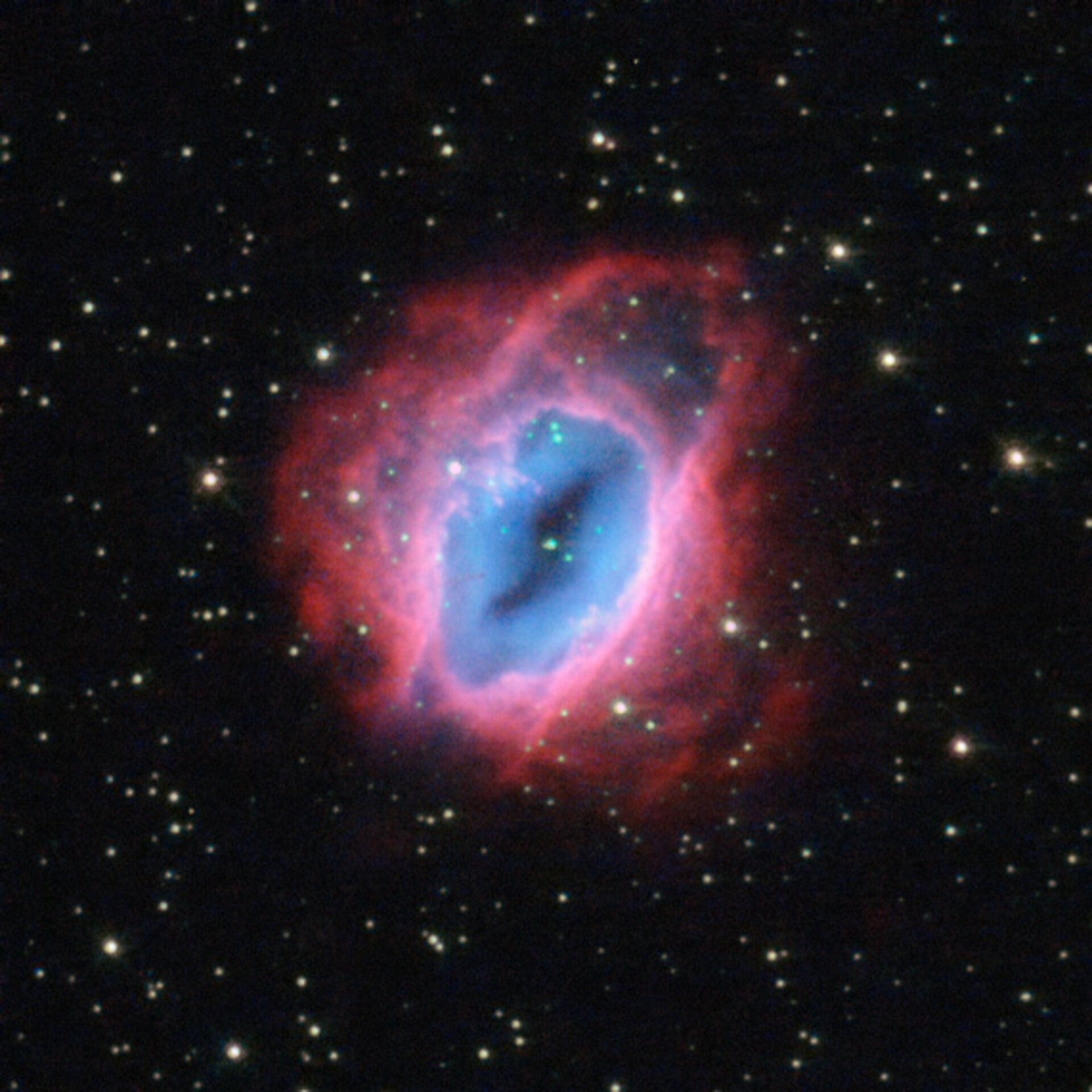
Planetary nebula ESO 456-67 as seen by the Hubble Space Telescope. The nebula is the product of a dying Sun-like star flinging its shells of dust and gas into space. ESO 456-67 lies in the constellation of Sagittarius (The Archer), in the southern sky.
This image was published as a space science image of the week feature on 25 February 2013 in collaboration with Hubble picture of the week.
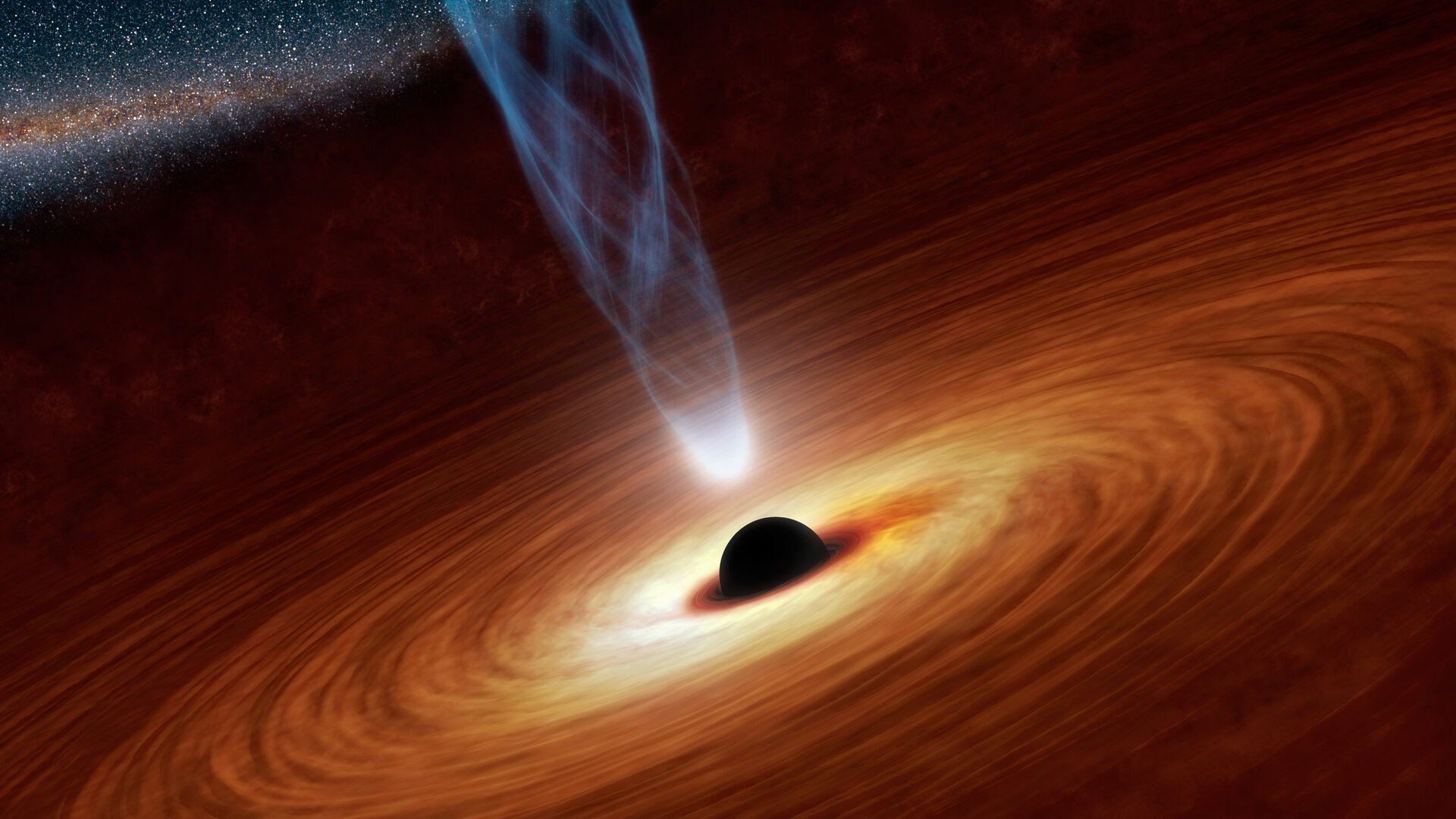
ESA’s XMM-Newton and NASA’s NuSTAR have detected a rapidly rotating supermassive black hole in the heart of spiral galaxy NGC 1365. The rate at which a black hole spins encodes the history of its formation. An extremely rapid rotation could result from either a steady and uniform flow of matter spiralling in via an accretion disc (as shown in this artist impression) or as a result of the merger of two galaxies and their smaller black holes.
Also depicted in this image is an outflowing jet of energetic particles, believed to be powered by the black hole’s spin. The regions near black holes contain compact sources of high energy X-ray radiation thought, in some scenarios, to originate from the base of these jets. The nature of the X-ray emission enables astronomers to see how fast matter is swirling in the inner region of the disc, and ultimately to measure the black hole's spin rate.
Week In Images
25 February - 01 March 2013
![[1/5] New Caledonia](/var/esa/storage/images/esa_multimedia/images/2013/02/new_caledonia/12543446-1-eng-GB/New_Caledonia_latestnews.jpg)
![[2/5] Chris Hadfield with Biolab](/var/esa/storage/images/esa_multimedia/images/2013/02/chris_hadfield_with_biolab/12542754-1-eng-GB/Chris_Hadfield_with_Biolab_latestnews.jpg)
![[3/5] BepiColombo MPO inside Phenix](/var/esa/storage/images/esa_multimedia/images/2013/02/bepicolombo_mpo_inside_phenix/12542945-1-eng-GB/BepiColombo_MPO_inside_Phenix_latestnews.jpg)
![[4/5] Planetary nebula ESO 456-67](/var/esa/storage/images/esa_multimedia/images/2013/02/planetary_nebula_eso_456-67/12541009-1-eng-GB/Planetary_nebula_ESO_456-67_latestnews.jpg)
![[5/5] Rapidly rotating black hole accreting matter](/var/esa/storage/images/esa_multimedia/images/2013/02/rapidly_rotating_black_hole_accreting_matter/12545177-1-eng-GB/Rapidly_rotating_black_hole_accreting_matter_latestnews.jpg)
Rate this
Views
Share
- Currently 5 out of 5 Stars.
- 1
- 2
- 3
- 4
- 5
Rating: 5/5 (12 votes cast)Thank you for rating!
You have already rated this page, you can only rate it once!
Your rating has been changed, thanks for rating!