• → European Space Agency

      • Space for Europe
      • Space News
      • Space in Images
      • Space in Videos
    • About Us

      • Welcome to ESA
      • DG's News and Views
      • For Member State Delegations
      • Business with ESA
      • ESA Exhibitions
      • ESA Publications
      • Careers at ESA
    • Our Activities

      • Space News
      • Observing the Earth
      • Human Spaceflight
      • Launchers
      • Navigation
      • Space Science
      • Space Engineering
      • Operations
      • Technology
      • Telecommunications & Integrated Applications
    • For Public

    • For Media

      • Media
      • ESA TV
      • Videos for professionals
      • Photos
    • For Educators

    • For Kids

    • ESA

    • [1/8] Venus from Saturn
    • [2/8] Blue bursts of hot young stars
    • [3/8] International Space Station from above
    • [4/8] Sentinel-3 arrives in France
    • [5/8] Vega VV02 Zefiro 9 hoisted for installation
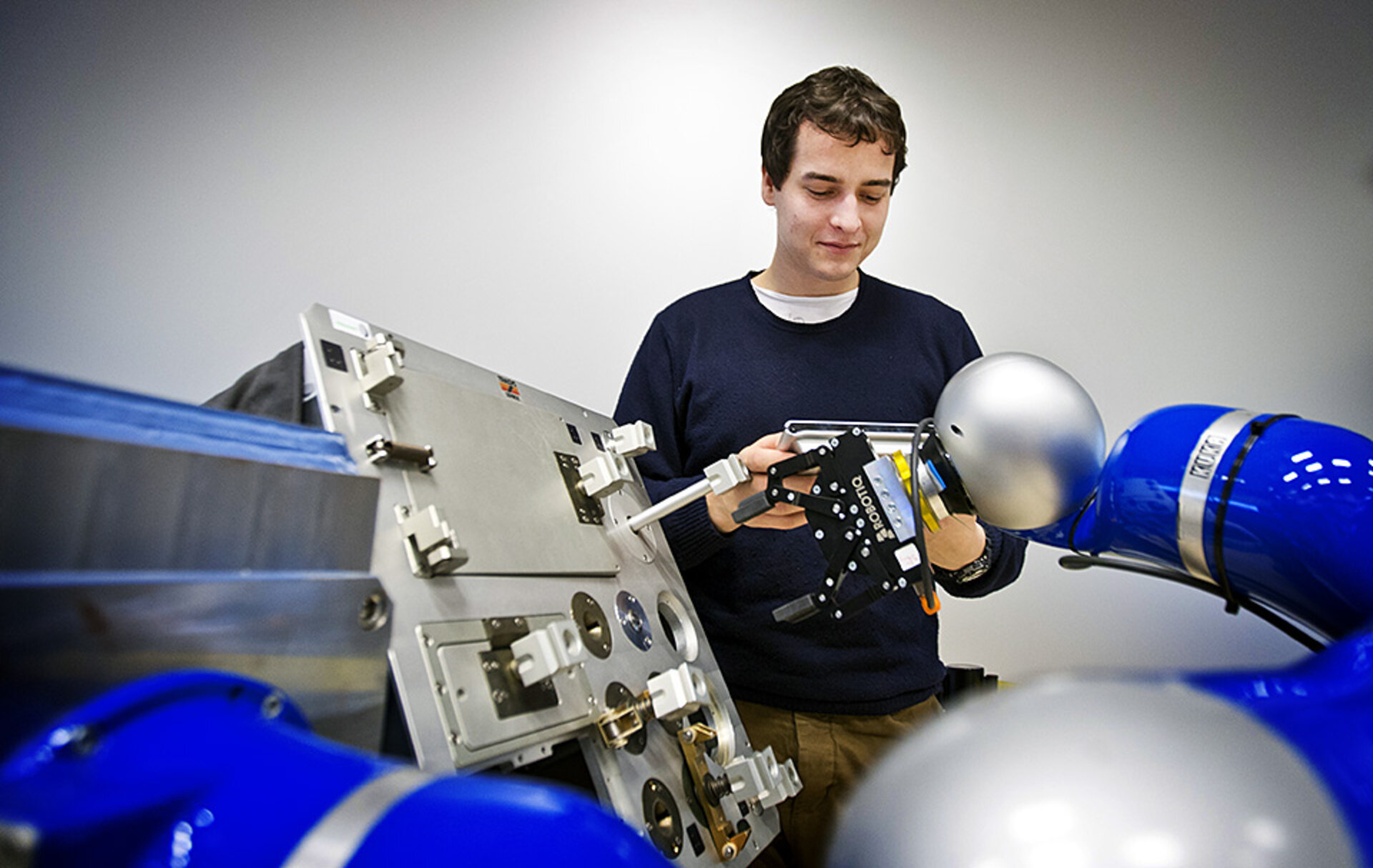
    • [6/8] Robotic manipulator in Telerobotics Lab
    • [7/8] Nile Delta harvest
    • [8/8] ESA astronaut Luca Parmitano suiting up for EVA training

    Venus from Saturn
    Venus from Saturn

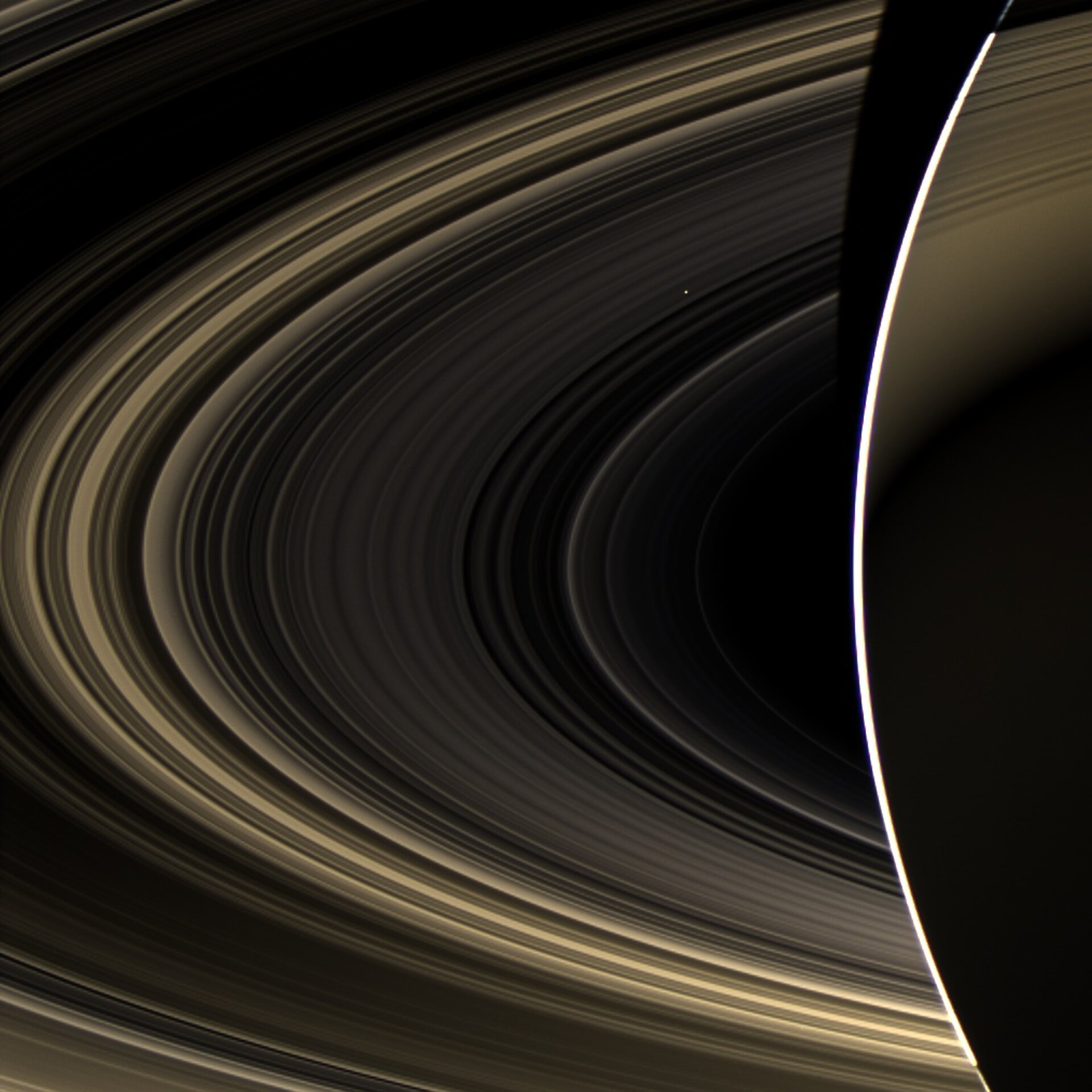
    Venus shines like a bright beacon through the rings of Saturn in this unique image taken by the international Cassini spacecraft on 10 November 2012 when the spacecraft was placed in the shadow of Saturn. This allowed Cassini to look in the direction of the Sun and take a backlit image of the planet and its rings. The view was obtained at a distance of approximately 802 000 km from Saturn and looks toward the unilluminated side of the rings from about 17 degrees below the ring plane. The image scale is 44 km per pixel.

    Credits: NASA/JPL-Caltech/Space Science Institute
    Blue bursts of hot young stars
    Blue bursts of hot young stars

    This image, speckled with blue, white, and yellow light, shows part of the spiral galaxy IC 5052. Surrounded by distant stars and galaxies, it emits a bright blue-white glow which highlights its narrow, intricate structure. It is viewed side-on in the constellation of Pavo (The Peacock), in the southern sky.

    When spiral galaxies are viewed from this angle, it is very difficult to fully understand their properties and how they are arranged. IC 5052 is actually a barred spiral galaxy – its pinwheeling arms do not begin from the centre point but are instead attached to either end of a straight "bar" of stars that cuts through the galaxy's middle. Approximately two thirds of all spirals are barred, including the Milky Way.

    Bursts of pale blue light are visible across the galaxy's length, partially blocked out by weaving lanes of darker gas and dust. These are pockets of extremely hot newborn stars. The bars present in spirals like IC 5052 are thought to help these formation processes by effectively funnelling material from the swirling arms inwards towards these hot stellar nurseries.

    Credits: ESA/Hubble & NASA, Acknowledgement: S. Meunier
    International Space Station from above
    International Space Station from above

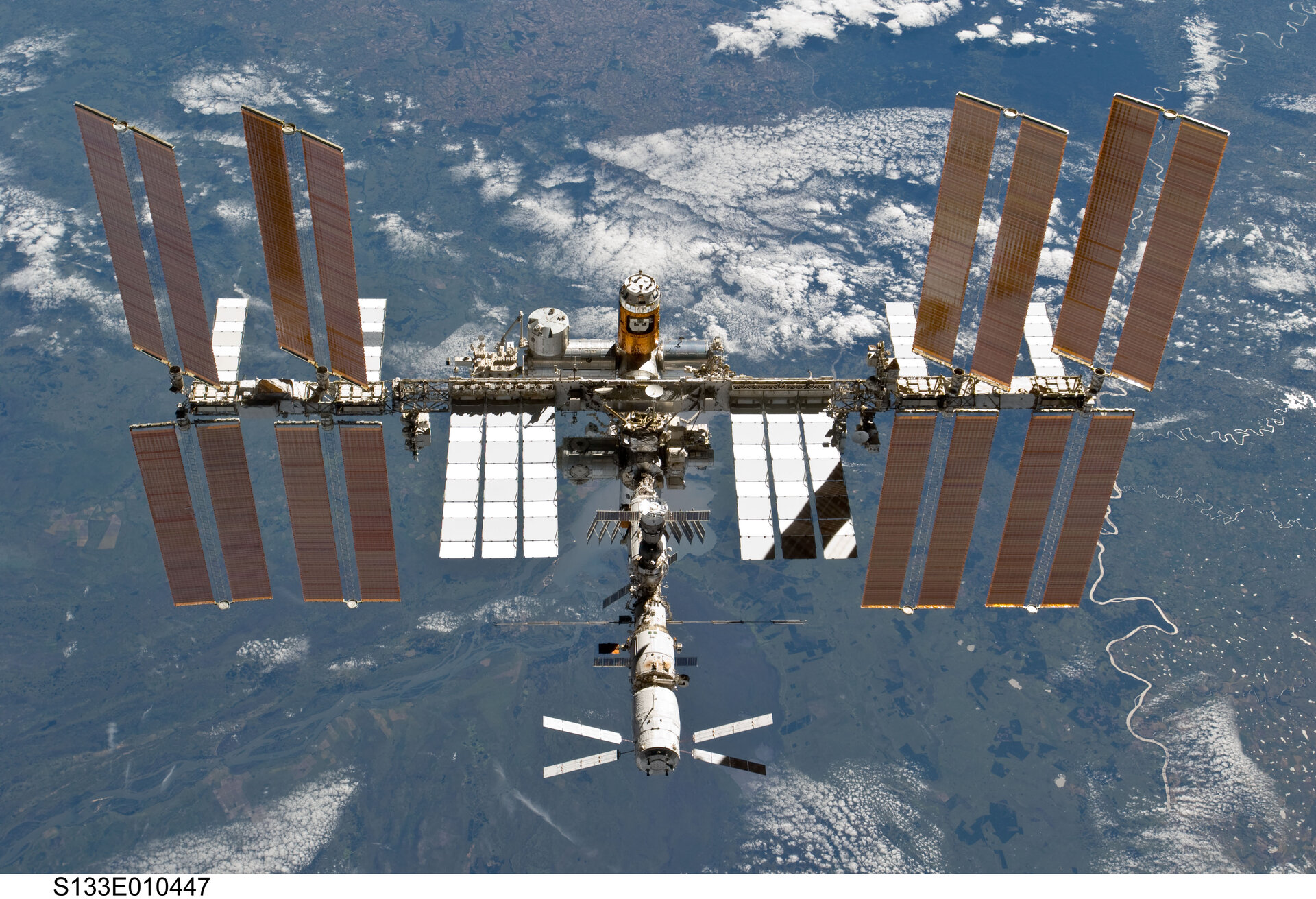
    This photo was taken in 2011 from Space Shuttle Discovery as it left the Station for Earth on her last voyage before retirement. ESA’s Automated Transfer Vehicle Johannes Kepler is docked with the Station at the bottom of the photo, while the golden module at the top is Japan’s own supply ferry.

    The Station circles Earth at 28 800 km/h, taking only 90 minutes to complete a full circuit. It can be seen and photographed without special equipment as it passes overhead. As it moves so fast, the hard part is to know when and where to look.

    Credits: NASA
    Sentinel-3 arrives in France
    Sentinel-3 arrives in France

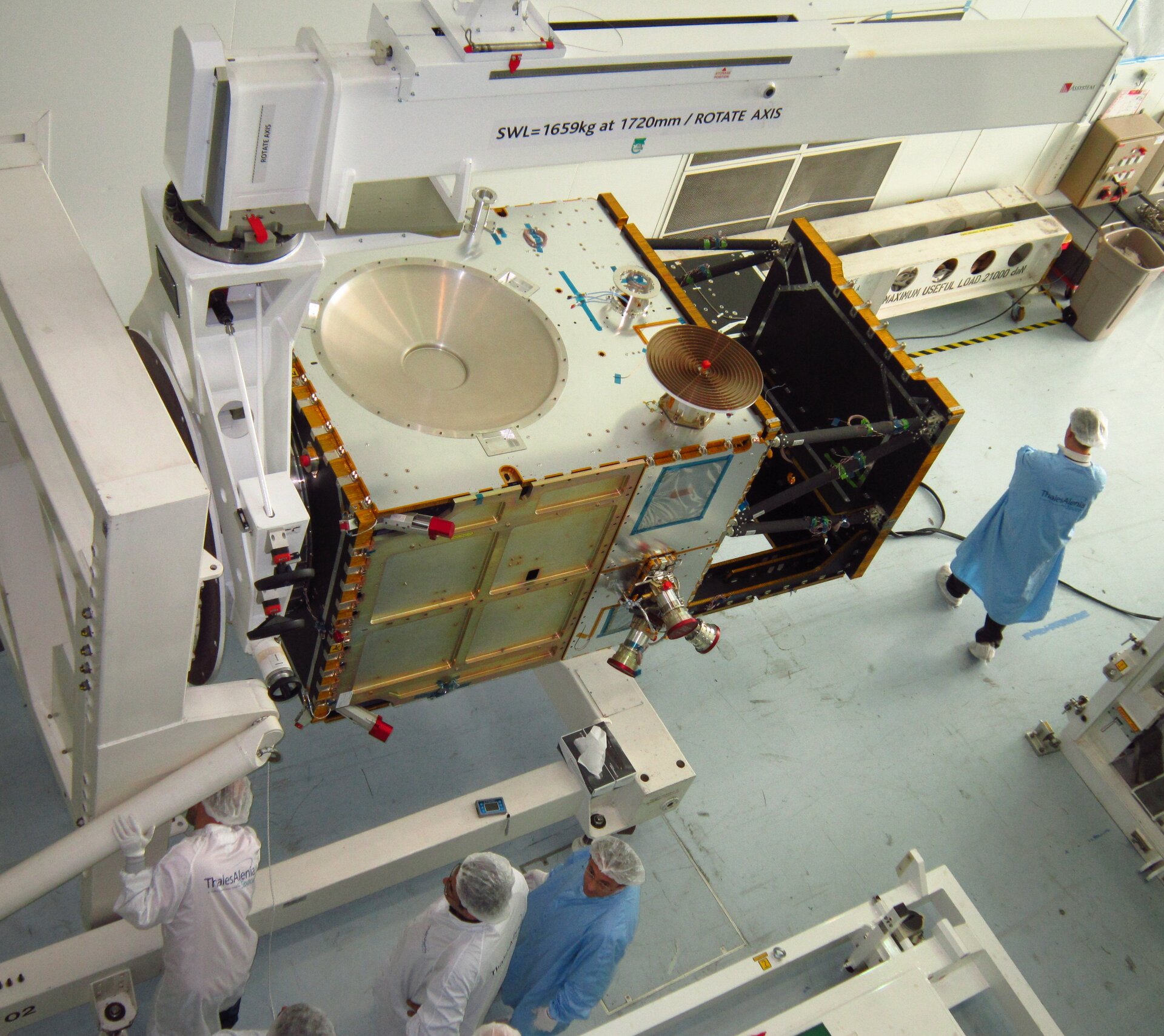
    On 27 February 2013, the Sentinel-3 satellite arrived at Thales Alenia Space in Cannes, France where the instruments will be integrated and the systems tested in preparation for launch in 2014.

    Credits: Thales Alenia Space
    Vega VV02 Zefiro 9 hoisted for installation
    Vega VV02 Zefiro 9 hoisted for installation

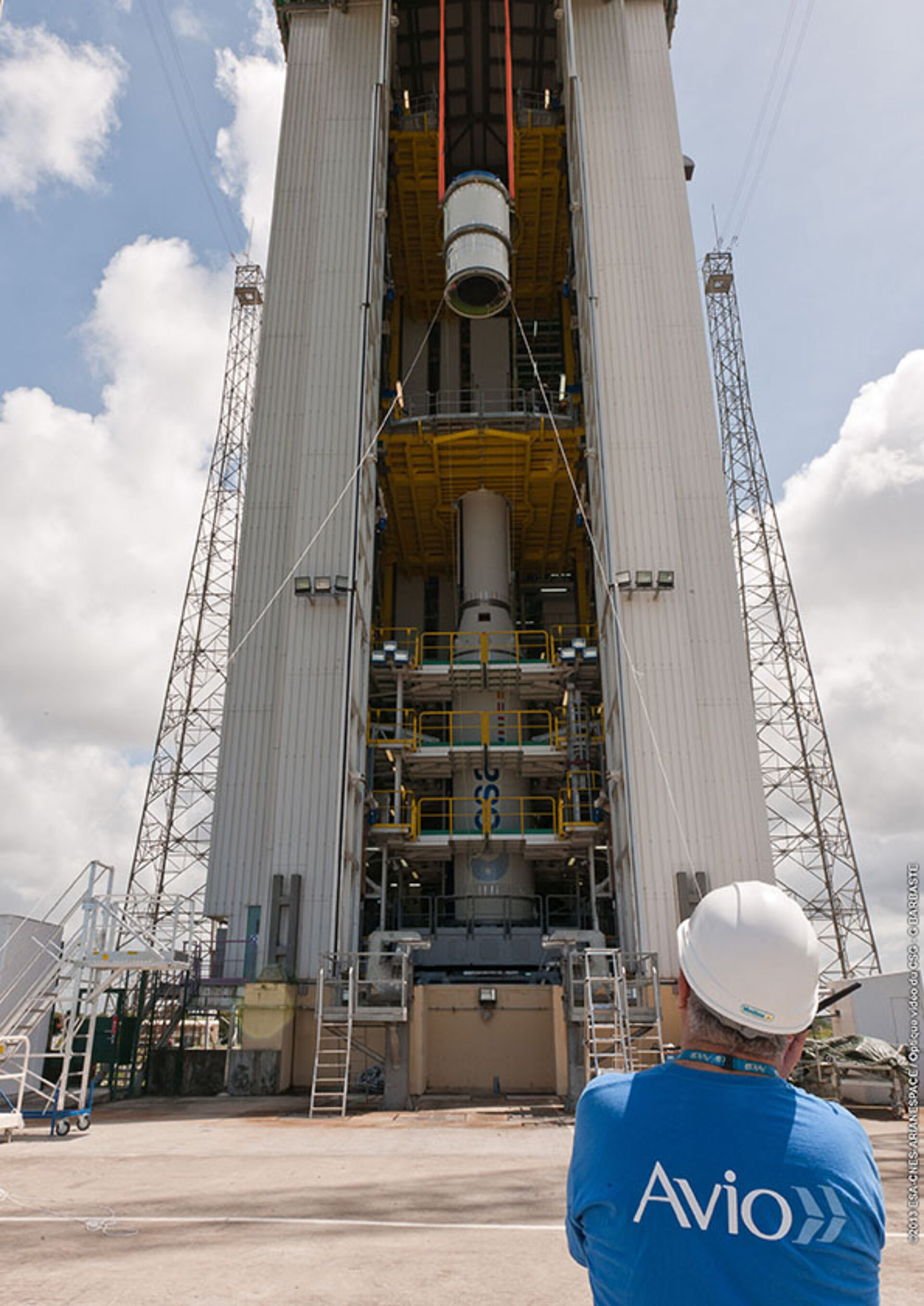
    In preparation for the launch of Vega flight VV02, the Zefiro 9 solid fuel engine is installed at the Vega Launcher assembly building at Europe's Spaceport in Kourou, French Guiana.

    The Zefiro 9 was derived from a 16-tonne solid rocket motor development (Zefiro 16) initiated by Fiat-Avio, now Avio S.p.A., with company funding and contracted by the Italian space agency ASI. The Zefiro-9 motor features include: a 1.9 m diameter carbon epoxy filament wound case; a low density EPDM insulation; HTPB 1912 composite propellant; a nozzle based on a flexible joint technology; a consumable igniter; and an electromechanical thrust vector control system.

    Credits: ESA/CNES/Arianespace/Optique Video du CSG
    Robotic manipulator in Telerobotics Lab
    Robotic manipulator in Telerobotics Lab

    PhD student Jan Smisek puts a robotic manipulator through its paces at ESTEC's Telerobotics and Haptics Laboratory.

    Credits: ESA/Guus Schoonewille
    Nile Delta harvest
    Nile Delta harvest

    This Landsat-7 image shows the harvest season in 2012 in the eastern Nile Delta. 

    Credits: USGS/ESA
    ESA astronaut Luca Parmitano suiting up for EVA training
    ESA astronaut Luca Parmitano suiting up for EVA training

    In this picture, ESA astronaut Luca Parmitano is seen preparing for a simulated spacewalk and is wearing a training version of his Extravehicular Mobility Unit spacesuit. He is about to be submerged in the waters of the Neutral Buoyancy Laboratory near NASA’s Johnson Space Center in Houston, Texas. Divers in the water will assist Luca and fellow spacewalker, NASA astronaut Chris Cassidy, in their rehearsal, which is intended to help prepare them for work on the outside of the International Space Station.

    Luca will perform two spacewalks during his Volare mission, which starts May on the International Space Station.

    As Expedition 36/37 flight engineer, Luca will conduct planned maintenance tasks, replace a camera mounted on Japan’s Kibo module and retrieve science payloads. One of his spacewalks will also prepare for the arrival of the Russia’sn Multipurpose Laboratory Module (MLM).

    Credits: NASA

    Week In Images

    Our week through the lens:
    04-08 March 2013

    Access the image

    Access the image

    Access the image

    Access the image

    Access the image

    Access the image

    Access the image

    Access the image

    Rate this

    Views

    Share

    • Currently 5 out of 5 Stars.
    • 1
    • 2
    • 3
    • 4
    • 5
    Rating: 5/5 (10 votes cast)

    Thank you for rating!

    You have already rated this page, you can only rate it once!

    Your rating has been changed, thanks for rating!

    745
    Tweet

    Connect with us

    • RSS
    • Youtube
    • Twitter
    • Flickr
    • G+
    • Facebook
    • Livestream
    • Subscribe
    • App Store
    • LATEST ARTICLES
    • · Rare merger reveals secrets of gal…
    • · Watching for hazards: ESA opens as…
    • · ESA astronaut Timothy Peake set fo…
    • · Space drives e-mobility
    • · Proba-V opens its eyes
    • FAQ

    • Jobs at ESA

    • Site Map

    • Contacts

    • Terms and conditions