Emergency support for Jules Verne ATV successfully given by Artemis
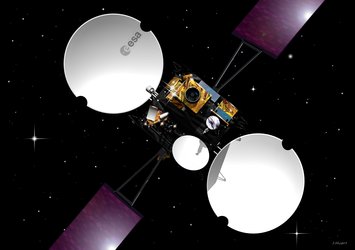
Artemis, ESA's data relay satellite, successfully answered the call for emergency services from the ATV Control Centre due to anticipated outages at the NASA Space Centre in Houston, Texas.
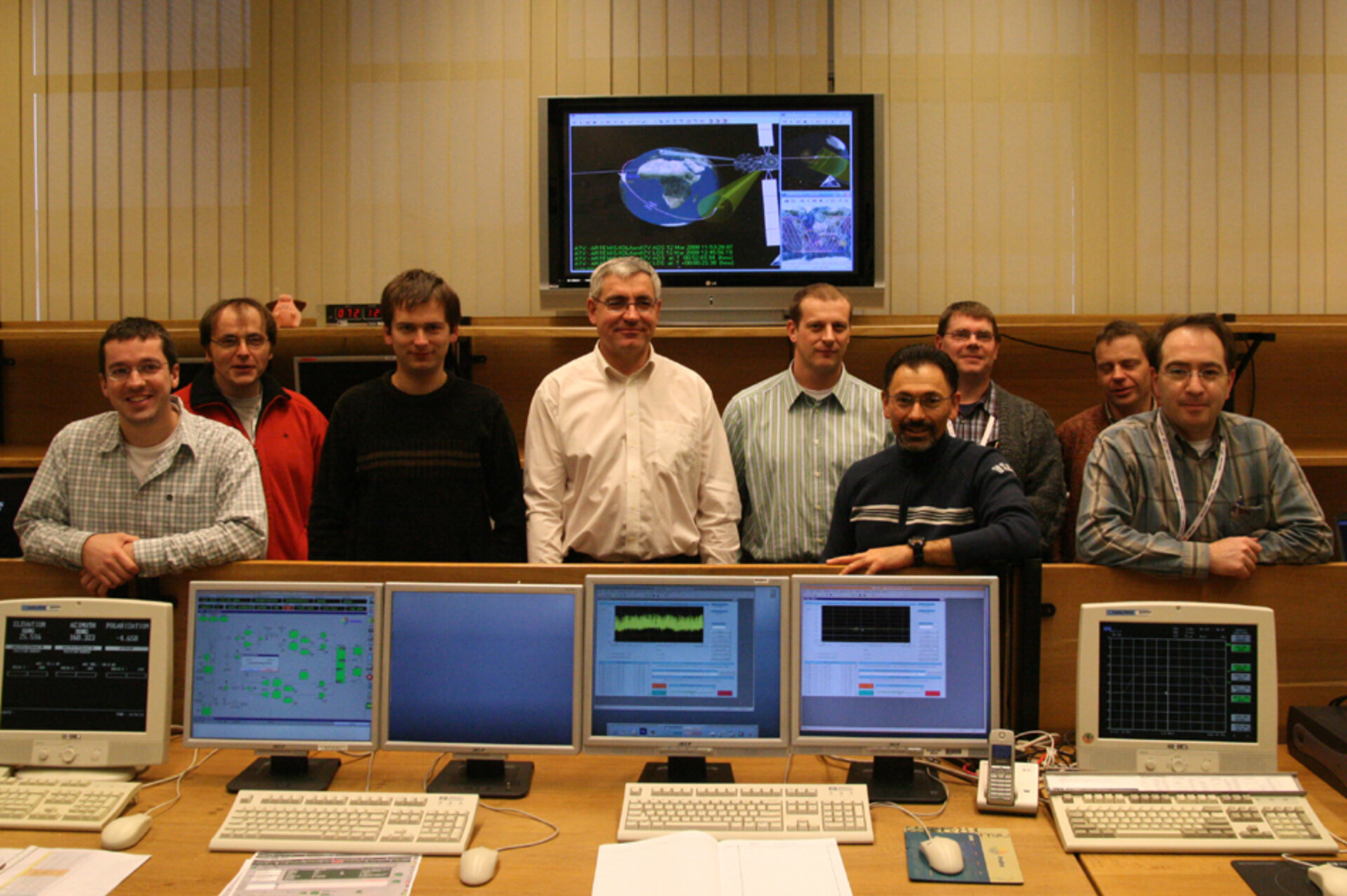
Artemis is operated from ESA's facility at Redu, Belgium which houses the spacecraft's mission control centre and a
“On 11 September, we received notification that emergency support needed to be given to the ATV by Artemis,” explained Benoit Demelenne, Head of Redu's TT&C and Spacecraft Operations Unit. “Hurricane Ike was approaching the Johnson Space Center in Houston, which had to be evacuated. The ATV Control Centre requested emergency support from Artemis as the communications with ATV via TDRSS would be interrupted.”

In addition, explained Kris Capelle, ATV Mission Director, a Debris Avoidance Manoeuvre or DAM needed to be performed because some space debris would come too close to the ATV.
"For these operations, we needed some extended visibilities to follow up ATV behaviour. Because both issues came exactly together, additional support from Artemis was needed," he explained.
The mission control team and ground segment support team at the ATV Control Centre at Toulouse and the Artemis Control Centre in Redu immediately began procedures. With only a few hours to prepare, support was successfully provided to the ATV during the night.
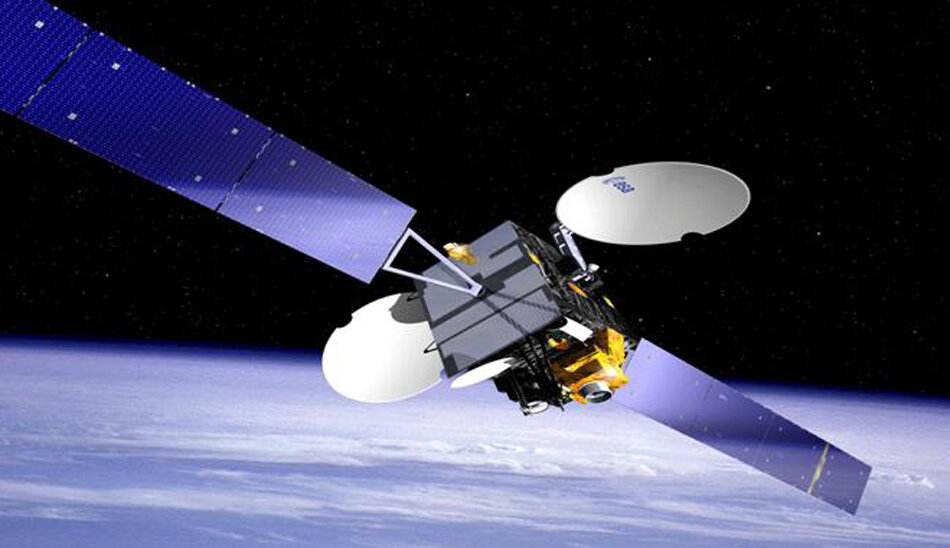
Artemis has performed more than five years of in-orbit operations. It is in geostationary orbit over Africa and has three main purposes:
- the provision of inter-orbit satellite communication using advanced S- and
Ka-band radio links and laser technology - performing a key role within Europe's EGNOS satellite navigation system by broadcasting enhanced GPS and GLONASS signals for use by civilian 'safety critical' transport and navigational services
- the provision of voice and data communications between mobile terminals in remote areas of Europe and North Africa, as well as in the Atlantic
Throughout the Jules Verne ATV mission phases and working in parallel with TDRSS, Artemis was used as prime during the attached phase to ISS and provided back up for telecommanding and telemetry reception to/from the ATV vehicle during the rendezvous phase, the docking phase, the de-docking phase and the re-entry phase. The Jules Verne ATV had completed a flawless six-month mission, undocking from the International Space Station on 5 September to complete the last leg of its journey in space, which will end with a controlled destructive re-entry into the Earth’s atmosphere on 29 September.
"Once again Artemis has demonstrated its preparedness to respond to the needs of ESA's Programmes, as it is the case for the long standing data relay service for Envisat," says Andrea Cotellessa, Head of the Artemis Project Office. "We are committed to continue Artemis operations and to provide initial services within in the forthcoming European Data Relay System and thereafter continue providing backup services until Artemis end-of-life."