• → European Space Agency

      • Space for Europe
      • Space News
      • Space in Images
      • Space in Videos
    • About Us

      • Welcome to ESA
      • DG's News and Views
      • For Member State Delegations
      • Business with ESA
      • ESA Exhibitions
      • ESA Publications
      • Careers at ESA
    • Our Activities

      • Space News
      • Observing the Earth
      • Human Spaceflight
      • Launchers
      • Navigation
      • Space Science
      • Space Engineering
      • Operations
      • Technology
      • Telecommunications & Integrated Applications
    • For Public

    • For Media

    • For Educators

    • For Kids

    • ESA

    • Human Spaceflight

    • Astronauts

    • International Space Station

    • Research

    • Education

    • How to become an astronaut
    • European astronauts
    • The European astronaut corps
    • European astronaut charta
    • Astronaut gallery
    • Astronaut biographies

      • Jean-François Clervoy
      • Samantha Cristoforetti
      • Frank De Winne
      • Pedro Duque
      • Léopold Eyharts
      • Christer Fuglesang
      • Alexander Gerst
      • André Kuipers
      • Andreas Mogensen
      • Paolo Nespoli
      • Luca Parmitano
      • Timothy Peake
      • Thomas Pesquet
      • Hans Schlegel
      • Roberto Vittori
    • European astronauts in space
    • European astronauts in new functions
    • Astronaut training

      • Related articles
      • The challenges of astronaut training
      • Basic training
      • Advanced training
      • Increment-specific training
      • Neutral buoyancy EVA training
      • ATV training
    • European Astronaut Centre
    • The European Astronaut Centre
    • Organisation and structure
    • Mission participation and support
    • Getting to EAC
    • Contact us
    • Living in space

      • Living in space
      • Learning to live with the laws of motion
      • Daily life
    • Services
    • Calendar
    • Subscribe
    • RSS feeds

    ESA > Our Activities > Human Spaceflight > Astronauts

    ESA’s Belgian astronaut on way to Space Station in new Soyuz spacecraft

    Launch Odissea Mission
    Launch Odissea Mission
    30 October 2002

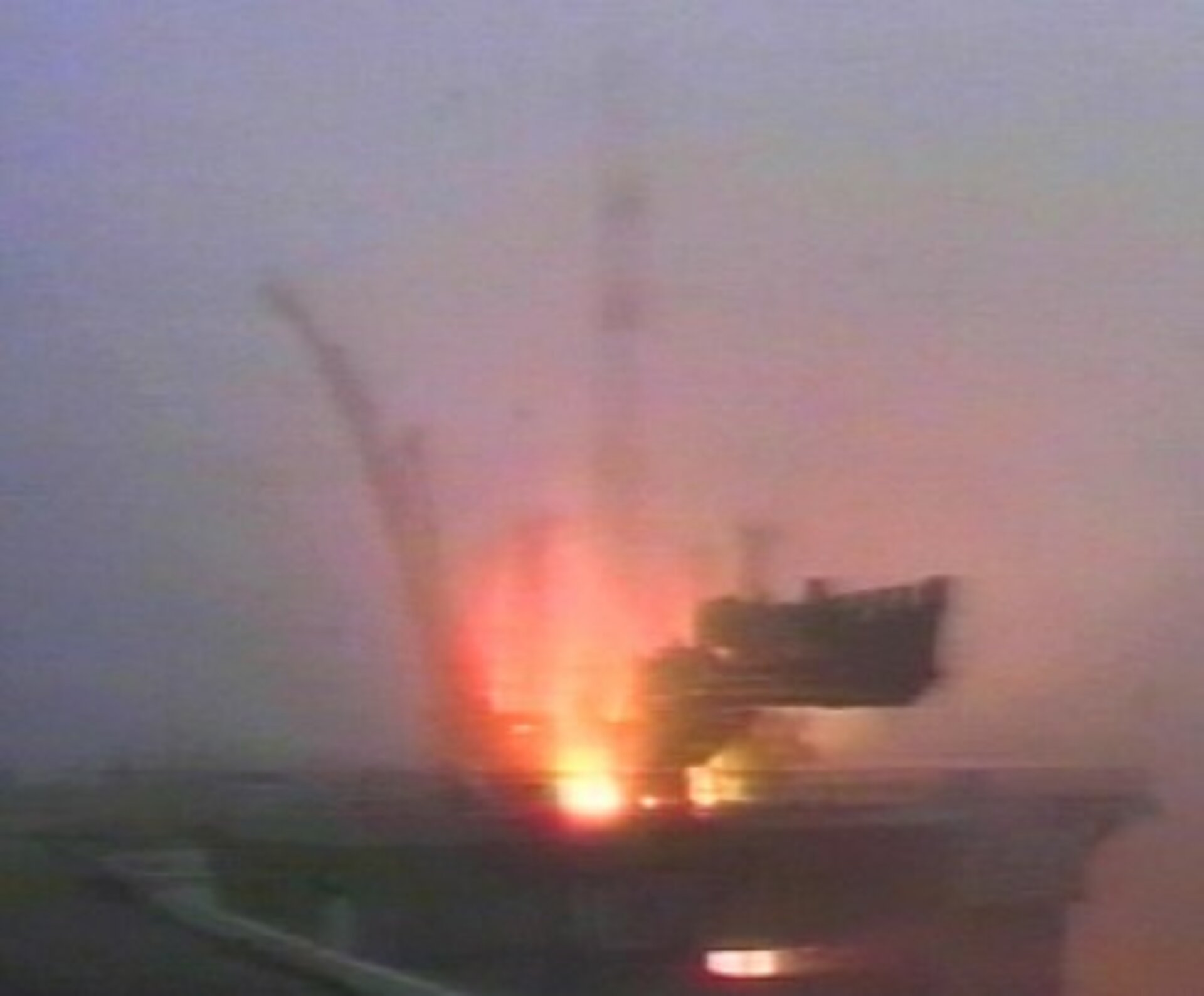
    ESA PR 68-2002. The fourth taxi flight to the International Space Station carrying a European Space Agency (ESA) astronaut and two Russian crew members made a perfect lift-off today (Wednesday, 30 October 2002) from the vast open plains of Baikonur, Kazakhstan, into the rising sun at 08:11 local time (04:11 Central European Time, 03:11 Universal Time).

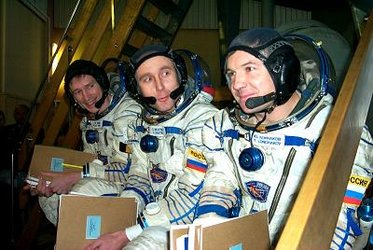
    ESA astronaut Frank De Winne, a former Belgian Air Force pilot, and his fellow crew members, Soyuz Mission Commander Sergei Zaletin and Soyuz Flight Engineer Yuri Lonchakov, are due to dock with the Space Station in two days’ time on Friday, 1 November at 06:00 CET (05:00 UT). The hatch between the Soyuz spacecraft and the Space Station will be opened at 07:30 CET (06:30 UT).

    Odissea mission crew going up to the Soyuz capsule
    Odissea Mission crew climb the steps to the Soyuz-TMA capsule

    The crew are flying a new Soyuz TMA-1 spacecraft, a modified and updated version of the TM-34 Soyuz capsule currently attached to the Space Station.

    It will remain attached to the Space Station for six months – acting as a rescue vehicle for the resident crew in case of an onboard emergency.

    Soyuz Flight Engineer De Winne, the first Belgian astronaut to visit the Space Station and the first non-Russian ever to fly on the first flight of a new Russian vehicle, is the fourth European astronaut to visit the Station.

    During his eight-day stay, De Winne will carry out a programme of 23 experiments in the fields of life and physical sciences and education, including four physical science experiments using the Microgravity Science Glovebox (MSG) – an important research facility designed and developed in Europe.


    Frank De Winne going up to the Soyuz capsule
    A last wave from Frank De Winne before entering the Soyuz-TMA capsule

    De Winne’s hopes for the mission extend beyond the success of the new Soyuz spacecraft delivery and the programme of experiments. They also encompass the desire to see space made real and exciting for young people.

    “During the mission I will be involved in a variety of educational activities. It is important to talk directly to our young people – we need to make space, technology and science interesting and relevant to them,” he said.

    The Odissea crew will head back to Earth on board the older TM-34 Soyuz currently attached to the Space Station. Landing in Kazakhstan is scheduled for Sunday, 10 November 2002 at 05:03 local time (01:03 CET, 00:03 UT).

    For further information, please contact:

    ESA Media Relations Service

    Tel: +33 (0)1.5369.7155

    Fax: +33 (0)1.5369.7690
    Rate this

    Views

    Share

    • Currently 0 out of 5 Stars.
    • 1
    • 2
    • 3
    • 4
    • 5
    Rating: 0/5 (0 votes cast)

    Thank you for rating!

    You have already rated this page, you can only rate it once!

    Your rating has been changed, thanks for rating!

    26
    Tweet
    • Related articles
      • ESA’s Belgian astronaut ready for Space Station mission
      • Frank De Winne's Odissea mission diary: On board ‘my' spacecraft
      • Related links
      • Odissea mission
      • Frank De Winne
      • Odissea's FAQ
      • Human Spaceflight and Exploration

    Connect with us

    • RSS
    • Youtube
    • Twitter
    • Flickr
    • G+
    • Facebook
    • Livestream
    • Subscribe
    • App Store
    • LATEST ARTICLES
    • · ESA astronaut Timothy Peake set fo…
    • · Space drives e-mobility
    • · Proba-V opens its eyes
    • · First new Galileo satellite arrive…
    • · Next destination: space
    • FAQ

    • Jobs at ESA

    • Site Map

    • Contacts

    • Terms and conditions
