• → European Space Agency

      • Space for Europe
      • Space News
      • Space in Images
      • Space in Videos
    • About Us

      • Welcome to ESA
      • DG's News and Views
      • For Member State Delegations
      • Business with ESA
      • ESA Exhibitions
      • ESA Publications
      • Careers at ESA
    • Our Activities

      • Space News
      • Observing the Earth
      • Human Spaceflight
      • Launchers
      • Navigation
      • Space Science
      • Space Engineering
      • Operations
      • Technology
      • Telecommunications & Integrated Applications
    • For Public

    • For Media

    • For Educators

    • For Kids

    • ESA

    • Human Spaceflight and Exploration

    • Columbus

    • About Columbus
    • Columbus laboratory
    • Columbus facts & figures
    • Columbus facilities
    • Biolab
    • European Drawer Rack
    • European Physiology Modules
    • European Transport Carrier
    • Fluid Science Laboratory
    • Microgravity Science Glovebox
    • External payloads
    • SOLAR
    • Vessel-ID
    • Columbus mission
    • About the mission
    • Mission objectives
    • Daily activities STS-122
    • Mission facts STS-122
    • Crew biographies
    • Columbus operations
    • Columbus Control Centre
    • User Support and Operations Centres
    • Downloads
    • Columbus Information Kit (pdf)
    • Exploring with Columbus (pdf)
    • Multimedia
    • Image gallery
    • Columbus videos
    • Exhibition material

    ESA > Our Activities > Human Spaceflight > Columbus

    Biolab

    26 February 2013

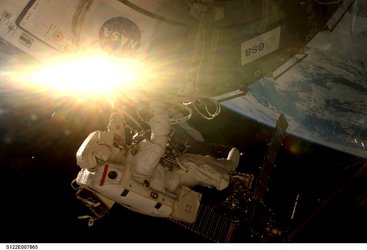
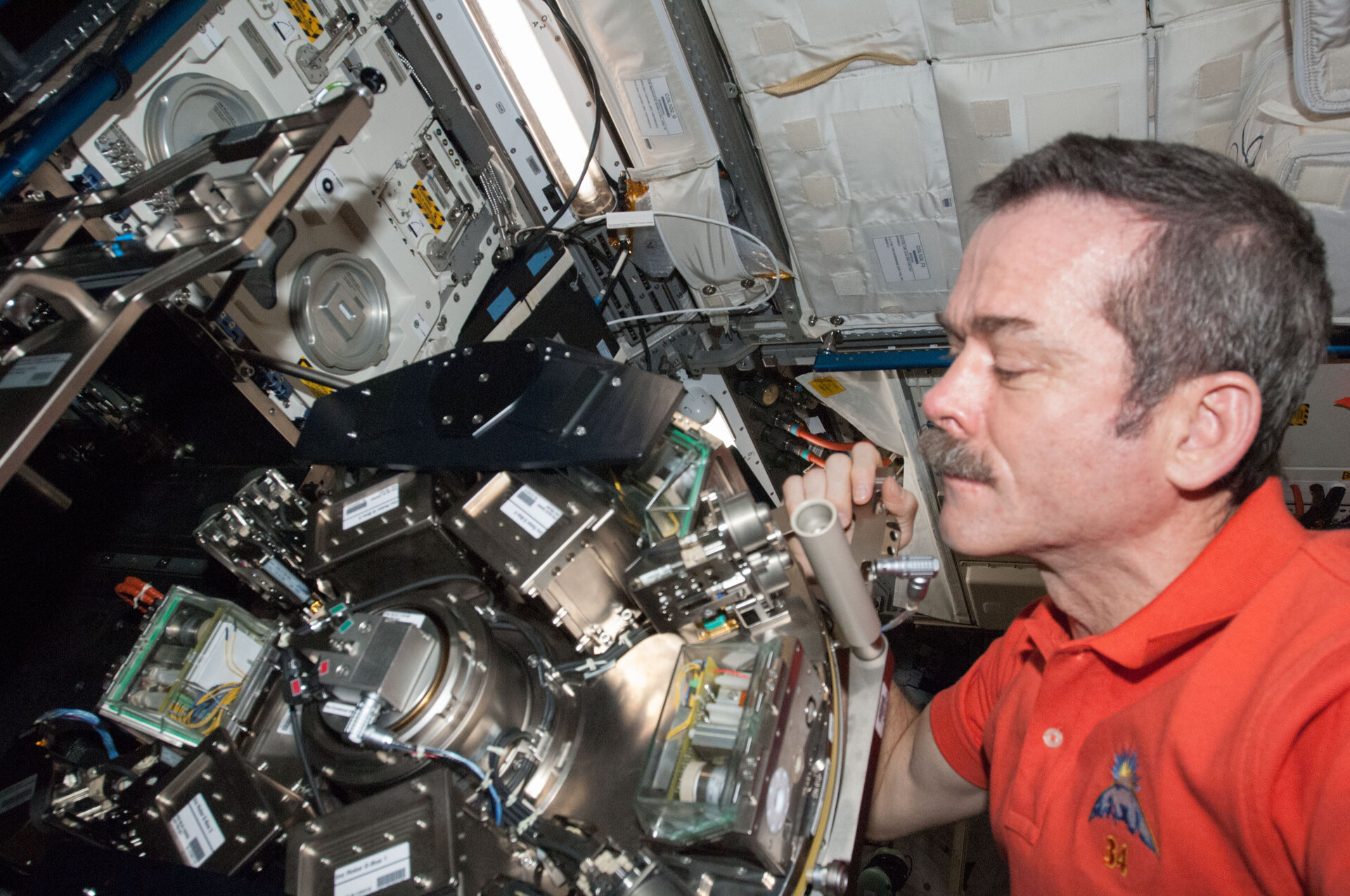
    Canadian Space Agency astronaut Chris Hadfield conducting routine maintenance on Biolab in Europe’s Columbus laboratory on the International Space Station.

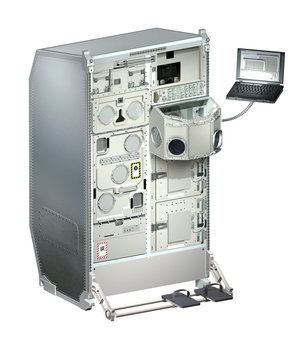
    Biolab is an experiment workstation tailored for research on biological samples such as micro-organisms, cells, tissue cultures, plants and small invertebrates.

    The unit features a centrifuge that creates simulated gravity to compare how samples react to weightlessness and artificial gravity.

    Here, Chris is replacing the drive belt that powers the centrifuge. He used Twitter to send the picture last week.

    Scientists can follow the experiments on Earth and receive data from early sample analysis. Many operations are automated, allowing astronauts to work in other areas while an experiment continues for up to three months.

    NASA astronaut Reid Wiseman replied to Chris’s space-tweet thanking him for fixing Biolab, since Reid had just finished his training on the ground to use the facility in space next year.

    Scientific experiments on the International Space Station involve scientists from all over the world and are conducted by astronauts regardless of their affiliation.
    Rate this

    Views

    Share

    • Currently 4.5 out of 5 Stars.
    • 1
    • 2
    • 3
    • 4
    • 5
    Rating: 4.64/5 (17 votes cast)

    Thank you for rating!

    You have already rated this page, you can only rate it once!

    Your rating has been changed, thanks for rating!

    1833
    Tweet

    Related articles

    Biolab

    Biolab18 July 2001

    Biolab

    Biolab18 July 2001 Biological experiment facility in Columbus Biolab supports biological experiments on micro-organisms, cells, tissue cultures, small plants and small invertebrates. Performing life science experiments in space identifies the role that weightlessness p...

    Waving and coiling in Arabidopsis seedlings

    Plant growth experiment starts in Columbus29 February 2008

    Waving and coiling in Arabidopsis seedlings

    Plant growth experiment starts in Columbus29 February 2008 ESA astronaut Léopold Eyharts has activated the first experiment inside the European Columbus laboratory. The WAICO experiment, which investigates the effect of gravity on plant root growth, has started inside the module's Biolab facility.

    Five years of unique science on Columbus12 February 2013

    Five years of unique science on Columbus12 February 2013 Since Europe’s Columbus laboratory module was attached to the International Space Station five years ago, it has offered researchers worldwide the opportunity to conduct science beyond the effects of gravity.

    • Gallery: Columbus 5 years
      • Columbus operations
        • Columbus Control Centre, Oberpfaffenhofen, Germany
        • Columbus Control Centre at DLR
        • International Space Station science reports

    Connect with us

    • RSS
    • Youtube
    • Twitter
    • Flickr
    • G+
    • Facebook
    • Livestream
    • Subscribe
    • App Store
    • LATEST ARTICLES
    • · Proba-V opens its eyes
    • · First new Galileo satellite arrive…
    • · Next destination: space
    • · Leak repaired on International Spa…
    • · After Chelyabinsk: European expert…
    • FAQ

    • Jobs at ESA

    • Site Map

    • Contacts

    • Terms and conditions