• → European Space Agency

      • Space for Europe
      • Space News
      • Space in Images
      • Space in Videos
    • About Us

      • Welcome to ESA
      • DG's News and Views
      • For Member State Delegations
      • Business with ESA
      • ESA Exhibitions
      • ESA Publications
      • Careers at ESA
    • Our Activities

      • Space News
      • Observing the Earth
      • Human Spaceflight
      • Launchers
      • Navigation
      • Space Science
      • Space Engineering
      • Operations
      • Technology
      • Telecommunications & Integrated Applications
    • For Public

    • For Media

    • For Educators

    • For Kids

    • ESA

    • Human Spaceflight

    • Astronauts

    • International Space Station

    • Research

    • Education

    • About Education
    • What we do & why we do it
    • @ESAHSOeducation
    • Browse lessons by

      • Age range

        • Primary level

          • Columbus: Past, present and future…
          • The Eclipse that saved Columbus
          • The Automated Transfer Vehicle
          • ATV: a very special delivery
          • Life in Space
          • A drop of water
          • Primary level ISS Education Kit - downloads
          • PromISSe educational experiments
          • Greenhouse in space
        • Secondary level

          • Ingredients for Life: On Earth and in Space
          • Spaceship Earth
          • ATV: a very special delivery - Lesson notes
          • Bubbles in space
          • Lesson plan for use with the ISS Education Kit on the web
          • A space compass
          • Bugs in Space
          • Space (fluid) oddities
          • Science fiction - science fact
          • Searching for the Missing Universe
          • Feeding our future – nutrition on Earth and in space
          • Newton in space
          • Body space
          • Space matters
          • Space robotics
          • ISS 3-D Teaching Tool: Spaceflight Challenge I
          • Take your classroom into space
          • ISS Education Kit - downloads
          • Do objects have weight in space?
          • Exploring capillarity
          • Greenhouse in space
        • University level

          • SpaceMaster
          • Life in Space
          • EuMAS
      • Mission

        • Astrolab

          • A space compass
          • Space robotics
        • OasISS

          • Life in Space
          • A drop of water
          • Bubbles in space
          • Take your classroom into space
          • Do objects have weight in space?
          • Exploring capillarity
        • PromISSe

          • Radiation
          • Balance in space
          • Immunology
          • Ingredients for Life: On Earth and in Space
          • PromISSe educational experiments
        • Eneide

          • ISS DVD Lesson series
        • Delta

          • Body space
        • Columbus

          • Columbus: Past, present and future…
          • The Eclipse that saved Columbus
          • Bugs in Space
          • Space (fluid) oddities
        • Cervantes

          • Newton in space
        • MagISStra

          • Greenhouse in space
      • Subject

        • Physics

          • Radiation
          • Bubbles in space
          • Lesson plan for use with the ISS Education Kit on the web
          • A space compass
          • Science fiction - science fact
          • Searching for the Missing Universe
          • Newton in space
          • Space matters
          • Space robotics
          • Take your classroom into space
          • Do objects have weight in space?
          • Exploring capillarity
          • PromISSe educational experiments
        • History

          • Columbus: Past, present and future…
          • The Eclipse that saved Columbus
        • Earth sciences

          • What is radiation?
        • Chemistry

          • Foam
        • Biology

          • Balance in space
          • Body space
          • Bugs in Space
          • Greenhouse in space
          • Immunology
          • Ingredients for Life: On Earth and in Space
          • Feeding our future – nutrition on Earth and in space
          • ISS 3-D Teaching Tool: Spaceflight Challenge I
          • ISS education kit
    • ISS Education Fund

      • What is the ISSEF?
      • Funding participants
      • Honorary participants
      • What does the ISSEF do?
      • ISSEF funding
      • Who can participate?
      • Benefits of participation
      • Application form
    • Services
    • Subscribe
    • RSS feeds

    ESA > Our Activities > Human Spaceflight > Education

    Future scientists to attend 'Life in Space' programme

    ESA astronaut Pedro Duque conducting Cardiocog, a Life Science experiment, during the Cervantes Mission
    27 August 2004

    From 6 to 17 September, ESA will support the two-week 'Life in Space' programme at the Arago Laboratory in Banyuls-sur-Mer, France. Thirty-five life sciences students attending the course will be introduced to the latest European research in space biology through an intensive programme of lectures and workshops.

    With the building of the International Space Station and the development of planetary missions (in particular to Mars), exciting new opportunities will arise in the field of life sciences. These challenges not only rely on cooperation at European and worldwide levels, but also on the adequate education of scientists specialising in the space environment.

    Lectures
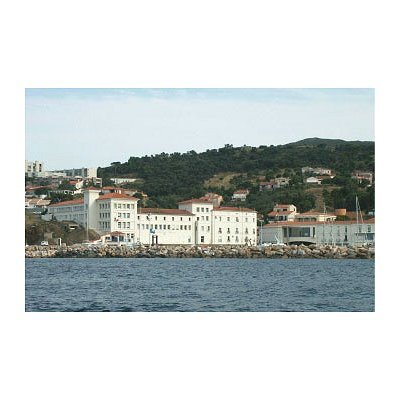
    Oceanological Observatory
    Hosted by the Oceanological Observatory in Banyuls-sur-Mer

    The goal of this intensive course is to introduce the students to the range of space-related biological disciplines in which research is being carried out in Europe. Students will attend lectures on the space environment, the origins of life, and the role of gravity in cellular, animal and plant development. Throughout the two weeks, the students will also create their own life science experiments, practicing practical science as well as teamwork.


    ESA experts

    As the main non-academic partner, ESA will contribute by organising three lectures, which will be presented by ESA experts:

    • Bed rest: A ground based analogue to spaceflight (Dr. P. Jost)
    • University student experiments on board the International Space Station (Dr. R. Schonenborg)
    • Flight opportunities for microgravity life sciences (Dr E. Brinckmann)

    During an e-learning session students will also follow a lecture given by an ESA astronaut.

    Collaboration

    The ERASMUS/SOCRATES-supported course is carried out in collaboration with five European universities, namely University Pierre et Marie Curie Paris VI, France, in cooperation with the Banyuls Laboratory; University of Bonn, Germany; University of Sassari, Italy; University of Nottingham, England and Autonomous University of Madrid, Spain.

    Rate this

    Views

    Share

    • Currently 0 out of 5 Stars.
    • 1
    • 2
    • 3
    • 4
    • 5
    Rating: 0/5 (0 votes cast)

    Thank you for rating!

    You have already rated this page, you can only rate it once!

    Your rating has been changed, thanks for rating!

    1
    Tweet
    • Related links
    • Oceanological Observatory, Banyuls-sur-mer
    • ISS Education Programme - University level activities
    • Human Spaceflight education

    Connect with us

    • RSS
    • Youtube
    • Twitter
    • Flickr
    • G+
    • Facebook
    • Livestream
    • Subscribe
    • App Store
    • LATEST ARTICLES
    • · ESA astronaut Timothy Peake set fo…
    • · Space drives e-mobility
    • · Proba-V opens its eyes
    • · First new Galileo satellite arrive…
    • · Next destination: space
    • FAQ

    • Jobs at ESA

    • Site Map

    • Contacts

    • Terms and conditions