• → European Space Agency

      • Space for Europe
      • Space News
      • Space in Images
      • Space in Videos
    • About Us

      • Welcome to ESA
      • DG's News and Views
      • For Member State Delegations
      • Business with ESA
      • ESA Exhibitions
      • ESA Publications
      • Careers at ESA
    • Our Activities

      • Space News
      • Observing the Earth
      • Human Spaceflight
      • Launchers
      • Navigation
      • Space Science
      • Space Engineering
      • Operations
      • Technology
      • Telecommunications & Integrated Applications
    • For Public

    • For Media

    • For Educators

    • For Kids

    • ESA

    • Human Spaceflight

    • Astronauts

    • International Space Station

    • Research

    • Education

    • About the International Space Station
    • Pushing the boundaries of science and technology
    • Current status
    • Where is the International Space Station?
    • Building the International Space Station
    • International collaboration
    • International Space Station legal framework
    • Europe's partners
    • European participation
    • Space Station elements
    • Control centres
    • How much does it cost?

    ESA > Our Activities > Human Spaceflight > International Space Station

    'Wings' attached to Space Station

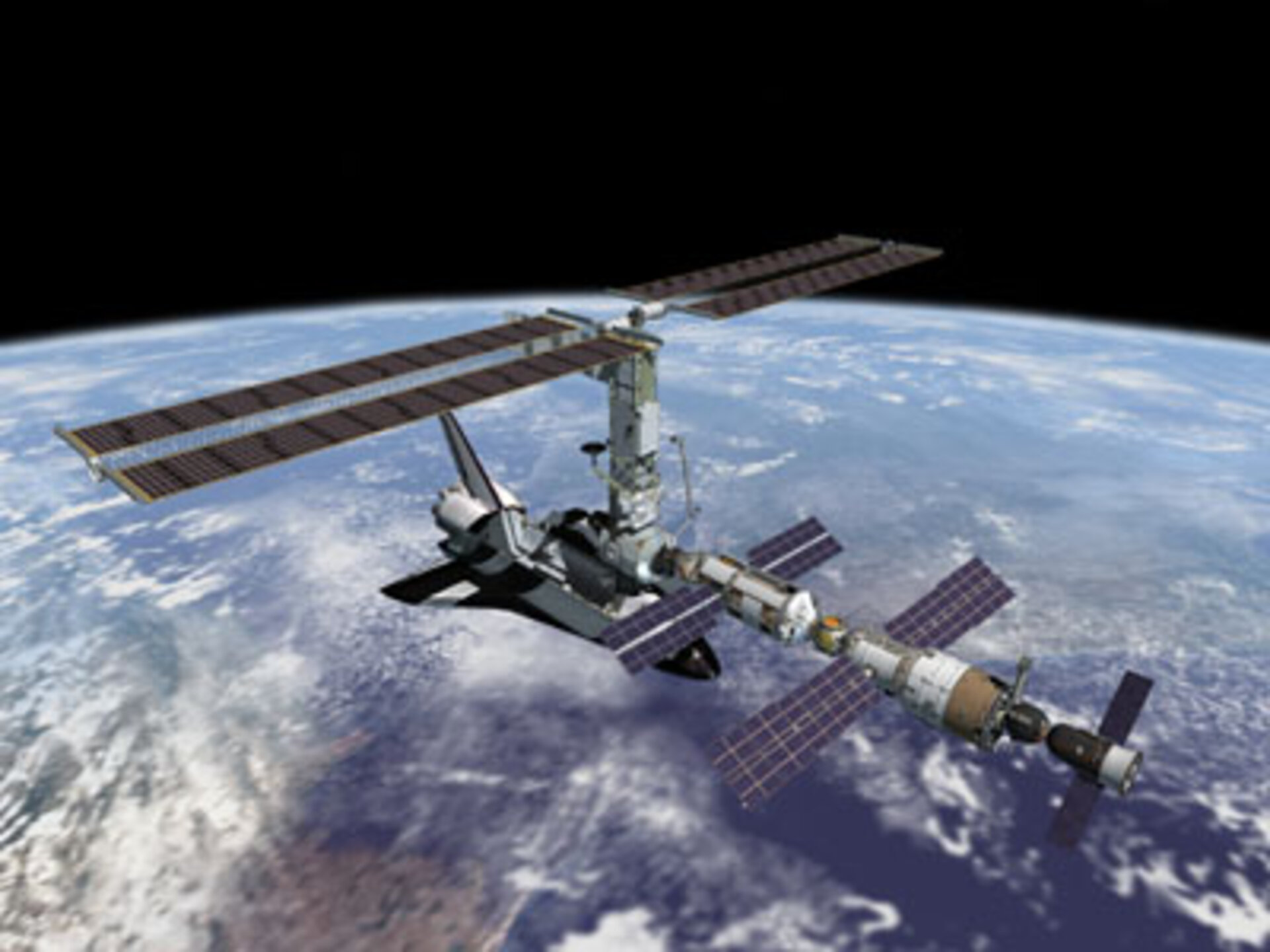
    ISS - artist's'impression
    5 December 2000

    Spanning 73 metres from tip to tip, the new solar array panels have now been installed on the International Space Station (ISS).

    The panels, brought to the ISS by the space shuttle Endeavour, will boost the power available to the space station fivefold. Once the solar arrays are fully operational the ISS will be one of the brightest objects in the night sky.

    The folded wings, weighing 17 tonnes, were put in place by means of a robotic arm operated from inside Endeavour by Canadian astronaut, Marc Garneau. Guiding his movements were his space-walking colleagues Joe Tanner and Carlos Noriega, who bolted the structure to the space station.

    The first of the two solar wings was deployed on Sunday taking just 13 minutes. A slight hitch meant that deployment of the second solar wing, on the port side, was delayed until Monday. An apparent slackness in one of the two blankets that make up the starboard wing needed closer examination before going ahead with the second array.

    The three-man crew of the ISS, who have been on board since the beginning of November, watched the procedure from inside the ISS. However, they will have to wait until Friday to meet the crew of the Endeavour. Given the difference in pressure between the spacecraft, the hatches leading between the two vessels must remain sealed until the construction work being carried out by the crew of the Endeavour is completed.

    The ISS, which is the largest engineering project ever undertaken, is being built jointly by the United States, Canada, Russia, Japan and l0 Member States of ESA.
    Rate this

    Views

    Share

    • Currently 0 out of 5 Stars.
    • 1
    • 2
    • 3
    • 4
    • 5
    Rating: 0/5 (0 votes cast)

    Thank you for rating!

    You have already rated this page, you can only rate it once!

    Your rating has been changed, thanks for rating!

    13
    Tweet
    • Related news
      • Expedition 1 crew enters the International Space Station
        • First crew starts living and working on the International Space Station
          • Space Shuttle Endeavour ready for sixth flight to the International Space Station
            • Successful launch of Endeavour
              • 'Wings' attached to Space Station
                • Christmas in space
                • Related links
                • ISS European participation
                • ISS (ESA pages)
                • ISS (NASA pages)
                • Canadian Space Agency
                • ISS video

    Connect with us

    • RSS
    • Youtube
    • Twitter
    • Flickr
    • G+
    • Facebook
    • Livestream
    • Subscribe
    • App Store
    • LATEST ARTICLES
    • · ESA astronaut Timothy Peake set fo…
    • · Space drives e-mobility
    • · Proba-V opens its eyes
    • · First new Galileo satellite arrive…
    • · Next destination: space
    • FAQ

    • Jobs at ESA

    • Site Map

    • Contacts

    • Terms and conditions