• → European Space Agency

      • Space for Europe
      • Space News
      • Space in Images
      • Space in Videos
    • About Us

      • Welcome to ESA
      • DG's News and Views
      • For Member State Delegations
      • Business with ESA
      • ESA Exhibitions
      • ESA Publications
      • Careers at ESA
    • Our Activities

      • Space News
      • Observing the Earth
      • Human Spaceflight
      • Launchers
      • Navigation
      • Space Science
      • Space Engineering
      • Operations
      • Technology
      • Telecommunications & Integrated Applications
    • For Public

    • For Media

    • For Educators

    • For Kids

    • ESA

    • Human Spaceflight

    • Astronauts

    • International Space Station

    • Research

    • Education

    • Our vision
    • About human spaceflight
    • Current missions
    • Volare
    • Bedrest studies
    • ATV
    • Concordia
    • Past missions

      • PromISSe
      • Mars500
      • MagISStra
      • DAMA mission
      • Node-3 & Cupola
      • Expert
      • Alissé
      • OasISS
      • Columbus
      • Esperia
      • Celsius
      • Astrolab
      • Eneide
      • DELTA
      • Cervantes
      • Odissea
      • Marco Polo
      • Andromède
      • STS-100
    • Multimedia
    • Video
    • Multimedia gallery
    • RSS feeds
    • Resources
    • Experiment archive
    • Services
    • Subscribe

    ESA > Our Activities > Human Spaceflight

    Listening to the past and talking to the future

    Aquanaut teamwork during Neemo
    18 July 2012

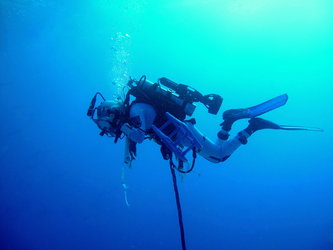
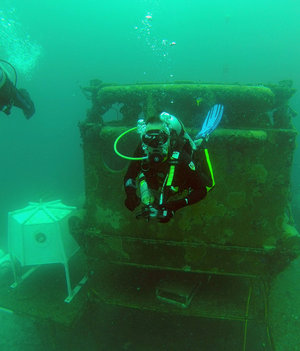
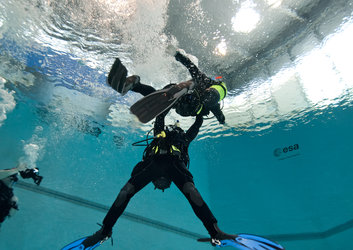
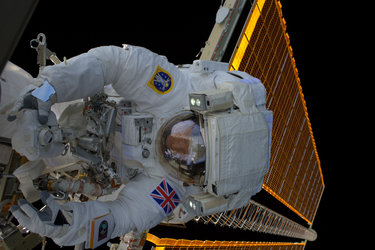
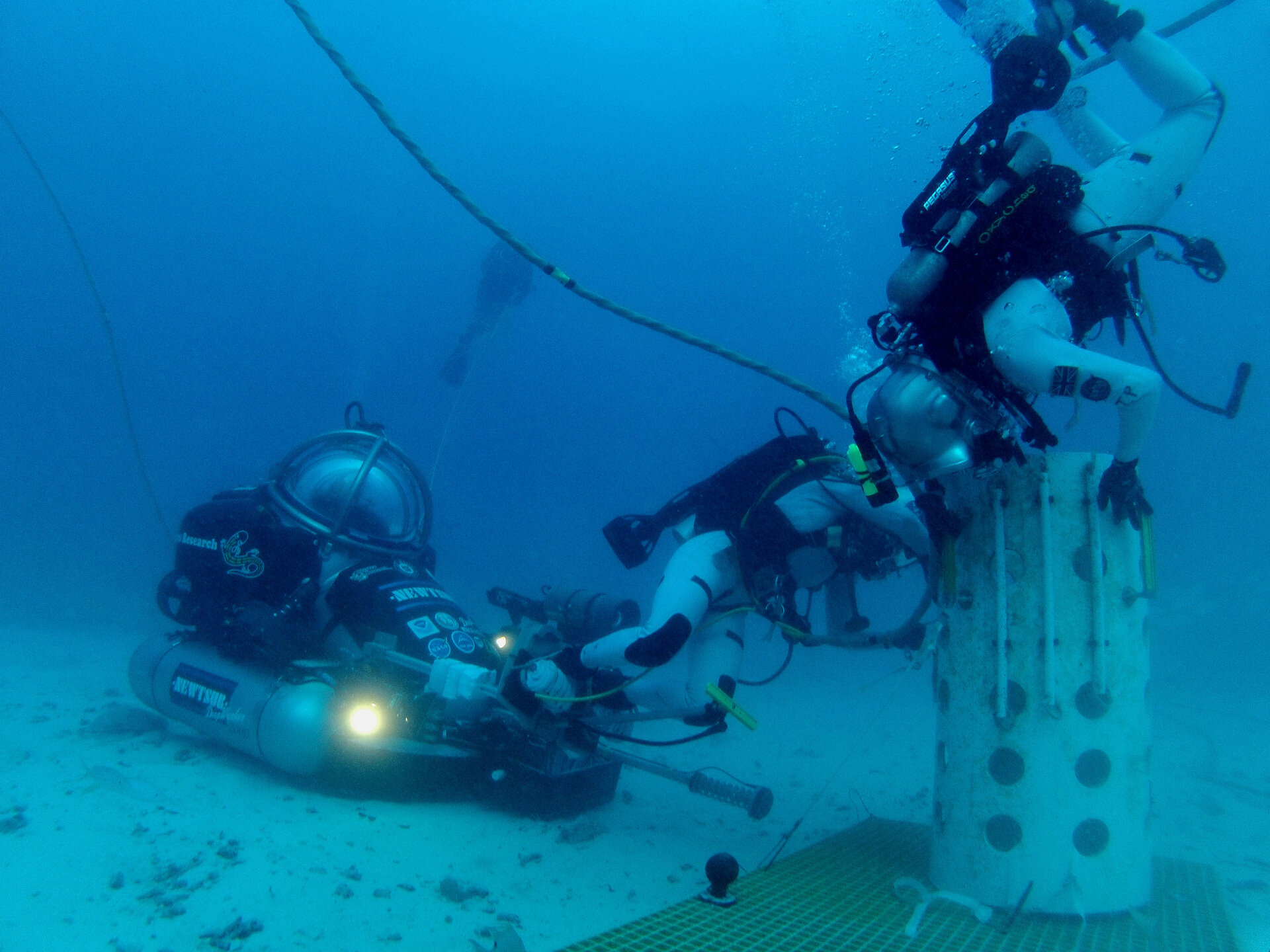
    ESA astronaut Tim Peake recently spent 12 days underwater with three other aquanauts to look at the best ways for astronauts to explore an asteroid. Behind the scenes, a large support team was learning through experience.

    No effort was spared to make the experience as realistic as possible. This Neemo mission simulated a mission to an asteroid 15 million km from Earth, almost 39 times further than the Moon.

    At this distance, it would take a message from Earth around 50 seconds to reach the crew.

    If an astronaut replied to a message from ground control immediately, people on Earth would still have to wait a minimum of 1 minute and 40 seconds before hearing the reply. Any urgent questions or interruptions are impossible.

    ESA's Stevenin in Aquarius control room

    Neemo was the first complex operation where the astronauts and mission control had to work with a time delay, so they had to learn how it affects communications.

    ESA’s Hervé Stevenin has years of experience as crew communicator for the International Space Station and was invited to be a capcom for Neemo: “On the Station, when we talk to astronauts the reply is instantaneous.

    “With Neemo, we had to completely rethink communications – we were listening to the past and talking to the future at the same time.”


    Underwater chatting through time

    The mission controllers quickly found ways to work with the communication delay. First of all, stopwatches reminded them when to expect a reply from the underwater astronauts.

    Then it became obvious that some voice messages should be announced. Hervé explains, “We introduced important messages by announcing the addressee and subject.
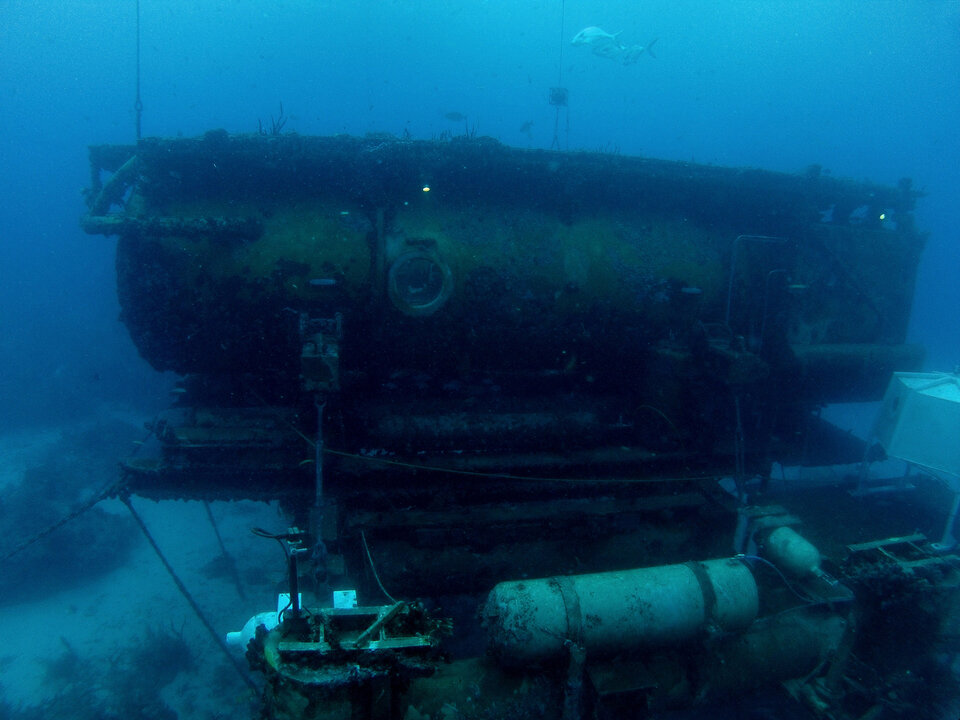
    Neemo base

    “For example, ‘Aquarius, MCC [Mission Control Centre], on Space to Ground One, incoming message in 10 seconds for Tim and geophysical array deployment.’”

    The pause gave the aquanauts time to stop what they were doing and pay attention. This avoided repeating messages, which could delay work for three minutes or more.

    Finally, a new communication system was tested. Many non-urgent messages were sent through a text chat programme that allowed multiple chats at the same time, similar to chat programmes on the Internet. Astronauts could read messages and reply in their own time.

    Text chat: best for an asteroid mission

    Hervé adds: “We found that text chat is the most appropriate communication system for an asteroid mission, accompanied by voice messages to keep a human touch.

    “If a voice message is complex, texting the same message as well is very helpful.”

    If a voice message is complex, texting the same message as well is very helpful.

    This Neemo mission was one of the most complex underwater simulations ever conducted. More than 80 engineers, divers and others worked 14-hour days to support the aquanauts from NASA’s mobile mission control, boats anchored above the Aquarius base, and even from submersibles.

    In addition to communication duties, Hervé supported Neemo as a scuba diver: “Being a Neemo working diver helped capcoms to understand the constraints and challenges of the environment in which the aquanauts were working.”
    Rate this

    Views

    Share

    • Currently 0 out of 5 Stars.
    • 1
    • 2
    • 3
    • 4
    • 5
    Rating: 0/5 (0 votes cast)

    Thank you for rating!

    You have already rated this page, you can only rate it once!

    Your rating has been changed, thanks for rating!

    94
    Tweet
    • Related articles
      • Underwater jetpacks with Neemo
        • Follow Neemo
          • The pressure is on for aquanauts
            • Tim scuba diving for space
              • Tim gets his feet wet
                • Timothy Peake
                  • The European Astronaut Centre
                    • Neutral buoyancy EVA training
                    • Related links
                    • Watch a replay of Tim speaking to students from Neemo
                    • NASA Neemo
                    • Neemo webcam
                    • Neemo on Facebook
                    • @ESAstro_trainer
                    • Follow on Twitter
                    • @ESAstro_trainer
                    • @Astro_TimPeake
                    • @NASA_NEEMO
                    • Astronaut blog

    Connect with us

    • RSS
    • Youtube
    • Twitter
    • Flickr
    • G+
    • Facebook
    • Livestream
    • Subscribe
    • App Store
    • LATEST ARTICLES
    • · Proba-V opens its eyes
    • · First new Galileo satellite arrive…
    • · Next destination: space
    • · Leak repaired on International Spa…
    • · After Chelyabinsk: European expert…
    • FAQ

    • Jobs at ESA

    • Site Map

    • Contacts

    • Terms and conditions