• → European Space Agency

      • Space for Europe
      • Space News
      • Space in Images
      • Space in Videos
    • About Us

      • Welcome to ESA
      • DG's News and Views
      • For Member State Delegations
      • Business with ESA
      • ESA Exhibitions
      • ESA Publications
      • Careers at ESA
    • Our Activities

      • Space News
      • Observing the Earth
      • Human Spaceflight
      • Launchers
      • Navigation
      • Space Science
      • Space Engineering
      • Operations
      • Technology
      • Telecommunications & Integrated Applications
    • For Public

    • For Media

      • Media
      • ESA TV
      • Videos for professionals
      • Photos
    • For Educators

    • For Kids

    • ESA

    • Mars500

    • Human Spaceflight

    • Background
    • Study overview
    • The isolation facility
    • Science
    • Scientific protocols
    • ESA and isolation studies
    • European 520-day isolation crew
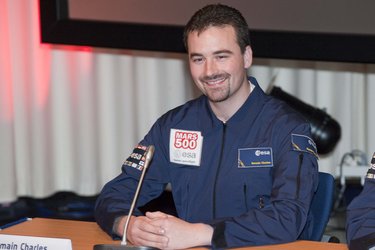
    • Romain Charles
    • Diego Urbina
    • European 105-day crew
    • Cyrille Fournier
    • Oliver Knickel
    • Downloads
    • Mars500 on ESA-TV
    • Mars500 photo gallery
    • Information Kit, English (pdf)
    • Information Kit, Russian (pdf)
    • Follow us
    • ESA on Youtube
    • Question and answers with Mars500 crew
    • Mars500 Diego

    ESA > Our Activities > Human Spaceflight > Mars500

    Mars500: two months away from ‘arrival at Earth’

    1 September 2011

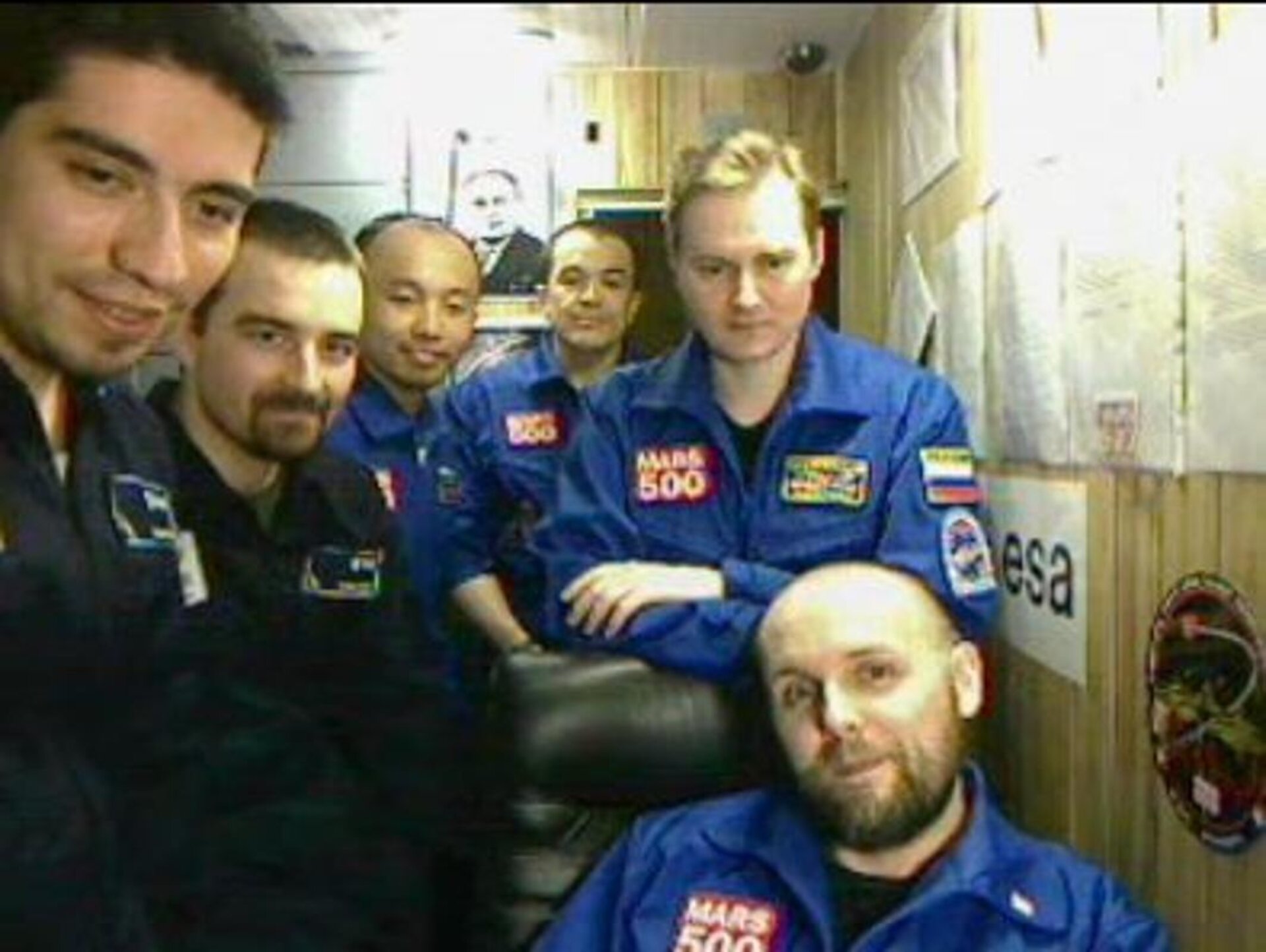
    The ‘mission’ to Mars is now generating unique data – nobody has been isolated as long as these six marsonauts. Soon, the communications delay will end and the crew will feel that much closer to opening the hatch on 4 November.

    The first full simulation of a mission to Mars and back is proceeding smoothly in the special facility at the Institute of Biomedical Problems in Moscow.

    In mid-August the experiment passed the milestone of 438 days that was previously the longest time ever spent apart from the natural world, by cosmonaut Valeri Polyakov aboard Russia’s Mir space station in 1994–95.

    Logistics, psychology, health, experiments – now everything is in uncharted territory and providing valuable information for that moment when humans eventually venture out to the planets.

    Long two months

    Diego and Romain with red goggles

    At the moment the crew is faced with the most demanding and difficult period of the mission, with strong elements of monotony, sensory deprivation and general weakness.

    Apart from being pale, the six men are coping with the situation remarkably well. They are always looking for new ways of staying motivated and relaxed.
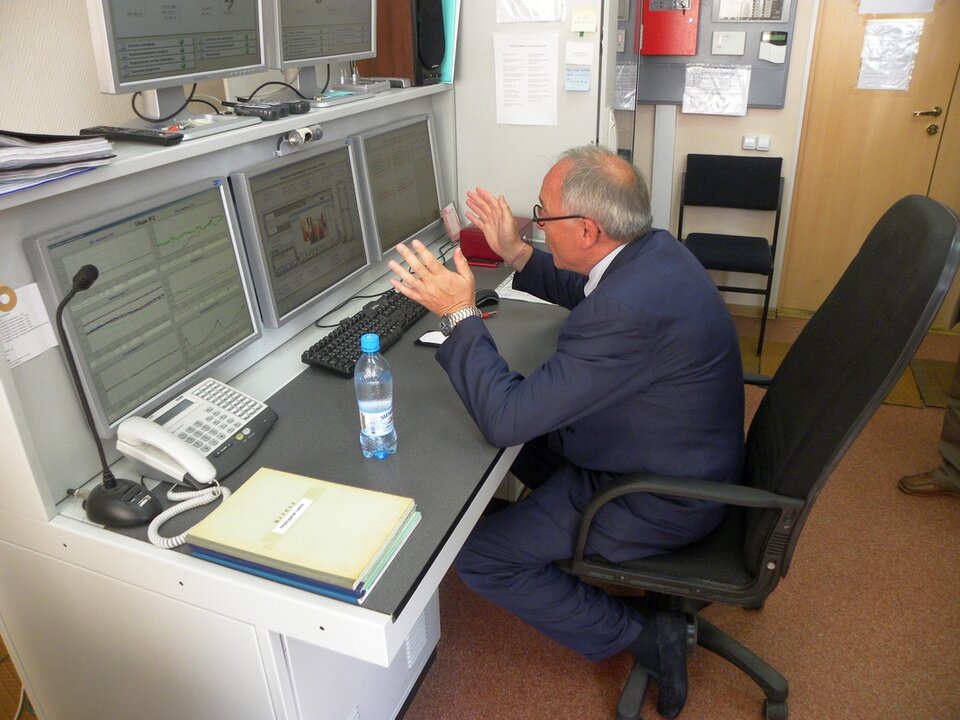

    ESA Director General talking with Mars500
    ESA Director General talking with Mars500

    They are occupied not only with a multitude of scientific experiments and maintaining their ‘spacecraft’, but also keep busy with creative activities.

    European participants Diego Urbina and Romain Charles are writing diaries, taking photos and making videos, although less often than at the beginning of their mission.

    Diego’s deep involvement with Twitter (@diegou) is giving the general public an insider’s view of daily life in the Mars500 modules.

    ESA Director General talking with Mars500
    As he was seen on Mars500

    The first real step towards ‘arrival back at Earth’ will take place on 15 September, when direct communication with the crew will be re-established.

    A varying artificial delay was introduced during the mission into communications with ground control, as would occur naturally on a real Mars mission because of the great distances involved.

    The delay has been reducing by about 30 seconds a week during the journey back, dropping to a minute by the end of August. The first planned realtime communication with the crew is a medical check-up.

    The screen capture showing where the 'spacecraft' is now

    The realtime link will surely be used for cheering the crew up with visitors at mission control – especially visitors speaking their own language. Video messages have already provided brighter moments in the daily routine.

    The end of the mission on 4 November is only two months away. The marsonauts are looking forward to that precious moment when the hatch is opened and they can step out, meet their families and friends, and breathe crisp fresh air.

    Rate this

    Views

    Share

    • Currently 0 out of 5 Stars.
    • 1
    • 2
    • 3
    • 4
    • 5
    Rating: 0/5 (0 votes cast)

    Thank you for rating!

    You have already rated this page, you can only rate it once!

    Your rating has been changed, thanks for rating!

    37
    Tweet
    • Mars500 logo
      Mars500 logo
      Mars500
      • End of the Mars500 520-day isolation
        • Mars500 quick facts
          • Mars500 crew
          • Partners
          • Institute of Biomedical Problems (IBMP)
          • Mars500 (IBMP)
          • Mars500 Photos
          • Gallery 1: Before
          • Gallery 2: Towards Mars
          • Gallery 3: Mars
          • Gallery 4: Return trip
          • Mars500 Mission Diary
          • Previous diary entries
          • Diary #11 - 26.1.2011
          • Diary #12 - 2.2.2011
          • Diary #13 - 10.2.2011
          • Diary #14 - 1.3.2011
          • Diary #15 - 3.6.2011
          • Diary #16 - 3.6.2011
          • Diary #17 - 17.8.2011
          • Diary #18 - 13.10.2011
          • Diary #19 - 25.10.2011
          • Mars500 Video Diary
          • Previous diary videos
          • Video #10 - 12.1.2011
          • Video #11 - 14.2.2011
          • Video #12 - 21.3.2011
          • Video #13 - 26.8.2011
          • Video #14 - 1.9.2011
          • Video #15 - 27.10.2011
          • Online video
          • ESA TV: One year inside

    Connect with us

    • RSS
    • Youtube
    • Twitter
    • Flickr
    • G+
    • Facebook
    • Livestream
    • Subscribe
    • App Store
    • LATEST ARTICLES
    • · Rare merger reveals secrets of gal…
    • · Watching for hazards: ESA opens as…
    • · ESA astronaut Timothy Peake set fo…
    • · Space drives e-mobility
    • · Proba-V opens its eyes
    • FAQ

    • Jobs at ESA

    • Site Map

    • Contacts

    • Terms and conditions