• → European Space Agency

      • Space for Europe
      • Space News
      • Space in Images
      • Space in Videos
    • About Us

      • Welcome to ESA
      • DG's News and Views
      • For Member State Delegations
      • Business with ESA
      • ESA Exhibitions
      • ESA Publications
      • Careers at ESA
    • Our Activities

      • Space News
      • Observing the Earth
      • Human Spaceflight
      • Launchers
      • Navigation
      • Space Science
      • Space Engineering
      • Operations
      • Technology
      • Telecommunications & Integrated Applications
    • For Public

    • For Media

    • For Educators

    • For Kids

    • ESA

    • Home

    • Launch vehicles

    • Europe's Spaceport

    • New Technologies

    • Strategy for launchers
    • Launcher strategy
    • Future Launchers Preparatory Programme
    • International cooperation
    • Launchers and industry
    • Launcher history
    • A look at the past
    • Ariane 1, 2, 3
    • Ariane 4
    • Launches
    • Previous launches
    • Launch schedule
    • Multimedia
    • Image gallery
    • Video gallery
    • RSS feeds
    • Flyers
    • Vega - Europe's small launcher
    • Soyuz - Europe's medium launcher
    • IXV - Intermediate Experimental Vehicle
    • NGL - Europe's Next-Generation Launcher
    • Launchers on your desktop
    • Screensavers and wallpaper
    • Services
    • Glossary
    • Frequently asked questions
    • Comments

    ESA > Our Activities > Launchers

    Anomalous behaviour affects firing test of Vega’s Zefiro 9 motor

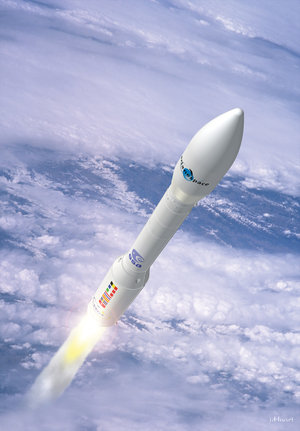
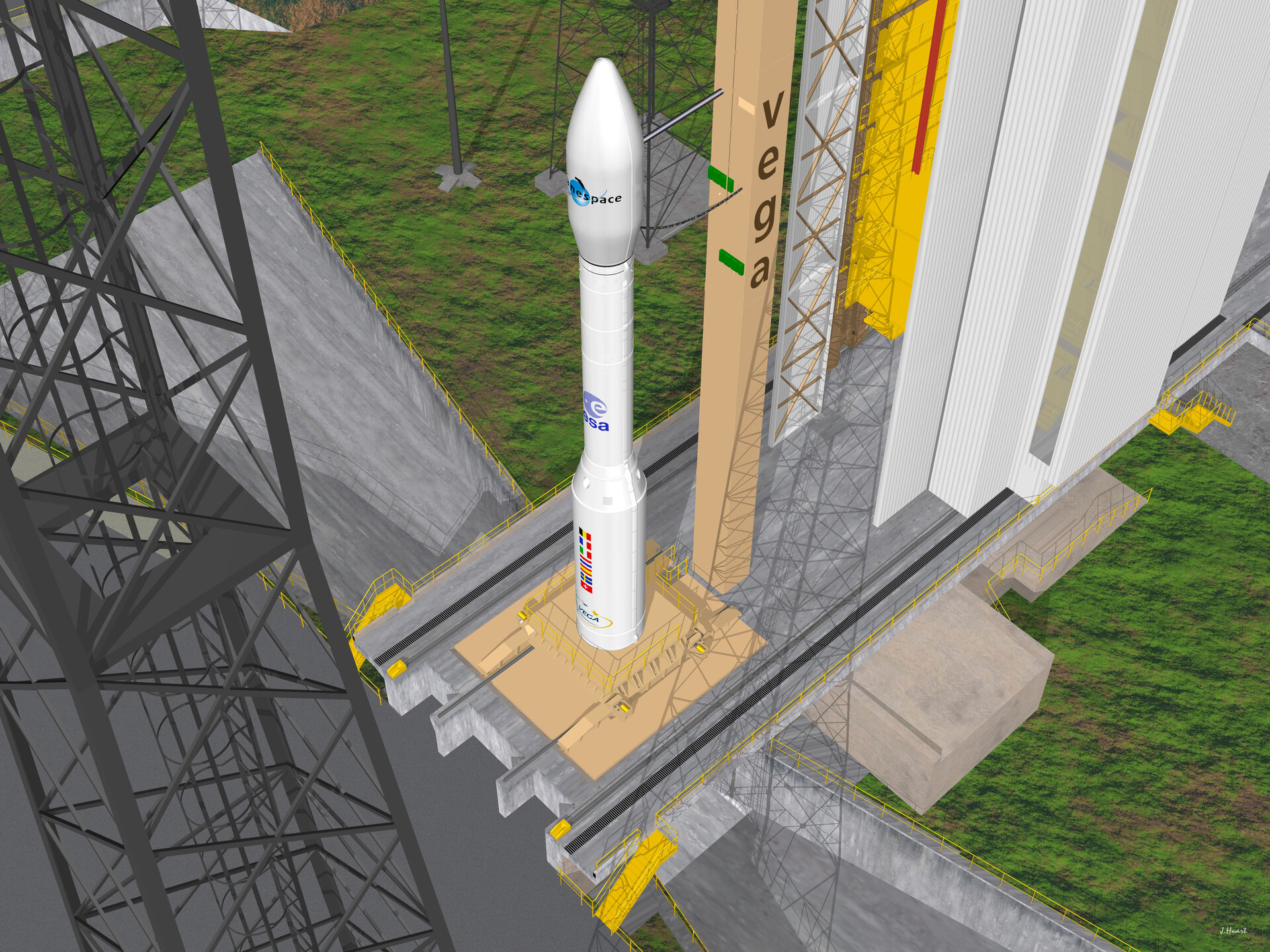
    Artist's view of Vega
    29 March 2007

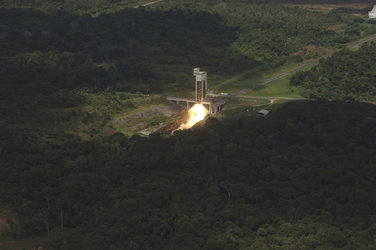
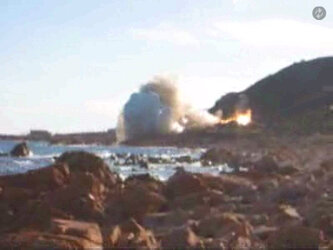
    On Wednesday 28 March, at around 15:00, the second firing test of the solid rocket motor ‘Zefiro 9’ – the motor that will power the third stage of ESA’s future small launcher Vega - took place at the Salto Di Quirra Inter-force Test Range in Sardinia, Italy.

    The first results of the test indicate that the behaviour of the motor and the actuation of the nozzle were in accordance with predictions up until 35 seconds after ignition, when a sudden drop in the motor’s internal pressure was detected. The pressure stabilised at a value lower than the nominal, leading to a longer combustion time than the expected 105 seconds.

    More than 400 sensors fitted to the motor monitored its behaviour during and after the firing test. The first visual investigation conducted on site after the firing showed that the nozzle of the motor was damaged, but no further damage was observed on the motor case or on the test bench.

    ESA and Industry teams have already started a thorough analysis and assessment of the data collected during the test. The causes of the anomaly have not been identified yet and an investigation board is being set up for this purpose. The board shall recommend preventative and other appropriate actions to preclude the recurrence of similar anomalies for the finalisation of the motor qualification.

    The first Zefiro 9 firing test took place successfully in December 2005

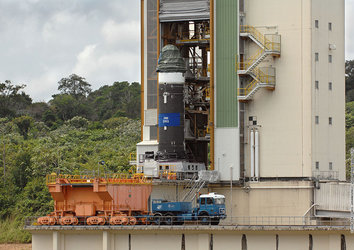
    This was the second firing test of the Zefiro 9 motor. The first test took place successfully in December 2005. The first firing tests of the other Vega solid rocket motors - Zefiro 23 (second stage) and P80 (first stage) held on 26 June 2006 at Salto di Quirra and on 30 November 2006 in Kourou respectively, also went well. Three more firing tests, in the years 1999-2000, were conducted successfully for the Zefiro 16 motor, the forerunner of the Zefiro family of solid rocket motors.

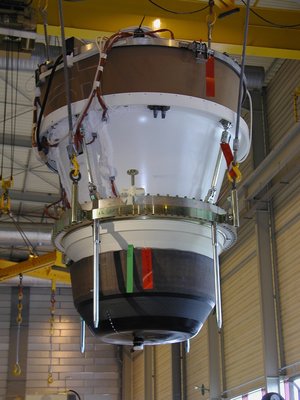
    The Zefiro 9 motor is developed by AVIO SpA and is based on advanced technologies in the field of solid rocket propulsion. It has an overall height of 3.17 m and a diameter of 1.92 m, contains approximately 10 tonnes of propellant and provides a maximum thrust of 305 kilonewton in vacuum.

    Vega is a single body launcher composed of three solid propellant stages and a liquid propellant upper module. It is approximately 30 metres high and weighs a total of 137 tonnes at lift-off. Vega will be able to launch satellites of up to 1500 kg into a 700 km-altitude polar orbit, and it will also be useable in a wide range of scientific and Earth observation missions. The maiden flight for ESA’s small launcher remains scheduled to take place in 2008.

    The Vega launcher is being developed with the support of seven ESA Member States (Italy, France, Belgium, Switzerland, Spain, the Netherlands and Sweden). ESA has contracted the development activities of the launcher to ELV SpA, a joint venture between Avio SpA and the Italian Space Agency (ASI).

    Rate this

    Views

    Share

    • Currently 0 out of 5 Stars.
    • 1
    • 2
    • 3
    • 4
    • 5
    Rating: 0/5 (0 votes cast)

    Thank you for rating!

    You have already rated this page, you can only rate it once!

    Your rating has been changed, thanks for rating!

    41
    Tweet
    • Vega
    • Vega net
    • More about...
    • Vega
    • Vega elements
    • Related news
      • Successful firing of Vega’s first-stage motor in Kourou
        • Kourou prepares for P80 motor test
          • Vega upper composite passes tests at ESTEC
            • First Vega P80 nozzle delivered
              • Successful firing test for Vega
                • Vega's second stage motor roars to life
                  • Control system tests begin for Vega’s main engine
                    • Successful first test for Vega's Zefiro 9 engine

    Connect with us

    • RSS
    • Youtube
    • Twitter
    • Flickr
    • G+
    • Facebook
    • Livestream
    • Subscribe
    • App Store
    • LATEST ARTICLES
    • · ESA astronaut Timothy Peake set fo…
    • · Space drives e-mobility
    • · Proba-V opens its eyes
    • · First new Galileo satellite arrive…
    • · Next destination: space
    • FAQ

    • Jobs at ESA

    • Site Map

    • Contacts

    • Terms and conditions