• → European Space Agency

      • Space for Europe
      • Space News
      • Space in Images
      • Space in Videos
    • About Us

      • Welcome to ESA
      • DG's News and Views
      • For Member State Delegations
      • Business with ESA
      • ESA Exhibitions
      • ESA Publications
      • Careers at ESA
    • Our Activities

      • Space News
      • Observing the Earth
      • Human Spaceflight
      • Launchers
      • Navigation
      • Space Science
      • Space Engineering
      • Operations
      • Technology
      • Telecommunications & Integrated Applications
    • For Public

    • For Media

    • For Educators

    • For Kids

    • ESA

    • Home

    • Launch vehicles

    • Europe's Spaceport

    • New Technologies

    • Strategy for launchers
    • Launcher strategy
    • Future Launchers Preparatory Programme
    • International cooperation
    • Launchers and industry
    • Launcher history
    • A look at the past
    • Ariane 1, 2, 3
    • Ariane 4
    • Launches
    • Previous launches
    • Launch schedule
    • Multimedia
    • Image gallery
    • Video gallery
    • RSS feeds
    • Flyers
    • Vega - Europe's small launcher
    • Soyuz - Europe's medium launcher
    • IXV - Intermediate Experimental Vehicle
    • NGL - Europe's Next-Generation Launcher
    • Launchers on your desktop
    • Screensavers and wallpaper
    • Services
    • Glossary
    • Frequently asked questions
    • Comments

    ESA > Our Activities > Launchers

    Vega moves closer to its first liftoff

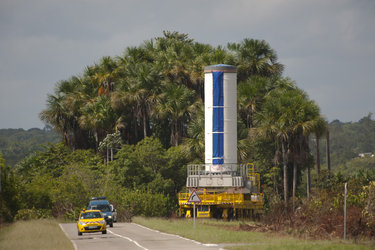
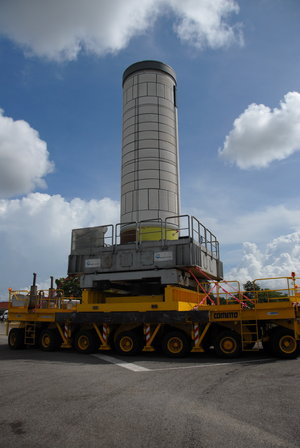
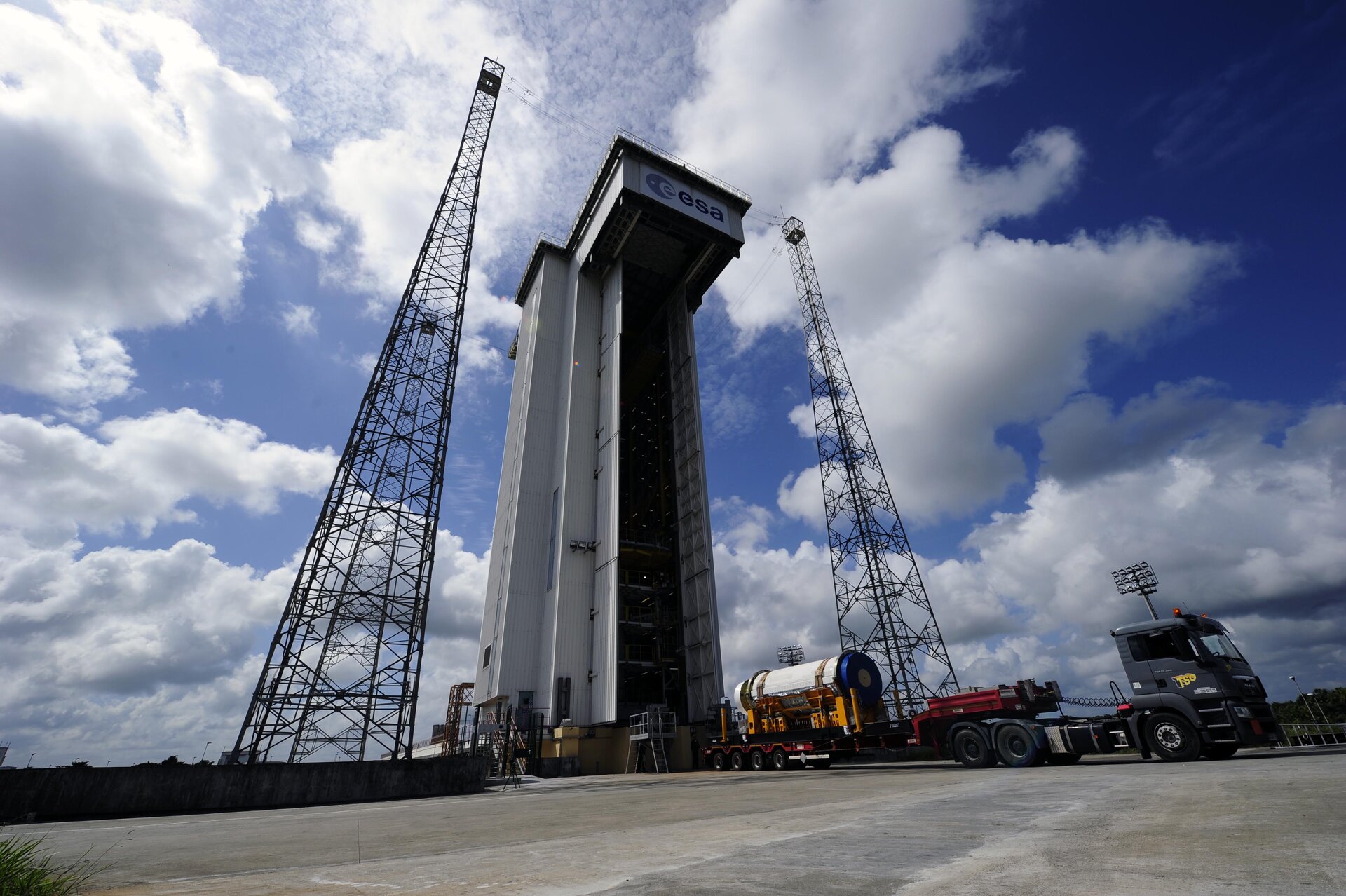
    Zefiro-23 transfer to launch pad
    15 December 2011

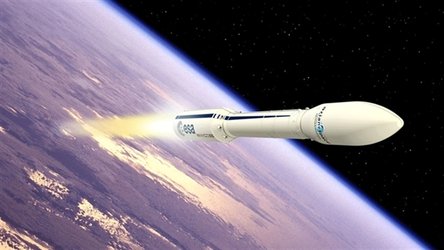
    The integration of Vega’s first, second and third stages is now complete at Europe’s Spaceport in French Guiana. The new rocket is moving full speed ahead towards its maiden flight at the end of January.

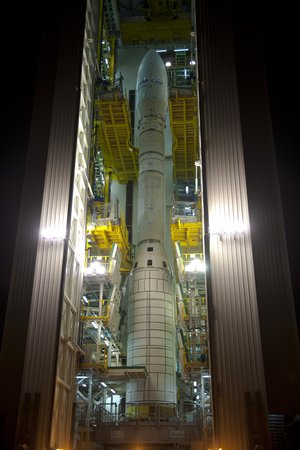
    The first Vega launch campaign began in November with the installation and testing inside the mobile gantry of the hundred-tonne solid-propellant first stage, the P80, and the Interstage-1/2 structure that links the first two stages.
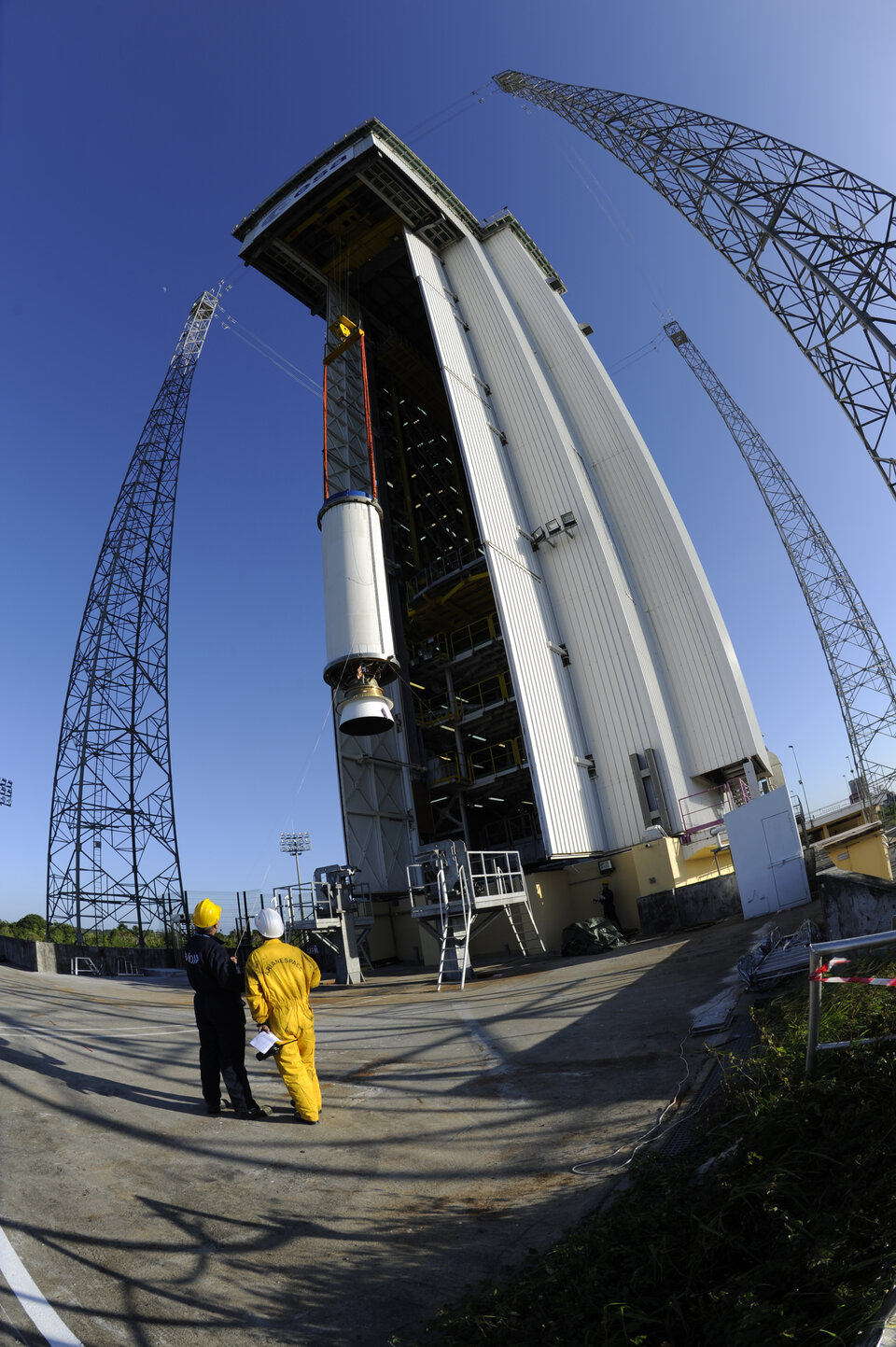
    Hoisting of Zefiro-23

    The booster’s final acceptance included testing of the thrust vector control system. The large nozzle was swivelled to simulate different flight profiles. Electrical and avionics interface and functional tests were also performed.

    The next step was to move the 30-tonne solid-propellant second stage, the Zefiro-23, from the Vega Booster Storage and Preparation Building, to the pad. As with the P80, the second stage underwent final acceptance, including testing of its thrust vector control system.

    Finally, the 10-tonne Zefiro-9 solid-propellant third stage was added on top of the launcher last week, marking another milestone of the campaign. Electrical and functional tests are now underway.
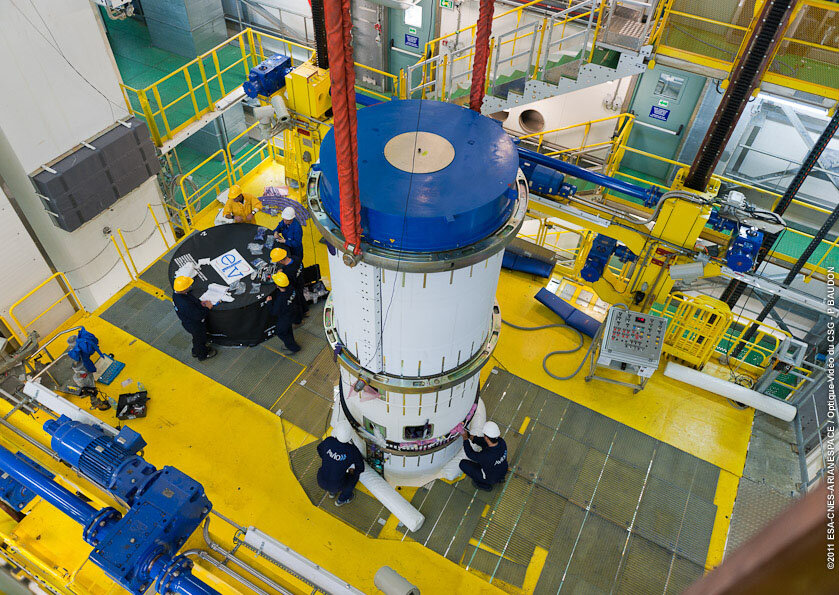

    Zefiro-9 integration

    The second and last Flight Readiness Review, held on 7 December, gave the go-ahead for the final preparation and launch.

    In the coming days, the AVUM – Attitude &Vernier Upper Module – liquid-propellant fourth stage will be moved to the pad and added to the launcher.

    Final preparations for launch in January
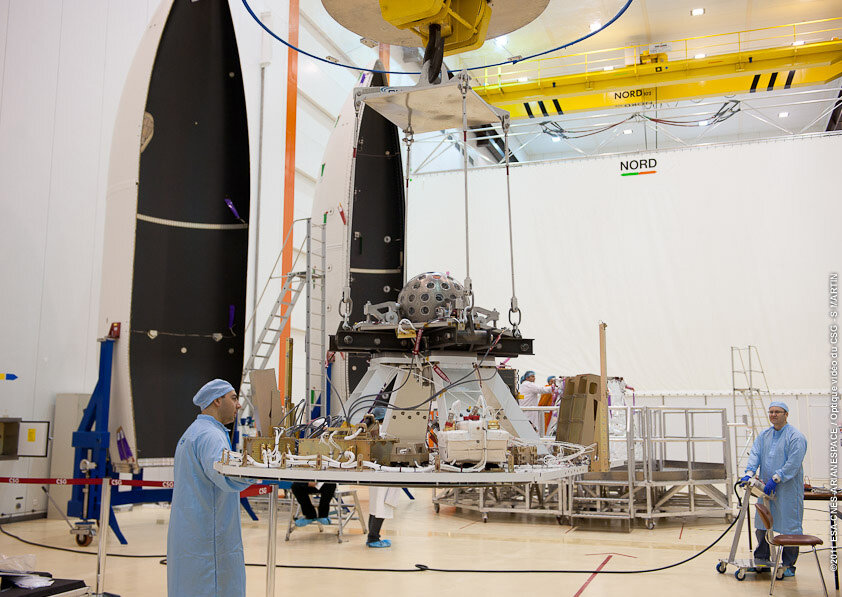
    LARES preparations

    In parallel to the launcher activities, the LARES laser relativity satellite from Italy’s ASI space agency has undergone initial fit checks with the payload adapter and fairing.

    A flexible system

    LARES, ALMASat-1 and CubeSats preparations

    By the end of the year, LARES and at least six small CubeSats and ALMASat-1 from European universities will be ready and enclosed in the fairing, well in time for the launch.

    January will see the integration of the ‘upper composite’ – the fairing and payload – followed by final checkout of the fully integrated launcher and the countdown rehearsal.

    The launch window for Vega’s maiden flight, VV01, opens on 26 January and closes in the first week of February.

    This flight will pave the way for ESA’s missions to demonstrate flexibility and for commercial missions operated by launch provider Arianespace.

    Preliminary feasibility studies for four Earth observation missions and one science mission are also underway.

    A flexible system

    Vega is designed to cope with a wide range of missions and payload configurations in order to respond to different market opportunities and provide great flexibility.

    In particular, it offers configurations able to handle payloads ranging from a single satellite up to one main satellite plus six microsatellites.

    Vega is compatible with payload masses ranging from 300 kg to 2500 kg, depending on the type and altitude of the orbit required by the customers. The benchmark is for 1500 kg into a 700 km-altitude polar orbit.

    Rate this

    Views

    Share

    • Currently 0 out of 5 Stars.
    • 1
    • 2
    • 3
    • 4
    • 5
    Rating: 0/5 (0 votes cast)

    Thank you for rating!

    You have already rated this page, you can only rate it once!

    Your rating has been changed, thanks for rating!

    79
    Tweet
    • Launchers
    • Vega
    • Related news
      • First Vega launch campaign aims for January liftoff
        • Vega getting ready for exploitation
          • First Vega starts journey to Europe’s Spaceport
            • Vega completes mechanical system tests
              • Europe’s new, small launcher takes shape
                • Vega test campaign starts at Europe’s Spaceport
                  • Vega launcher production contracts signed by ESA, Arianespace and ELV
                  • Online video
                  • Vega dry-run (time lapse)

    Connect with us

    • RSS
    • Youtube
    • Twitter
    • Flickr
    • G+
    • Facebook
    • Livestream
    • Subscribe
    • App Store
    • LATEST ARTICLES
    • · Proba-V opens its eyes
    • · First new Galileo satellite arrive…
    • · Next destination: space
    • · Leak repaired on International Spa…
    • · After Chelyabinsk: European expert…
    • FAQ

    • Jobs at ESA

    • Site Map

    • Contacts

    • Terms and conditions