ESA is helping to make road transport more effective
Space is the usual business of a space agency, so it may come as a surprise that the European Space Agency (ESA) is giving some attention to road transport.
The agency is designing and building the satellites that will make up the space segment of Galileo, Europe's own global satellite navigation system. When Galileo becomes fully operational in 2008, road vehicles fitted with special receivers will be able to use signals broadcast by the satellites to determine their positions with unprecedented accuracy. Such information will open up new ways of managing traffic, leading to better road safety, fewer traffic jams and more efficient journeys. Already, ESA is assessing some of the possibilities.
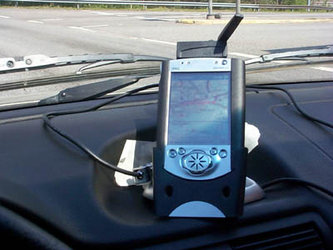
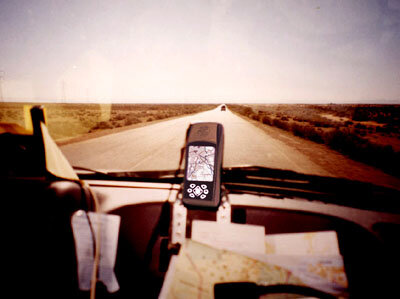
Many cars already have GPS (Global Positioning System) that can tell you how to get to your destination. But what we will be able to have with Galileo is spot-on road traffic management. This is because the future satellite navigation services will be more reliable and much more accurate than the present GPS system.
Metre accuracy can already be achieved with satellite based augmentation systems, such as EGNOS (the European Global Navigation Overlay System), which improves the accuracy and reliability of GPS signals. “Galileo's novel signal structure in combination with regional augmentations will notch the accuracy up again by an order of magnitude into the centimetre range. We have already tested the technology and are pretty sure that Galileo will achieve this. Galileo will also bring an enormous leap in the availability and reliability of positioning signals. We will be able to do things that have been impossible so far. What seems like science fiction today will be science fact in a few years' time," says Hans Fromm from ESA's navigation department.
ESA has recently launched a new intelligent car initiative to test out some of these futuristic scenarios. Industry is being invited to send in proposals. The chief aims are to devise and demonstrate ways of using Galileo signals to improve road safety and manage traffic more efficiently. Initially, however, the new ideas will be tested using the EGNOS signal, which is already being broadcast.
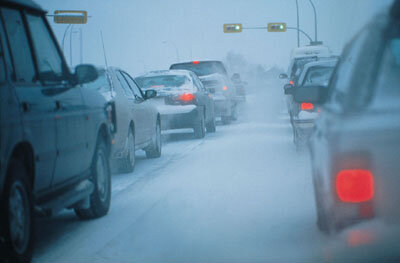
Galileo could revolutionise the experience of future car-driving. The car of tomorrow, for example, might be equipped with an inter-car communication system that sends out a signal over a distance of about 100m containing information on the car's position, direction of travel, speed and any other relevant information. Neighbouring vehicles, similarly equipped, will pick up the signal and automatically take action to continue driving safely. Such "smart" cars would avoid crashes, break softly in front of traffic jams, or wake up a driver who is falling asleep. Ultimately, Galileo's guaranteed signal will be reliable enough for automated driver assistance. Already several car manufacturers are developing systems that integrate different aspects of a car's control system with satellite navigation to provide an auto-pilot for cars.
Other possibilities include warning drivers of traffic jams and suggesting alternative routes; providing drivers with accurate and up-to-the-minute information on motorway lane closures and speed restrictions; and guiding drivers to the nearest parking space, hotel, restaurant or other facility. The list is almost endless.