• → European Space Agency

      • Space for Europe
      • Space News
      • Space in Images
      • Space in Videos
    • About Us

      • Welcome to ESA
      • DG's News and Views
      • For Member State Delegations
      • Business with ESA
      • ESA Exhibitions
      • ESA Publications
      • Careers at ESA
    • Our Activities

      • Space News
      • Observing the Earth
      • Human Spaceflight
      • Launchers
      • Navigation
      • Space Science
      • Space Engineering
      • Operations
      • Technology
      • Telecommunications & Integrated Applications
    • For Public

    • For Media

      • Media
      • ESA TV
      • Videos for professionals
      • Photos
    • For Educators

    • For Kids

    • ESA

    • Navigation

    • EGNOS

    • Galileo

    • Evolution

    • About satellite navigation
    • Europe's satellite navigation services
    • Resources
    • Development Facilities
    • Navipedia
    • Multimedia
    • Galileo's In-Orbit Validation phase - 2012 video
    • Galileo - Europe leads the way 3D video
    • Image gallery
    • Video gallery
    • Documents
    • Galileo factsheet (PDF)
    • Galileo IOV factsheet (PDF)
    • Galileo FOC factsheet (PDF)
    • GNSS Evolution factsheet (PDF)
    • Galileo IOV brochure (PDF)
    • Galileo IOV brochures in French and German (PDF)
    • Archives
    • News archive
    • Navigation projects
    • Services
    • Subscribe

    ESA > Our Activities > Navigation

    Space signal demonstrates Galileo interoperability with GPS

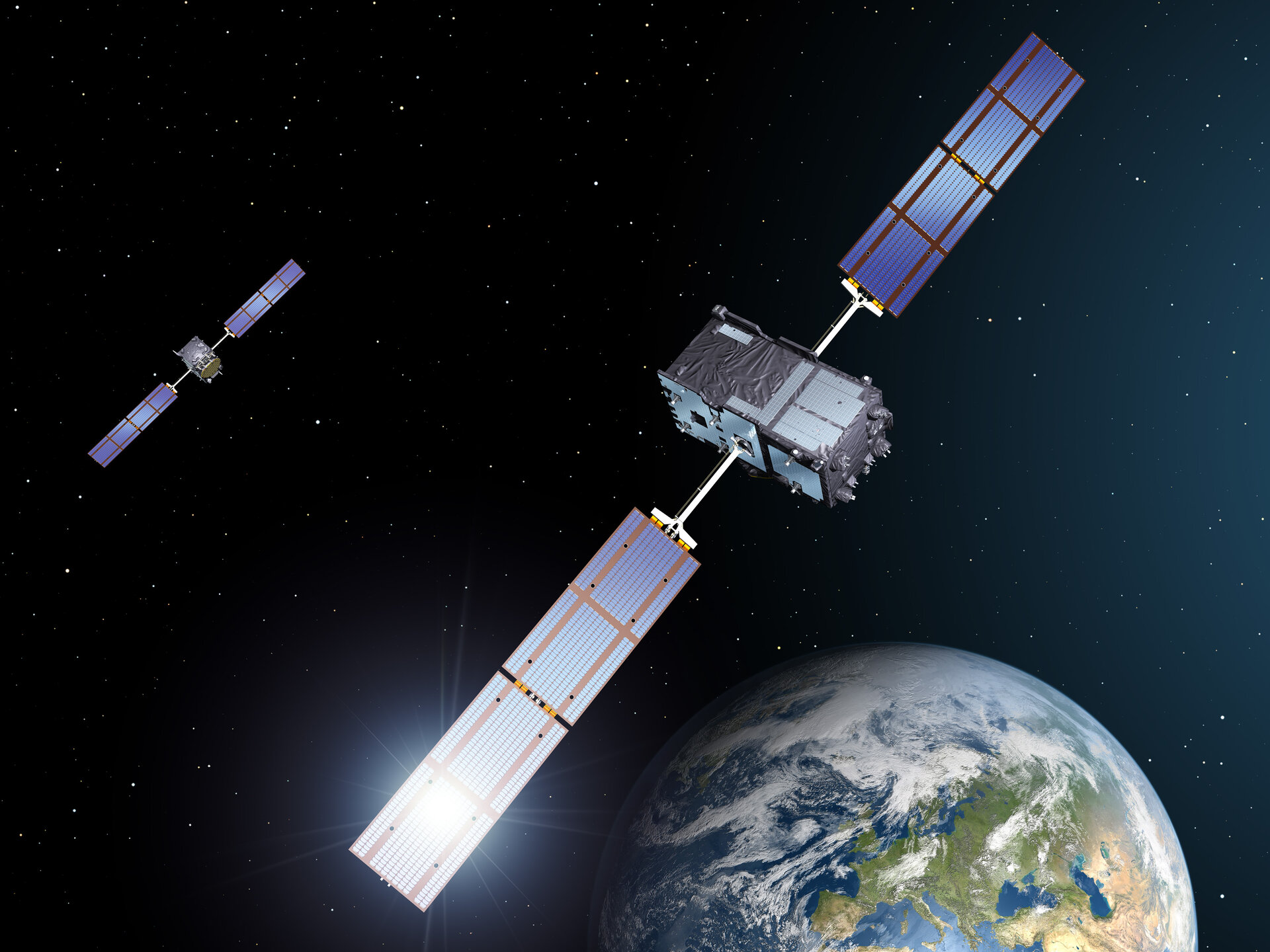
    First two Galileo IOV satellites
    12 July 2012

    ESA’s first two Galileo navigation satellites in space have achieved their latest milestone, transmitting dummy signals in a modulation scheme designed to allow full interoperability with the US GPS once operational services start.

    “This is an advanced modulation technique that offers robust protection against signal interference and the misleading signal reflections known as ‘multipath’,” said Marco Falcone, Head of Galileo System Services.

    “Significantly, this is also the European version of the Multiplexed Binary Offset Code signal standard agreed with the United States for the interoperability of Galileo and GPS.

    “So this transmission helps demonstrate how the two systems will work together in future with no risk of signal interference.”

    Galileo CBOC modulation

    The first two Galileo satellites were launched from Europe’s Spaceport in French Guiana into medium orbits on 21 October 2011, and since then have been progressively put through their paces in a series of tests.

    These satellites are serving to validate the Galileo system design as well as being fully functional elements of the full 30-strong constellation that will follow.

    Four satellites, the minimum number needed to achieve a position fix at user level, will become available later on this year.

    This autumn the next two satellites will be launched together from French Guiana.


    Once they are commissioned, Galileo will have its operational nucleus complete, able to perform actual ranging when all four satellites are visible from a receiver.

    For technical details of the Galileo signal currently being transmitted, see the right-hand link.

    Rate this

    Views

    Share

    • Currently 0 out of 5 Stars.
    • 1
    • 2
    • 3
    • 4
    • 5
    Rating: 0/5 (0 votes cast)

    Thank you for rating!

    You have already rated this page, you can only rate it once!

    Your rating has been changed, thanks for rating!

    200
    Tweet
      • Technical details of current Galileo signal
        • Space signal demonstrates Galileo interoperability with GPS
        • Related link
        • Public Galileo Open Service Signal In Space Interface Control Document

    Connect with us

    • RSS
    • Youtube
    • Twitter
    • Flickr
    • G+
    • Facebook
    • Livestream
    • Subscribe
    • App Store
    • LATEST ARTICLES
    • · Earth Explorers take centre stage …
    • · The fast winds of Venus are gettin…
    • · ExoMars 2016 set to complete const…
    • · Herschel ends operations as orbiti…
    • · Europe’s largest spaceship reache…
    • FAQ

    • Jobs at ESA

    • Site Map

    • Contacts

    • Terms and conditions