Building for the future
Galileo, a global satellite navigation system, is being developed through a joint initiative of the European Space Agency and the European Union. The development process is now well under way, with the first satellite, GIOVE-A, due to be launched at the end of December.
Galileo development started in 2002, with the definition of requirements for the system and development of critical new technologies. Initial experiments were performed using signals from existing navigation satellites to verify some design concepts.
Starting in 1997 and continuing in parallel with Galileo, ESA, the EU and Eurocontrol, the organisation responsible for European air navigation safety, have developed the European Geostationary Navigation Overlay Service (EGNOS), an enhancement system for the existing satellite navigation systems. EGNOS is now in its initial operations phase, with work continuing for stabilisation of the signal in 2006 and then certification for use in safety-critical applications. The experience gained with EGNOS makes it a vital precursor to Galileo.
In-orbit validation

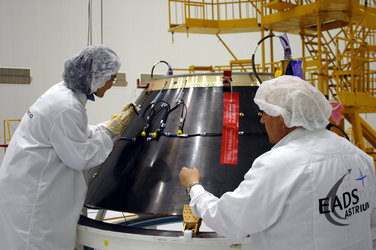
The in-orbit validation (IOV) phase begins with the launch of GIOVE-A at the end of December. The main objectives of the first part of IOV phase are to validate new technologies developed for Galileo, provide live navigation signals for further development of ground equipment and to characterise the medium earth orbit environment that the production satellites will experience, a first for Europe. A second satellite, GIOVE-B, which includes a more sophisticated clock and is capable of transmitting a wider variety of navigation signals, will be ready for launch during 2006.
The second part of the IOV phase will involve launching four satellites, the minimum number required for an operational satellite navigation system. These satellites will be representative of those that will be used for the complete Galileo system. The availability of an operational navigation constellation will allow the validation of the complete system and testing of user equipment.
Building the Galileo system
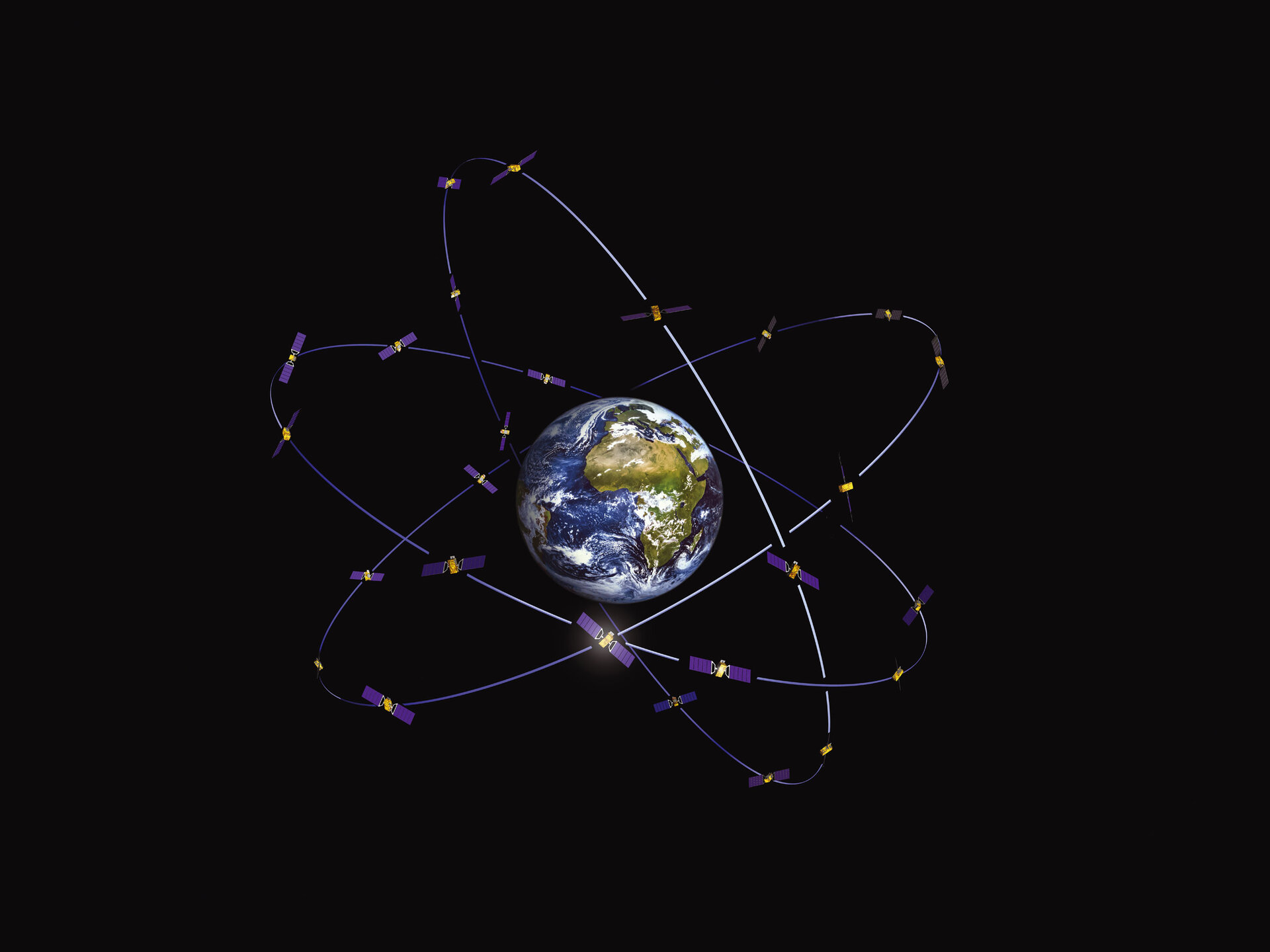
Once in-orbit validation is completed, an additional 26 satellites will be launched, creating a constellation of 27 active satellites and 3 ‘hot’ or operational spares. The use of operating spare satellites means that the failure of one spacecraft will have no effect on the users. The Galileo design provides for the users to be notified of system faults within 6 seconds of their occurrence, providing a level of integrity not available from existing systems.
The fully operational Galileo system is planned to be available from 2010, but Galileo services will become available progressively during the deployment of the constellation, and the implementation of the associated ground-based infrastructure.