• → European Space Agency

      • Space for Europe
      • Space News
      • Space in Images
      • Space in Videos
    • About Us

      • Welcome to ESA
      • DG's News and Views
      • For Member State Delegations
      • Business with ESA
      • ESA Exhibitions
      • ESA Publications
      • Careers at ESA
    • Our Activities

      • Space News
      • Observing the Earth
      • Human Spaceflight
      • Launchers
      • Navigation
      • Space Science
      • Space Engineering
      • Operations
      • Technology
      • Telecommunications & Integrated Applications
    • For Public

    • For Media

    • For Educators

    • For Kids

    • ESA

    • CryoSat

    • Observing the Earth

    • Living Planet

    • CryoSat at a glance
    • An Earth Explorer
    • CryoSat: an icy mission
    • Earth’s changing ice
    • Facts and figures
    • About the satellite

      • Platform
      • Instruments
    • About the launch

      • Launch site
      • Launcher
      • After launch
    • Meet the team

      • Richard Francis - Project Manager
      • Tommaso Parrinello - Mission Manager
      • Duncan Wingham, Lead Investigator
      • Klaus Köble, EADS Astrium Project Manager
      • Mark Drinkwater, Mission Scientist
      • Bill Simpson, Launch Campaign Manager
      • Nic Mardle, Spacecraft Operations Manager
      • Laurent Rey, Thales Alenia Space SIRAL Project Manager
      • Malcolm Davidson, Validation Manager
    • Multimedia
    • Image Gallery
    • Videos
    • Online documents

    ESA > Our Activities > Observing the Earth > CryoSat

    CryoSat: green light for launch campaign

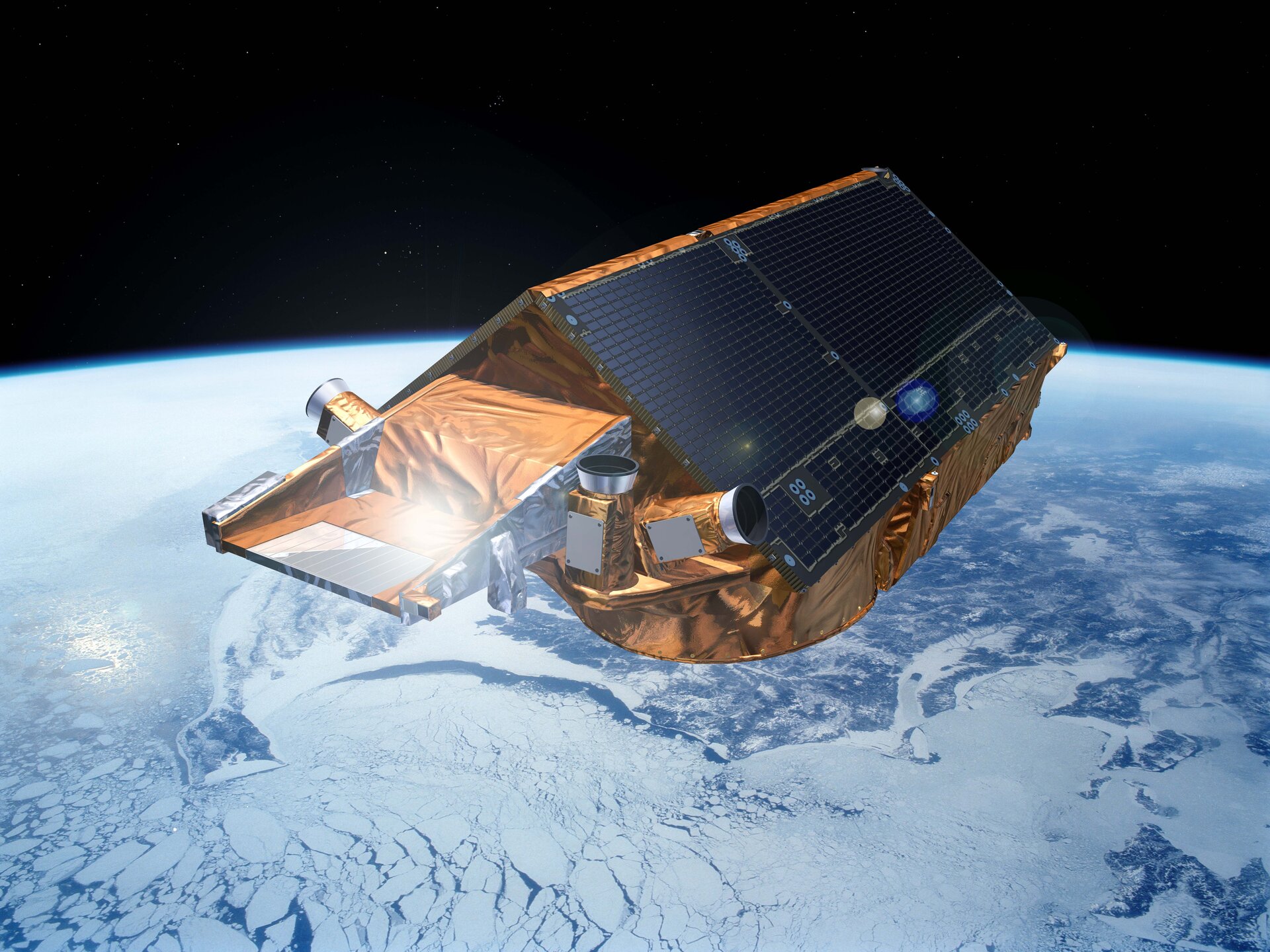
    CryoSat-2 satellite
    20 November 2009

    ESA’s CryoSat ice mission has completed its Flight Acceptance Review, confirming that all the mission components are ready for launch, which is planned for 25 February 2010 from Baikonur.

    This formal review is an important part of the process to ensure that all the parts of the mission are in place. It is focused on the readiness of the satellite and the preparation of the launch campaign, but also heard reports of the successful Ground Segment Acceptance Review completed in July and the status of the launcher. Although there will be future checkpoints along the road to the launch pad, this was the last major hurdle.

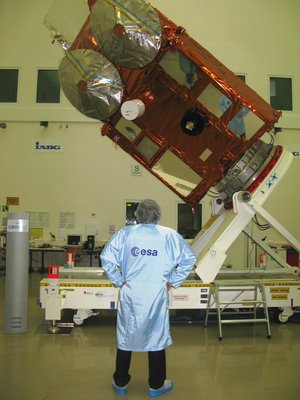
    Generally happy with the status of the satellite, the Board requested to be informed of the progress on a few outstanding analyses that are due to be completed in mid-December. Currently in storage at IABG’s spacecraft test centre in Ottobrunn, Germany, the CryoSat-2 satellite, built to replace the original CryoSat lost in a launch failure in 2005, will be shipped to the Baikonur launch site in Kazakhstan on 12 January.
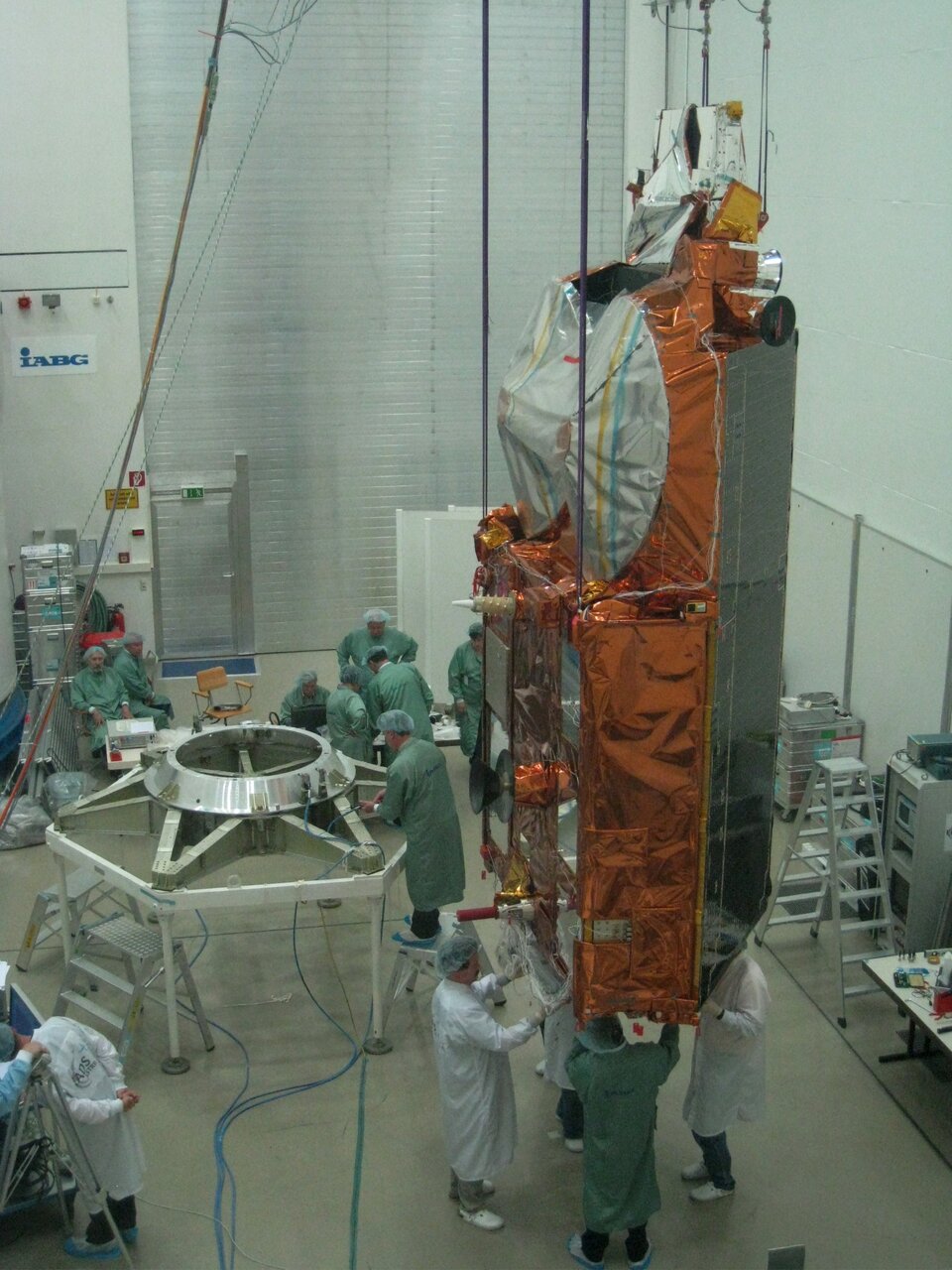

    CryoSat-2 undergoing testing
    CryoSat-2 at IABG

    Once the satellite has safely arrived at the integration facilities at the launch site, it will undergo final testing before joining the launch vehicle. CryoSat-2 will be taken into orbit on a Dnepr launch vehicle, which is based on the SS-18 intercontinental ballistic missile.

    “We are looking forward to starting the launch campaign and finally getting the satellite into orbit. It’s been a long wait since we lost the first CryoSat four years ago, but now the tempo is stepping up and we’re again on the threshold of adventure,” said Richard Francis, the CryoSat Project Manager.

    Polar ice
    Polar ice

    From an altitude of just over 700 km and reaching latitudes of 88°, CryoSat will precisely monitor changes in the thickness of sea ice and variations in the thickness of the ice sheets on land. These data are urgently needed by scientists to understand exactly how Earth’s ice is changing in response to climate change. For over 15 years, the ERS satellites and Envisat have been mapping the extent of ice cover. However, in order to understand how climate change is affecting the sensitive polar regions, there is an urgent need to determine exactly how the thickness of the ice is changing to get the full picture.

    Following on from GOCE, which was launched in March this year and now delivering detailed data on Earth’s gravity field, and SMOS, which was launched less than three weeks ago and will take measurements of soil moisture and ocean salinity for a better understanding of Earth’s water cycle, CryoSat will be the next of ESA’s Earth Explorer satellites in orbit.

    Launching three missions dedicated to improving our understanding of the Earth system within 12 months will mark a significant step in ESA’s Earth Observation Programme.
    Rate this

    Views

    Share

    • Currently 0 out of 5 Stars.
    • 1
    • 2
    • 3
    • 4
    • 5
    Rating: 0/5 (0 votes cast)

    Thank you for rating!

    You have already rated this page, you can only rate it once!

    Your rating has been changed, thanks for rating!

    20
    Tweet
    • Related news
      • February launch for ESA's CryoSat ice mission
        • Ground segment declared ready for CryoSat mission
        • In depth
          • CryoSat-2
          • Related links
          • IABG
          • EADS-Astrium
          • Thales Alenia Space - SIRAL
          • Kosmotras
          • ESA on Youtube
          • Earth Explorers

    Connect with us

    • RSS
    • Youtube
    • Twitter
    • Flickr
    • G+
    • Facebook
    • Livestream
    • Subscribe
    • App Store
    • LATEST ARTICLES
    • · ESA astronaut Timothy Peake set fo…
    • · Space drives e-mobility
    • · Proba-V opens its eyes
    • · First new Galileo satellite arrive…
    • · Next destination: space
    • FAQ

    • Jobs at ESA

    • Site Map

    • Contacts

    • Terms and conditions