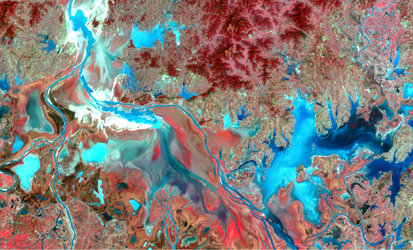
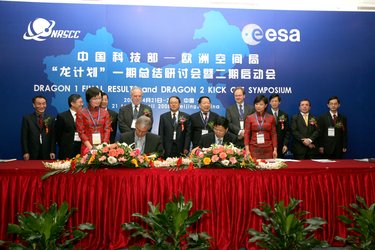
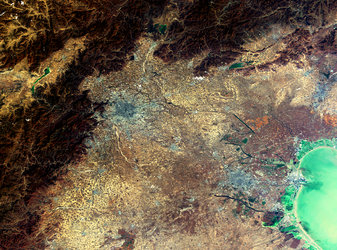
Dragon 2 teams report on their mid-term results
More than 270 European and Chinese scientists have gathered in the People’s Republic of China to present the mid-term results of Dragon 2 research projects using data from Earth observation satellites.
The Dragon 2 Programme is a joint undertaking between ESA and the Ministry of Science and Technology (MOST) of China that encourages the increased use of ESA, Third Party Missions and Chinese Earth observation satellite data within China.
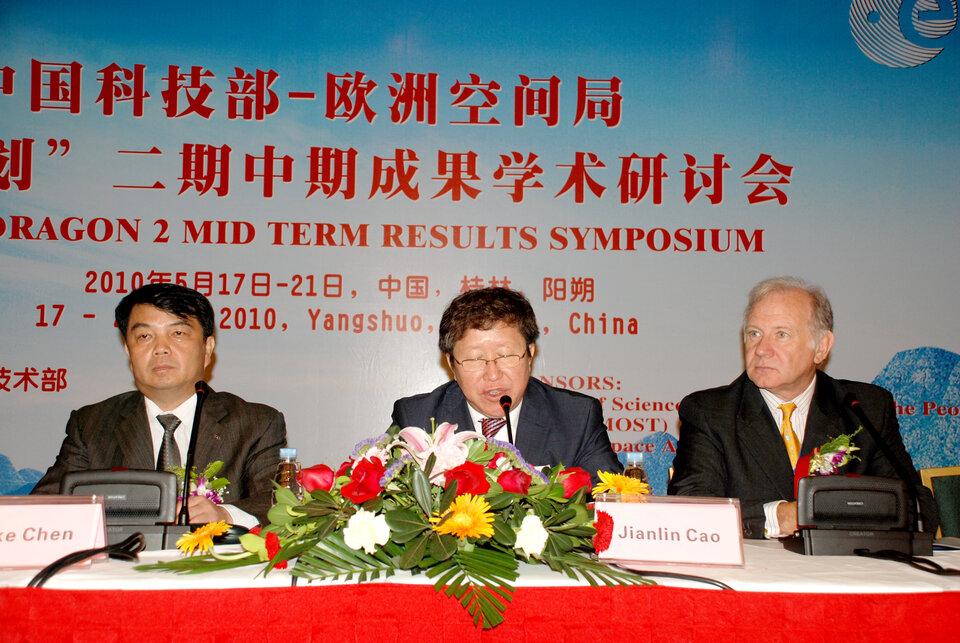
Opening the 17–21 May symposium in Yangshuo County in the Guangxi Zhuang Autonomous Region, MOST Vice Minister Dr Jianlin Cao said: "The Dragon Programme has offered a successful model in the field of Earth observation and received widespread international attention."
ESA and China both have a series of satellites already in orbit with additional missions for scientific and operational monitoring planned for launch in the near future. Dragon 2 provides joint Sino-European teams the opportunity to investigate scientific themes using data from this wide array of satellite instruments.
ESA’s Dr Stephen Briggs, Head of Science and New Technologies Department, commended the growth and success of the undertaking, saying: "The Dragon Programme goes from strength to strength. It is delivering world-class science across a wide range of disciplines."
Under Dragon 2, which began in April 2008 and runs through 2012, more than 400 scientists from 165 research institutions in Europe and China are involved in 25 joint research projects covering land, ocean and atmospheric research themes. Lead scientists are paired with young researchers so that knowhow can be transferred to the next generation.
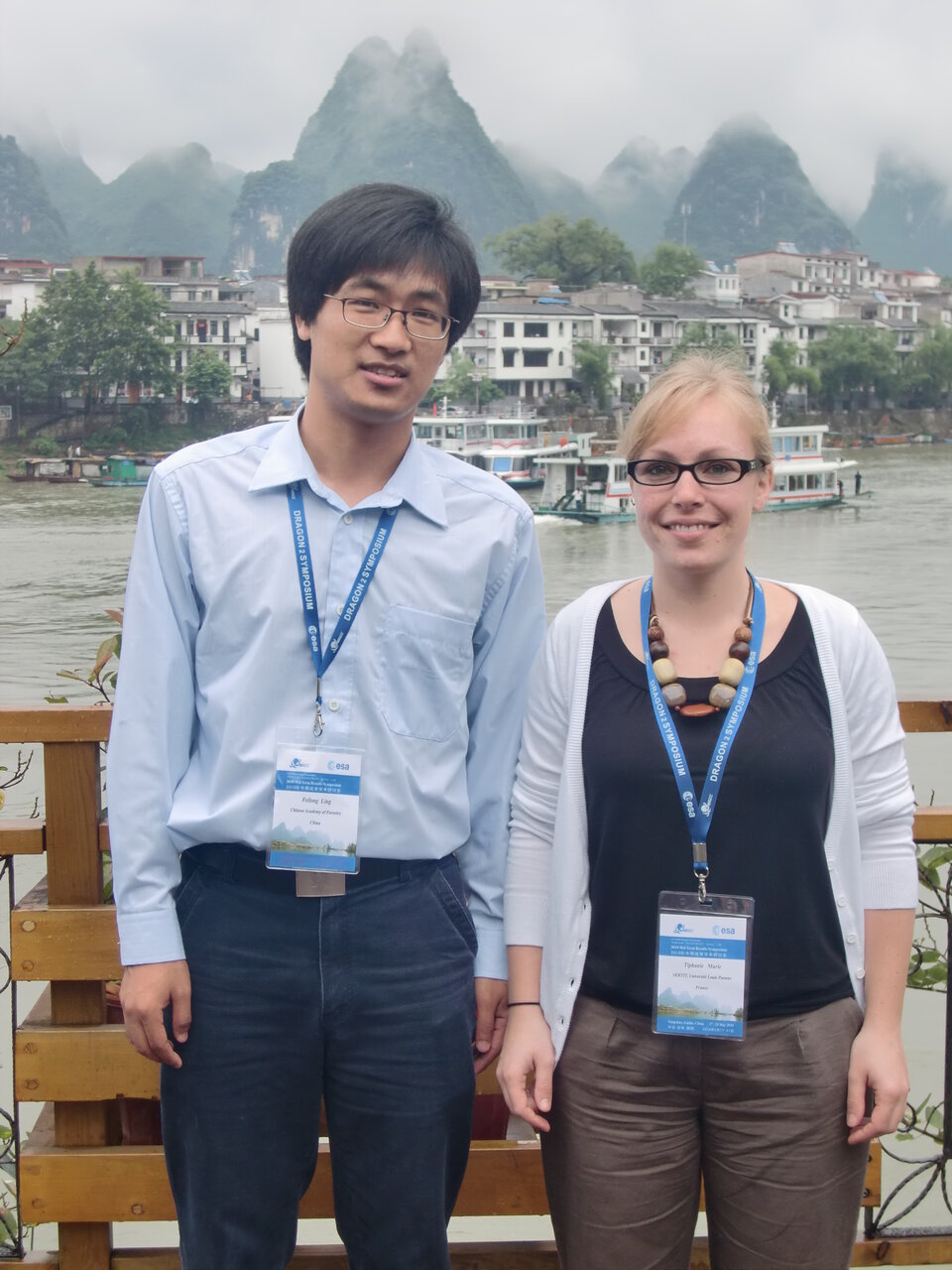
Tiphanie Marie from the University of Strasbourg-SERTIT is involved in a project that monitors Poyang Lake to characterise endemic areas for the development of schistosomiasis, a parasitic disease that affects more than 207 million people worldwide.
"I am really proud to be trained under Dragon 2. The cooperation with Chinese scientists is a personal and rich experience," she said. "We are exploiting Chinese Earth observation data and undertaking large validation campaigns with Chinese colleagues."
Ling Feilong from Fuzhou University, who participated in the first Dragon Programme, said: "I had the opportunity to train at ESA on synthetic aperture radar data applications and am now preparing a PhD thesis on SAR applications for forest mapping in China at the Chinese Academy of Forestry.
"The Dragon 2 Symposium offers me a unique opportunity to meet and work with both lead and young scientists from Europe and China."
The symposium gives young scientists a platform to report and get feedback on their latest results. It also allows them to meet renowned scientists and get guidance for their research.
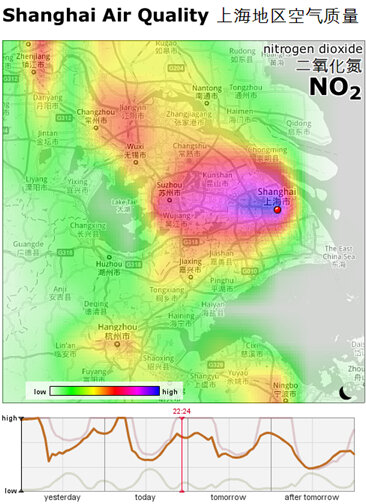
The Dragon 2 project results are also on public display this week at the World Expo 2010 in Shanghai. Dr Ronald van der A of the Royal Netherlands Meteorological Institute working on Air Quality Monitoring and Forecasting in China is showing the most recent satellite measurements of nitrogen dioxide together with the air quality forecasts of the Shanghai region at the Pavilion of the Netherlands.