• → European Space Agency

      • Space for Europe
      • Space News
      • Space in Images
      • Space in Videos
    • About Us

      • Welcome to ESA
      • DG's News and Views
      • For Member State Delegations
      • Business with ESA
      • ESA Exhibitions
      • ESA Publications
      • Careers at ESA
    • Our Activities

      • Space News
      • Observing the Earth
      • Human Spaceflight
      • Launchers
      • Navigation
      • Space Science
      • Space Engineering
      • Operations
      • Technology
      • Telecommunications & Integrated Applications
    • For Public

    • For Media

    • For Educators

    • For Kids

    • ESA

    • Observing the Earth

    • Understanding Our Planet

    • Securing Our Environment

    • Benefiting Our Economy

    • About Observing the Earth

      • How does Earth Observation work?
      • How to get Earth observation data
      • Integrating Earth Observation in your job
      • Earth Observation users speak
    • EO programmes
    • The Living Planet
    • GMES
    • ESA's Earth Observing missions
    • Envisat overview
    • ERS overview
    • Earth Explorers overview
    • Sentinels overview
    • MSG overview
    • MetOp overview
    • Proba-1 overview
    • Third Party Missions overview
    • Opportunities with us

      • Education & training
      • International cooperation
      • Milestones & announcements
    • Multimedia

      • Image Gallery
      • Video Gallery
      • Online resources
      • RSS feeds
    • Services
    • Subscribe

    ESA > Our Activities > Observing the Earth

    ERS satellite missions complete after 20 years

    ERS-2
    12 September 2011

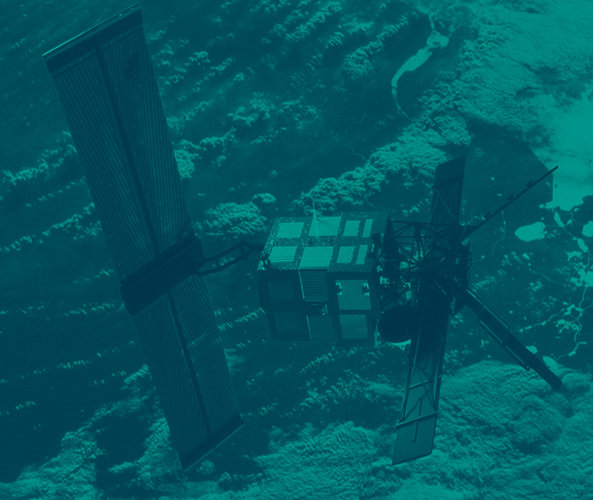
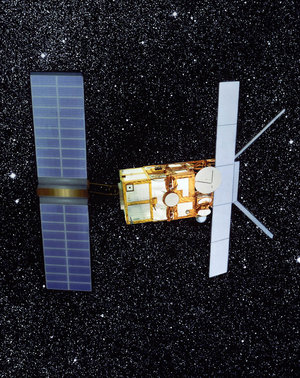
    After a final thruster firing last week to deplete its remaining fuel, ESA's venerable ERS-2 observation satellite has been safely taken out of service. Ground controllers also ensured the space environment was protected for future missions.

    The mission ended on 5 September, after the satellite's average altitude had already been lowered from 785 km to about 573 km. At this height, the risk of collision with other satellites or space debris is greatly reduced.

    The final critical step was to 'passivate' ERS-2, ensuring that all batteries and pressurised systems were emptied or rendered safe in order to avoid any future explosion that could create new space debris.

    This primarily consisted of burning off the fuel, disconnecting the batteries and switching off the transmitters.

    "As soon as we saw fuel depletion occurring, a series of commands was sent to complete passivation, before shutting the satellite down for good. The last command was sent at 13:16 GMT on 5 September," said Frank Diekmann, ERS-2 Operations Manager.

    Valuable data archive

    Final ERS-2 image showing Rome, Italy

    The end of flight operations does not mean the end of the mission's usefulness, though.

    "We will continue exploiting data gathered by ERS-2, especially the radar imagery," said Volker Liebig, ESA's Director for Earth Observation Programmes.

    "Combining this rich scientific store with new data delivered by improved radar instruments on the GMES Sentinel-1 mission will generate strong synergies as we work to understand our planet's climate."


    Atmospheric burn up

    With the effects of natural atmospheric drag, ERS-2 is predicted to enter and largely burn up in the atmosphere in about 15 years. This is well within the 25-year-limit that is imposed to minimise the risk of collision before re-entry.

    "ERS-2 deorbiting is being conducted in compliance with ESA's space debris mitigation requirements," said Heiner Klinkrad, Head of ESA’s Space Debris Office.

    "This indicates the strong commitment by the Agency to reducing space debris, which can threaten current and future robotic and human missions."

    End of 16-year mission

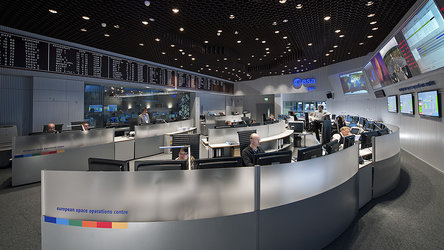
    ERS-2 deorbiting team
    Part of the ESA team at ESOC for deorbiting

    ERS-2 was launched in 1995, four years after ERS-1, the first European Remote Sensing satellite. The missions paved the way for the development of many new Earth observation techniques.

    "ERS-1 and -2 delivered 20 years of continuous high-quality data covering the oceans, land, ice and atmosphere," said Wolfgang Lengert, ERS-2 Mission Manager.

    "Throughout these two decades, the emphasis has been on quantifying measurement accuracy and documenting results, ensuring the data will serve as a heritage for future generations."

    ERS-2 travelled 3.5 billion km during its lifetime, providing data for thousands of scientists and projects.


    Expanded version of this article with additional details on final mission operations.

    Rate this

    Views

    Share

    • Currently 0 out of 5 Stars.
    • 1
    • 2
    • 3
    • 4
    • 5
    Rating: 0/5 (0 votes cast)

    Thank you for rating!

    You have already rated this page, you can only rate it once!

    Your rating has been changed, thanks for rating!

    100
    Tweet
    • Operations
    • Earth Observation
    • Related news
      • Lowering of ERS-2 orbit continues
        • Satellite’s final images focus on changing glaciers
          • Pioneering ERS environment satellite retires
            • Veteran ERS satellite provides new insight into Greenland's plumbing
            • Related missions
              • ERS overview
              • Related links
                • Malindi station
                  • Svalbard station
                  • JAXA Katsuura Station

    Connect with us

    • RSS
    • Youtube
    • Twitter
    • Flickr
    • G+
    • Facebook
    • Livestream
    • Subscribe
    • App Store
    • LATEST ARTICLES
    • · ESA astronaut Timothy Peake set fo…
    • · Space drives e-mobility
    • · Proba-V opens its eyes
    • · First new Galileo satellite arrive…
    • · Next destination: space
    • FAQ

    • Jobs at ESA

    • Site Map

    • Contacts

    • Terms and conditions