• → European Space Agency

      • Space for Europe
      • Space News
      • Space in Images
      • Space in Videos
    • About Us

      • Welcome to ESA
      • DG's News and Views
      • For Member State Delegations
      • Business with ESA
      • ESA Exhibitions
      • ESA Publications
      • Careers at ESA
    • Our Activities

      • Space News
      • Observing the Earth
      • Human Spaceflight
      • Launchers
      • Navigation
      • Space Science
      • Space Engineering
      • Operations
      • Technology
      • Telecommunications & Integrated Applications
    • For Public

    • For Media

    • For Educators

    • For Kids

    • ESA

    • GOCE

    • Earth Explorers

    • Observing the Earth

    • Living Planet

    • GOCE at a glance
    • The first of a series
    • Looking into the forces that shape our planet
    • A technological achievement
    • An intimate portrait of Earth
    • Facts and figures
    • About the spacecraft

      • Satellite
      • Payload
    • About the launch

      • Launch overview
      • Launcher
      • After launch
      • GOCE data
    • Meet the team

      • Danilo Muzi, Project Manager
      • Rune Floberghagen, Mission Manager
      • Reiner Rummel, Chairman Mission Advisory Group
      • Mark Drinkwater, Mission Scientist
      • Roger Haagmans, Mission Scientist
      • Andrea Allasio, Thales Alenia Space Project Manager
      • Michael Fehringer, System Manager
      • Paolo Laberinti, Head of Verification and Testing
      • Miguel Aguirre, Technical Officer for Definition Phase
      • Daniel Lamarre, Gradiometer Engineer
      • Juan Piñeiro, Spacecraft Operations Manager
      • Stefano Capitanio, Launch Campaign Manager
      • Pascal Gilles, Head of Earth Explorer Payload Data Ground Segment
    • Multimedia
    • Image gallery
    • Videos
    • Online resources

    ESA > Our Activities > Observing the Earth > GOCE

    GOCE’s ‘heart’ starts beating

    GOCE gradiometer
    GOCE gradiometer
    8 April 2009

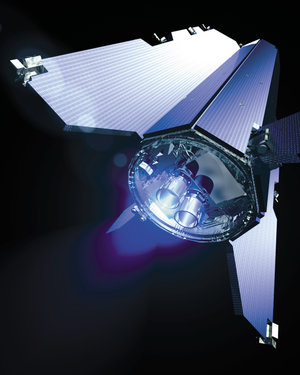
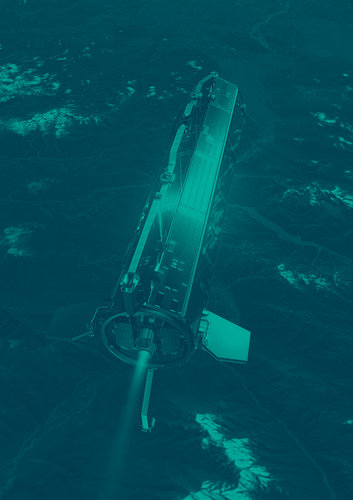
    GOCE’s highly sensitive gradiometer instrument has been switched on and is producing data. Forming the heart of GOCE, the gradiometer is specifically designed to measure Earth’s gravity field with unprecedented accuracy.

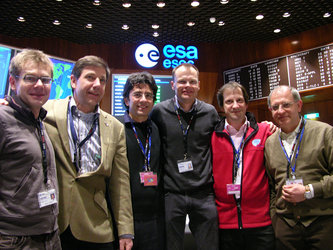
    "We are very pleased with what we have seen from the gradiometer from the moment it was switched on. All accelerometer sensor heads are working in very good health and provide meaningful data," GOCE Project Manager Danilo Muzi said.

    The gradiometer consists of three pairs of identical ultra-sensitive accelerometers, each mounted to point in orthogonal directions to allow the simultaneous measurement of the spatial variations of the gravity field.

    With the switching on of the gradiometer, all systems on the satellite have now been activated. The satellite’s sophisticated electric ion propulsion system was switched on last week and continues to operate normally.

    GOCE in orbit

    In order to get the maximum performance from the gradiometer, GOCE was designed to provide a highly stable and undisturbed environment. However, GOCE has to orbit Earth close enough to measure the tiny differences in gravity, which forces it to endure significant drag from the uppermost layers of the atmosphere.

    The atmospheric drag is compensated for by the ion engine, which is able to deliver between 1 and 20 milliNewtons of thrust (the force equivalent to our exhaling).

    GOCE was injected into orbit at an altitude of 283 km on 17 March. Since then, it has been freefalling at a rate of 150 to 200 m a day and will continue to do so until it enters ‘drag-free mode’ at an altitude of 273 km.

    At this altitude, the satellite will actively compensate for the effect of air drag and its payload will undergo a further six weeks of commissioning and calibration. Mission operations are scheduled to start in summer 2009.


    The Earth's gravity field as it will be seen by GOCE

    "With the ion engine and the gradiometer working, we have started to tune the satellite and its instruments," GOCE System Manager Michael Fehringer said.

    "We have a lot of work ahead of us, but it is a highly exciting time for everyone involved in the mission," GOCE Mission Manager Rune Floberghagen added.

    Data from GOCE will be used to create an extremely accurate map of Earth's gravity field. Together with altimetry data from missions, such as ESA’s Envisat, the GOCE gravity map will allow scientists to measure sea-surface height more accurately and understand sea-level change and ocean circulation better.
    Rate this

    Views

    Share

    • Currently 0 out of 5 Stars.
    • 1
    • 2
    • 3
    • 4
    • 5
    Rating: 0/5 (0 votes cast)

    Thank you for rating!

    You have already rated this page, you can only rate it once!

    Your rating has been changed, thanks for rating!

    76
    Tweet
    • GOCE launch
    • Related news
      • GOCE's electric ion propulsion engine switched on
        • GOCE completes early orbit phase
          • GOCE: Critical operations ongoing
            • ESA launches Earth Explorer mission GOCE
            • Spacecraft Operations
              Spacecraft Operations
              Operations
            • Track GOCE

    Connect with us

    • RSS
    • Youtube
    • Twitter
    • Flickr
    • G+
    • Facebook
    • Livestream
    • Subscribe
    • App Store
    • LATEST ARTICLES
    • · Proba-V opens its eyes
    • · First new Galileo satellite arrive…
    • · Next destination: space
    • · Leak repaired on International Spa…
    • · After Chelyabinsk: European expert…
    • FAQ

    • Jobs at ESA

    • Site Map

    • Contacts

    • Terms and conditions