High resolution satellite imagery assists hunt for infectious 'kissing bugs'
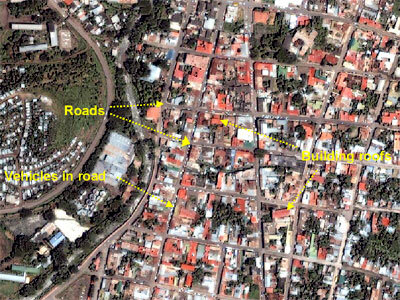
In the midst of crammed slums in the Nicaraguan district of Matagalpa, aid workers are hunting house-to-house for hidden killers, their search guided by high-resolution satellite imagery supplied through an ESA-backed project.
Their targets are blood-sucking reduviid insects, generally known as 'kissing bugs' because they emerge from their hiding places each night to bite human skin where it is thinnest – around the mouth and eyes.
Growing up to five centimetres long, the kissing bugs are harmless by themselves, but carry a microscopic protozoan parasite that causes the wasting and eventually lethal Chagas disease. Secondary sources of infection can include ingesting contaminated food, mother to child transmission like during breast feeding and tainted blood transfusions.
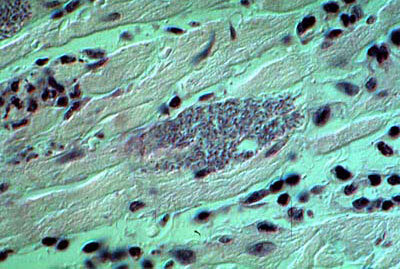
Infection by this Trypanosoma cruzi parasite may cause short-term symptoms including fever, tiredness and brain swelling. However it is the longer-term symptoms that are most serious: ten to 15 years after initial infection the heart enlarges and grows weaker; internal organs are also affected. Sufferers must endure chronic tiredness and a higher chance of an early death – often from heart failure.
Chagas disease affects at least 16 million people across Central and South America, of which World Health Organisation figures show 21 000 die every year. There is no vaccine, and response to treatment decreases with age. When first discovered in 1909, Chagas was a predominantly rural affliction, but urbanisation has brought it into towns and cities.
The majority of the half a million inhabitants of Matagalpa are poor - made poorer still by the devastation of Hurricane Mitch in 1998 – and Chagas is a disease of poverty.
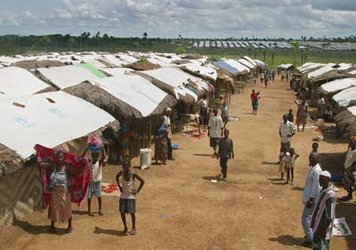
The parasite-carrying insects thrive in poor housing conditions, such as trodden earth floors, adobe walls and thatched roofs. Hundreds of kissing bugs can hide in cracks and cavities by day, then emerge to climb walls, jump and glide to land on exposed flesh.

Infected children respond best to treatment, but for medical interventions to be effective, the bugs have to be eradicated to avoid rapid patient re-infection. As part of a wider anti-Chagas campaign in the area, Médecins Sans Frontières workers oversee a methodical house-to-house inspection campaign, identifying where cracks need to be filled in and control methods such as spraying are required.
This campaign is being guided by ultra high-resolution satellite imagery showing individual houses and even cars, supplied by an ESA-backed project called HUMAN, set up to provide geo-spatial mapping products and services for humanitarian aid organisations.
"MSF is evaluating new methods to control Chagas disease, and the acquisition of a high resolution image of Matagalpa is part of this research activity," said Rémi CARRIER, MSF logistics director. "Up until now, MSF staff have been working with hand-drawn maps”.
"The use of space-based mapping technologies allows us to carry out a more efficient situation analysis of the Chagas disease on a house by house basis. It will also help us to implement effective control and monitoring programmes on the ground."
In the Esquipulas municipality before April 2004, out of 8772 children under 15, MSF screened 5359, finding and treating 50 Chagas positives. And out of an estimated 782 pregnant women, MSF screened 141, finding and treating two positives.
A prevalence survey was finalised in July 2004 in Matagalpa, Dario and San Ramon municipalities. Once available, the results will condition a project extension to those areas.
As well as house inspection, MSF is also looking at screening blood transfusions and lobbying for new medical treatment possibilities with increased effectiveness and fewer side effects.
Following the completion of this Matagalpa pilot project, the same techniques - including use of satellite imagery – may be employed for Chagas control elsewhere in Nicaragua and Central and South America.
About HUMAN
The Humanitarian Mapping Service (HUMAN) project is funded by ESA as part of its Data User Programme. It is run by a consortium headed by Belgian firm Keyobs s.a. and includes the Italian company Intecs HRT, with MSF Belgium as the user partner.
The long-term intention is to build HUMAN into a self-sufficient service for non-governmental organisations (NGOs) and public organisations involved in humanitarian relief operations.