International Astronautical Federation joins project to protect World Heritage sites
The joint ESA/UNESCO Open Initiative to conserve hundreds of natural and cultural World Heritage sites using Earth observation satellites gets additional backing as the International Astronautical Federation joins the growing number of space entities to pledge support to the project.
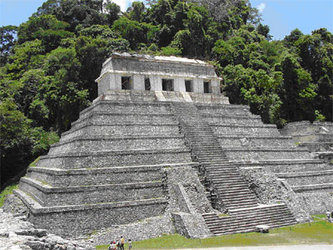
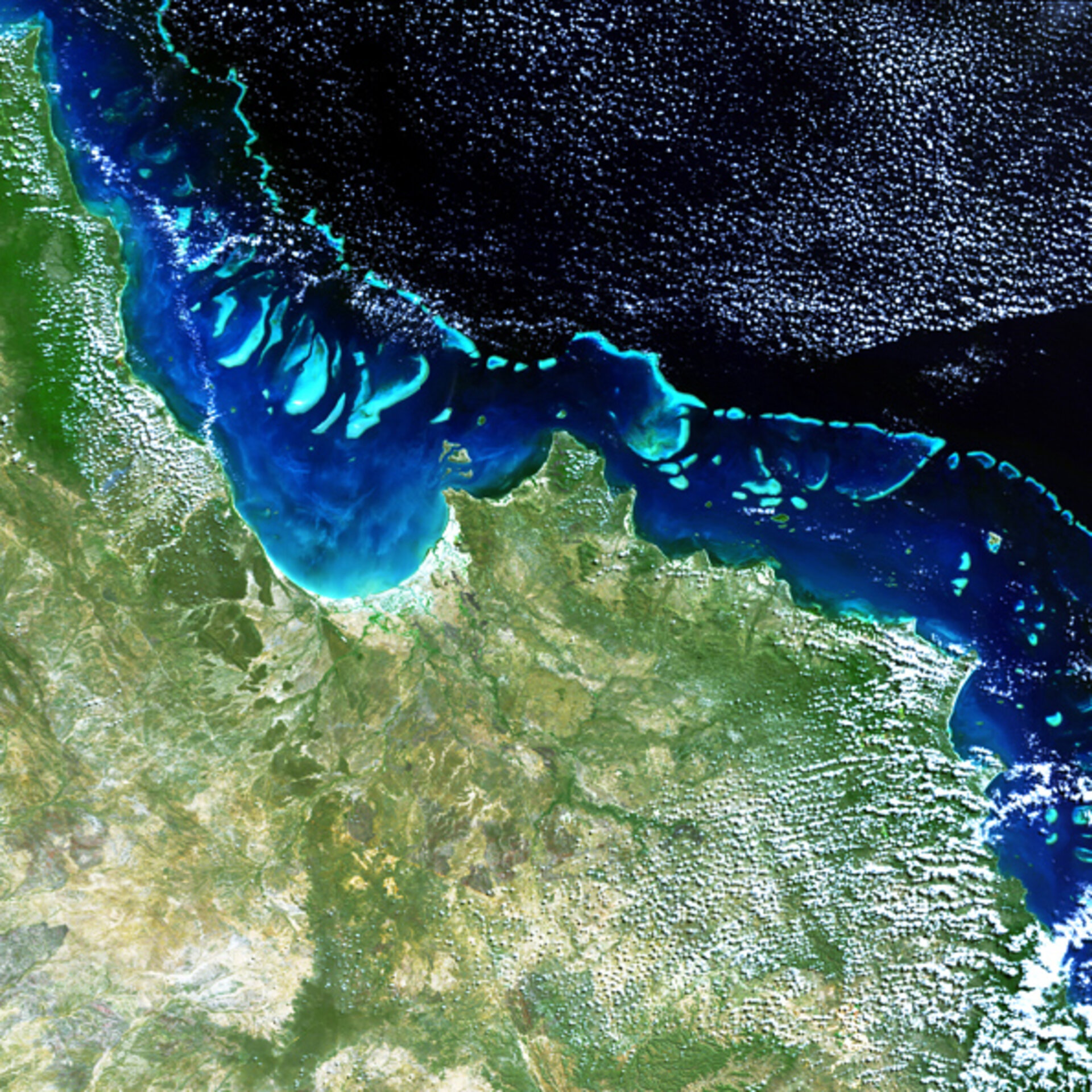
The Open Initiative, agreed upon by ESA and UNESCO (United Nations Educational, Scientific and Cultural Organisation) in 2001, involves satellites monitoring UNESCO World Heritage sites as unique and varied as the Great Barrier Reef and the Great Wall of China in order to provide early warnings of conditions that could threaten them, such as natural catastrophes, atmospheric contamination and changes in land use.
The signing of the partnership between the International Astronautical Federation (IAF) and UNESCO took place today at UNESCO headquarters in Paris, France. ESA’s Stephen Briggs, Head of Earth Observation Science and Applications Department, opened the ceremony with his thoughts on how Earth-observing satellites have benefited humanity.

Paying tribute to the first man in space in 1961, Briggs quoted Russian cosmonaut Yuri Gagarin’s first words spoken there: "‘I see Earth. It’s so beautiful.’ Indeed, observing Earth from space has truly revolutionised the way we view our home planet. With their unique global perspective, satellite systems offer incomparable advantages to help us better understand, manage and protect the Earth’s precious environment."
"The extraordinary cultural and natural diversity of the world is an important source of life and inspiration for humanity. Its preservation should be a responsibility shared by the whole international community," he added.
The name Open Initiative was chosen by ESA and UNESCO because they intended to have other space agencies join the partnership, and in 2003, when the initiative was formally launched, they called on others to participate.
To date, several space agencies have progressively established similar arrangements for providing satellite data to protect these sites, including Argentina, Brasil, Canada, India, the Iraq Space Department, Jordan, Morocco, Poland, Turkey and the United States (NASA).

The World Heritage list includes sites, monuments or landscapes that have been deemed of 'exceptional universal value' in either cultural or natural terms. There are currently 830 different sites on UNESCO’s World Heritage list. Of these, 644 of them are listed as cultural, 162 as natural and 24 as both. UNESCO considers 31 of them currently listed to be ‘in danger’. The initiative is especially aimed at helping developing nations monitor World Heritage sites on their territories more effectively.
ESA and UNESCO highlighted the potential of the initiative through a two-year pilot project called BEGo (Build Environment for Gorilla) in which satellite imagery and products were provided to conservation groups and authorities monitoring and protecting the habitats of endangered mountain gorillas in national parks located in Uganda, Rwanda and the Democratic Republic of Congo. These parks are either considered World Heritage sites or candidate sites, and make up the last refuge of the less than 700 mountain gorillas still alive.
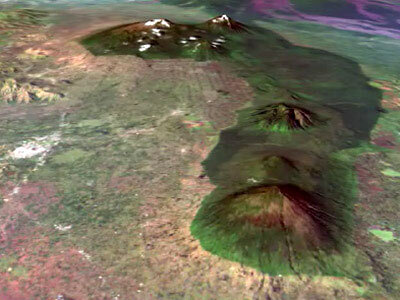
Because these habitats totalled more than eight hundred thousand hectares, with long boundaries across extremely inaccessible and seldom-mapped terrain, ground-based observations, if possible, were extremely difficult. Data from ESA satellites helped produce maps, detect changes over time in how the land was used and create three-dimensional digital elevation models of the terrain.
According to Eulalie Bashige, Director General of the Institut Congolais pour la Conservation de la Nature (ICCN) of the Democratic Republic of Congo (DRC), the maps were considered helpful in making anti-poaching efforts more effective and planning out gorilla eco-tourism.
"ESA is determined to continue helping UNESCO and our other partners to promote the use of space technologies for the benefit of our heritage and to support initiatives that serve better the cause of equality around the globe," Briggs said.