• → European Space Agency

      • Space for Europe
      • Space News
      • Space in Images
      • Space in Videos
    • About Us

      • Welcome to ESA
      • DG's News and Views
      • For Member State Delegations
      • Business with ESA
      • ESA Exhibitions
      • ESA Publications
      • Careers at ESA
    • Our Activities

      • Space News
      • Observing the Earth
      • Human Spaceflight
      • Launchers
      • Navigation
      • Space Science
      • Space Engineering
      • Operations
      • Technology
      • Telecommunications & Integrated Applications
    • For Public

    • For Media

      • Media
      • ESA TV
      • Videos for professionals
      • Photos
    • For Educators

    • For Kids

    • ESA

    • Observing the Earth

    • Understanding Our Planet

    • Securing Our Environment

    • Benefiting Our Economy

    • About Observing the Earth

      • How does Earth Observation work?
      • How to get Earth observation data
      • Integrating Earth Observation in your job
      • Earth Observation users speak
    • EO programmes
    • The Living Planet
    • GMES
    • ESA's Earth Observing missions
    • Envisat overview
    • ERS overview
    • Earth Explorers overview
    • Sentinels overview
    • MSG overview
    • MetOp overview
    • Proba-1 overview
    • Third Party Missions overview
    • Opportunities with us

      • Education & training
      • International cooperation
      • Milestones & announcements
    • Multimedia

      • Image Gallery
      • Video Gallery
      • Online resources
      • RSS feeds
    • Services
    • Subscribe

    ESA > Our Activities > Observing the Earth

    Ozone hole

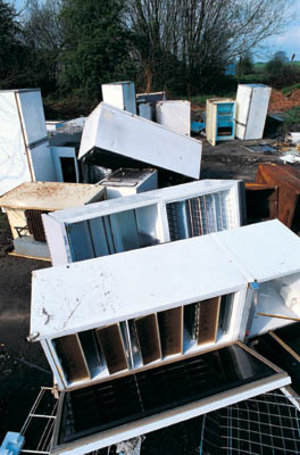
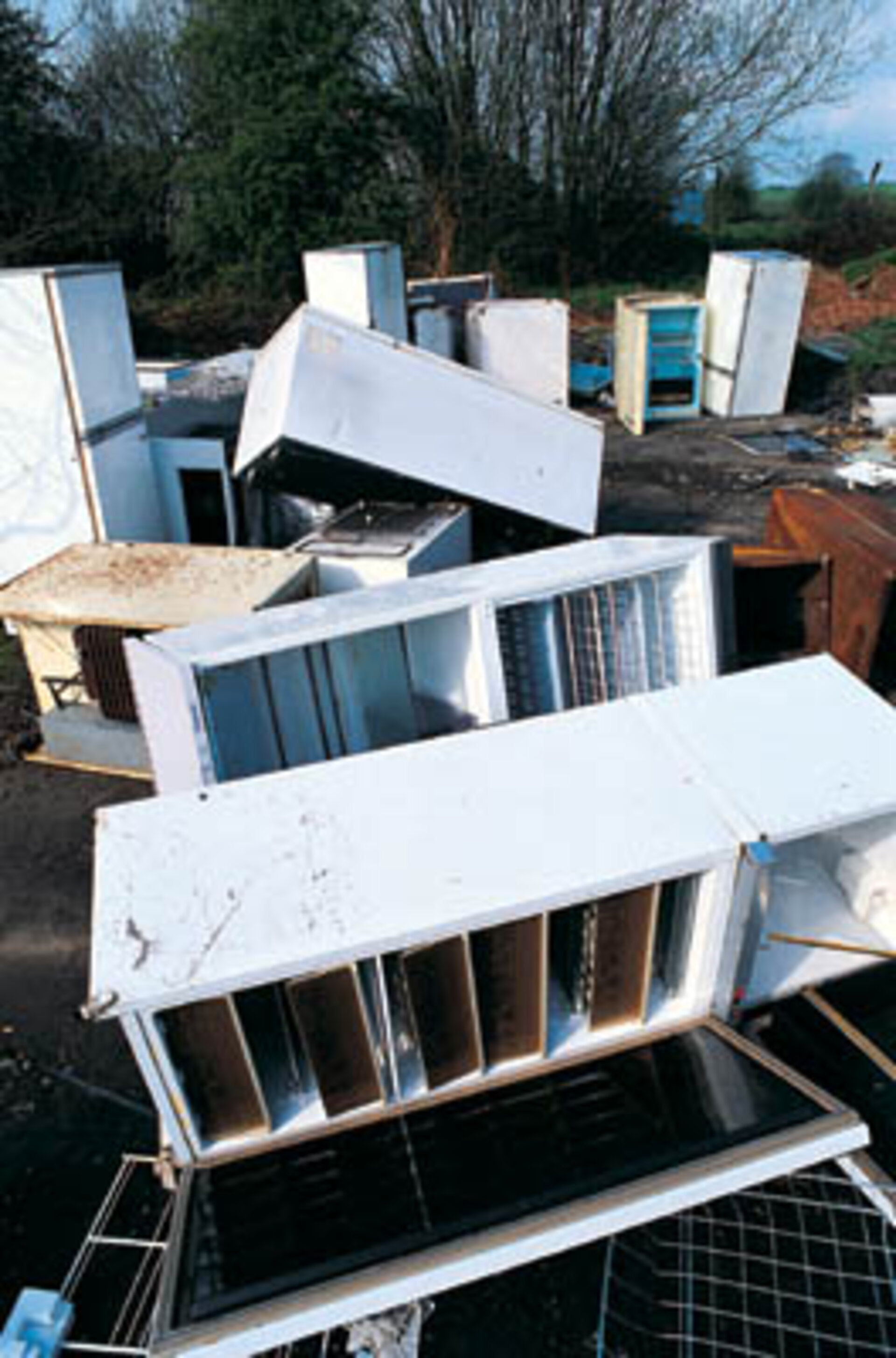
    Old discarded fridges, a source of CFCs

    The hole in the ozone layer that now opens annually above the South Pole is a dramatic symbol of our atmosphere’s inherent unpredictability. It was caused by what were developed to be stable, non-polluting chemicals: chloroflurocarbons (CFCs), once used in aerosols and refrigerators.

    But CFCs turned out to circulate throughout the globe and some made it up as high as the stratosphere. Safely inert at lower altitudes, they were broken up at these scanty heights by intense ultraviolet radiation from the sun.

    The chlorine liberated from CFCs then turned out to be highly reactive with the stratospheric ozone layer that is mainly concentrated between 25 and 35 km up and which blocks this harmful ultraviolet from reaching the Earth’ surface. Excess ultraviolet exposure causes skin cancer, cataracts and immune system damage in humans, and injures animals, plants and even microscopic phytoplankton. A single chlorine molecule has a devastating effect, taking apart ozone molecule after ozone molecule.

    The 1987 Montreal Protocol banned the production and use of CFCs, but too late to stop a mammoth 28 million km2 ozone hole opening over Antarctica each spring. Scientists predict another ozone hole will eventually open over the Arctic, already the site of seasonal ozone thinning, as the extreme winter cold of both regions accelerates ozone destruction.
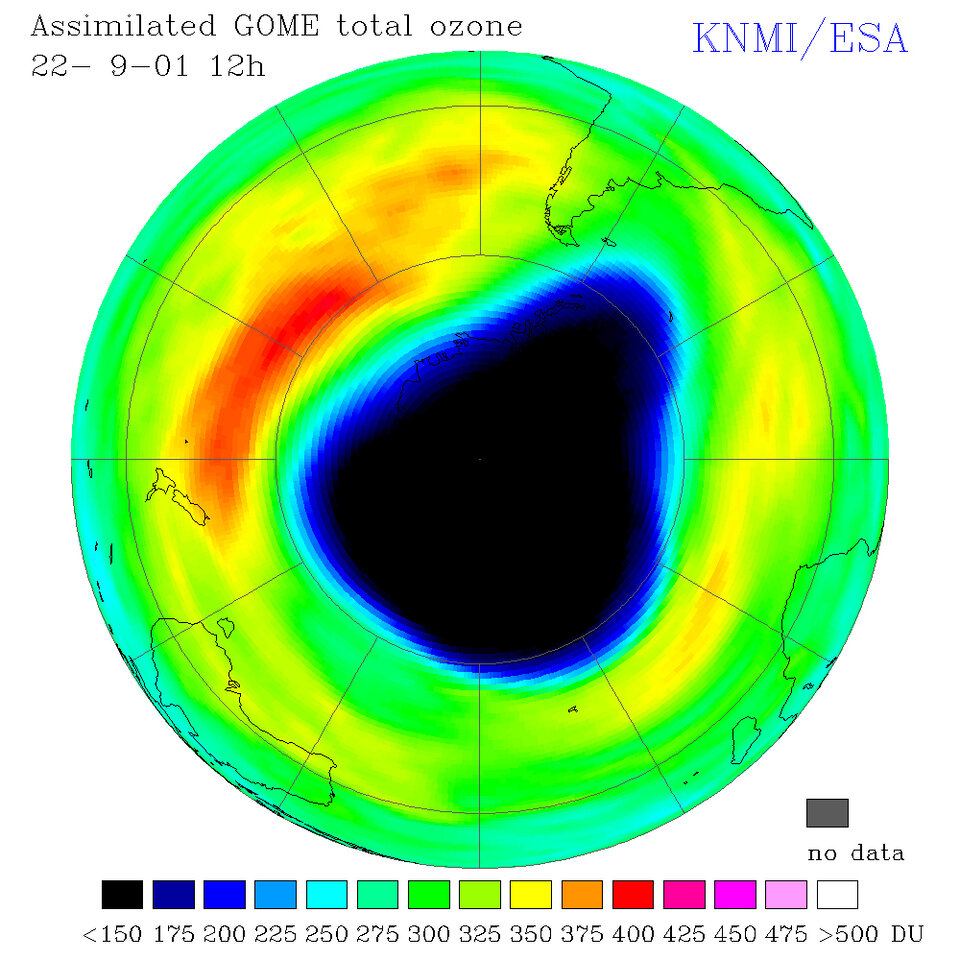
    Ozone hole over the South Pole, September 2001

    ERS-2, Envisat’s predecessor mission, has been mapping global stratospheric ozone levels since 1995. Envisat is flying a dedicated instrument to continue this task. Known as GOMOS, it actually functions by looking away from the Earth to the stars. A pre-programmed star tracker fixes a star and follows it as it ‘sets’ behind the Earth.

    GOMOS has a telescope-linked spectrometer to analyse the starlight as it passes through the Earth’s atmosphere. This detects the vertical concentration of ozone as well as other trace gases that react with it, plus stratospheric temperatures. This is particularly important information as some studies suggest the high atmosphere is being further cooled by global warming retaining heat in the lowest, thickest part of the atmosphere. Such cooling would speed up the rate of ozone destruction further and make an Arctic - and maybe European - ozone hole more likely.

    By observing about 30 stars per orbit GOMOS can produce as much data daily as 360 separate ground stations. The MIPAS and SCIAMACHY instruments simultaneously show how CFCs and other trace gases make their way up from the lower troposphere across the boundary of the stratosphere. Scientists will be able to learn more about the complex chain of chemical reactions that continue to affect the ozone layer and estimate how long it will take to replenish itself.

    Last update: 4 March 2002

    Rate this

    Views

    Share

    • Currently 0 out of 5 Stars.
    • 1
    • 2
    • 3
    • 4
    • 5
    Rating: 0/5 (0 votes cast)

    Thank you for rating!

    You have already rated this page, you can only rate it once!

    Your rating has been changed, thanks for rating!

    11
    Tweet
    • Envisat expected results
    • Envisat Expected Results Home Page
      • Oceans
        • Land
        • Atmosphere
          • Climate change
            • Water vapour and clouds
              • Air pollution
                • Ozone hole
                  • Aerosols
                  • Related links
                  • About Envisat
                  • Envisat Project Site
                  • EO Principal Investigator News
                  • Earthnet
                  • Envisat Launch
                  • Envisat multimedia links
                  • 3-D VRM Envisat model
                  • Earth Observation Gallery
                  • Envisat videos
                  • Envisat instruments

    Connect with us

    • RSS
    • Youtube
    • Twitter
    • Flickr
    • G+
    • Facebook
    • Livestream
    • Subscribe
    • App Store
    • LATEST ARTICLES
    • · Rare merger reveals secrets of gal…
    • · Watching for hazards: ESA opens as…
    • · ESA astronaut Timothy Peake set fo…
    • · Space drives e-mobility
    • · Proba-V opens its eyes
    • FAQ

    • Jobs at ESA

    • Site Map

    • Contacts

    • Terms and conditions