• → European Space Agency

      • Space for Europe
      • Space News
      • Space in Images
      • Space in Videos
    • About Us

      • Welcome to ESA
      • DG's News and Views
      • For Member State Delegations
      • Business with ESA
      • ESA Exhibitions
      • ESA Publications
      • Careers at ESA
    • Our Activities

      • Space News
      • Observing the Earth
      • Human Spaceflight
      • Launchers
      • Navigation
      • Space Science
      • Space Engineering
      • Operations
      • Technology
      • Telecommunications & Integrated Applications
    • For Public

    • For Media

    • For Educators

    • For Kids

    • ESA

    • Observing the Earth

    • Living Planet

    • Meteorological missions

    • MetOp

    • MetOp at a glance
    • Overview
    • Why we need MetOp
    • Facts & figures
    • History
    • Satellite

      • About the satellite
      • Payload Module
      • Service Module
    • Instruments

      • Overview
      • Technical summary
    • Launch

      • Launch sequence
      • Launcher
    • Mission operations

      • Operations
      • Orbit
    • Resources

      • Publications
      • General links
      • Glossary
      • Acronym list
    • Multimedia
    • MetOp images
    • MetOp videos
    • MetOp animations
    • Help
    • Services
    • Subscribe

    ESA > Our Activities > Observing the Earth > The Living Planet Programme > Meteorological missions > MetOp

    AVHRR description

    Scanning mechanism

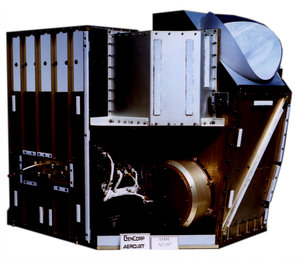
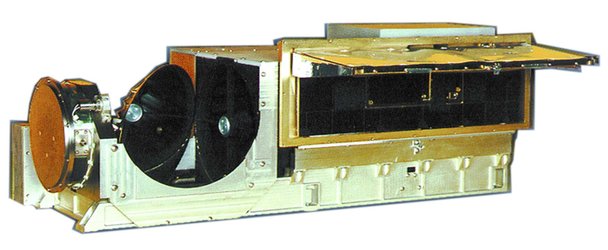
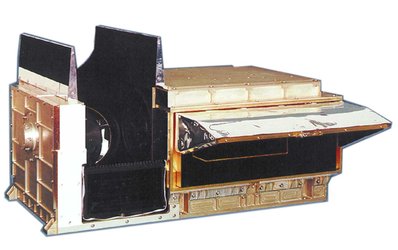
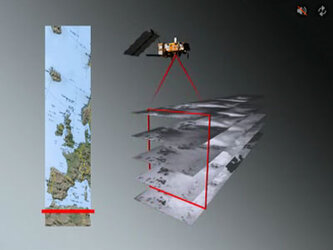
    The AVHRR/3, a six channel scanning radiometer, provides three solar channels in the visible-near infrared region and three thermal infrared channels. The instrument utilises an 8-inch diameter-collecting telescope of the reflective Mersenne type. Cross-track scanning is accomplished by a continuously rotating mirror direct driven by a hysteresis synchronous motor. The three thermal infrared detectors are cooled to 105K by a two-stage passive radiant cooler.

    The Sun angle is defined as the angle between the satellite-to-Sun line and the normal-to-orbital plane with the spacecraft in its operating orientation. The AVHRR/3 instrument, with the exception of the radiant cooler, operates within specification when exposed to any Sun angle from 0° to 80°. The radiant cooler operates within specification for solar angles between 0° to 68°. The spacecraft provides a Sun shield to protect the radiant cooler.

    The AVHRR/3 uses an internal rotational scanning mirror that also views deep space and an internal calibration source. Those facilities (view to space and on-board black body targets) are used for the primary calibration of the IR channels (3B, 4 and 5), that occurs at each scan cycle.

      Central wavelength
    (mm)
    Half power points
    (mm)
    Channel noise specifications Time availability
    1 0.630 0.580 / 0.680 S/N 9:1 @ 0.5% albedo 24 hours
    2 0.862 0.725 / 1.000 S/N 9:1 @ 0.5% albedo 24 hours
    3a 1.1610 1.580 / 1.640 S/N 20:1 @ 0.5% albedo Day (Selectable)
    3b 3.740 3.550 / 3.930 NEDT
    0.12K @ 300K
    Night (Selectable)
    4 10.800 10.300 / 11.300 NEDT
    0.12K @ 300K
    24 hours
    5 12.000 11.500 / 12.500 NEDT
    0.12K @ 300K
    24 hours

    AVHRR/3 Channel Characteristics
    Last update: 28 June 2006

    Rate this

    Views

    Share

    • Currently 0 out of 5 Stars.
    • 1
    • 2
    • 3
    • 4
    • 5
    Rating: 0/5 (0 votes cast)

    Thank you for rating!

    You have already rated this page, you can only rate it once!

    Your rating has been changed, thanks for rating!

    124
    Tweet
    • In depth
    • About AVHRR
    • Scanning mechanism
    • Components
    • Performance
    • Products
    • Related links
    • NOAA AVHRR
    • MetOp's instruments
    • A/DCS
    • AMSU-A1
    • AMSU-A2
    • ASCAT
    • AVHRR
    • GOME-2
    • GRAS
    • HIRS
    • IASI
    • MHS
    • SARP-3
    • SARR
    • SEM

    Connect with us

    • RSS
    • Youtube
    • Twitter
    • Flickr
    • G+
    • Facebook
    • Livestream
    • Subscribe
    • App Store
    • LATEST ARTICLES
    • · ESA astronaut Timothy Peake set fo…
    • · Space drives e-mobility
    • · Proba-V opens its eyes
    • · First new Galileo satellite arrive…
    • · Next destination: space
    • FAQ

    • Jobs at ESA

    • Site Map

    • Contacts

    • Terms and conditions