• → European Space Agency

      • Space for Europe
      • Space News
      • Space in Images
      • Space in Videos
    • About Us

      • Welcome to ESA
      • DG's News and Views
      • For Member State Delegations
      • Business with ESA
      • ESA Exhibitions
      • ESA Publications
      • Careers at ESA
    • Our Activities

      • Space News
      • Observing the Earth
      • Human Spaceflight
      • Launchers
      • Navigation
      • Space Science
      • Space Engineering
      • Operations
      • Technology
      • Telecommunications & Integrated Applications
    • For Public

    • For Media

      • Media
      • ESA TV
      • Videos for professionals
      • Photos
    • For Educators

    • For Kids

    • ESA

    • Operations

    • Ground Systems Engineering

    • Space Debris

    • SSA

    • Operations
    • Operations home
    • Background
    • About Operations
    • The Right Stuff
    • Multimedia

      • Images
      • Videos
    • SSA programme
    • Space Situational Awareness
    • Teams on ground
    • Ground Systems Engineering
    • EGOS - Ground operation system
    • Missions in space
    • Solar and planetary
    • Astronomy & fundamental physics
    • Earth observation
    • Human spaceflight
    • Technology demonstration
    • Estrack operations
    • Past missions
    • ESA mission history
    • - Find a mission: A...Z
    • Mission control centres
    • ATV Control Centre (ATV-CC)
    • Columbus Control Centre (Col-CC)
    • Ground stations
    • Estrack tracking stations
    • ESTRACK Control Centre
    • - Find a station: A...Z
    • OPS Community
    • Advanced Operations Concepts Office
    • HSO Exchange
    • Knowledge Management at ESA's Operations team

    ESA > Our Activities > Operations

    Closing in on Venus

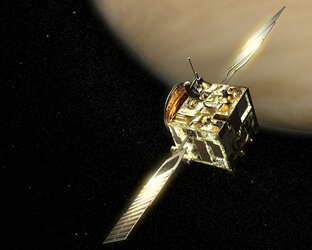
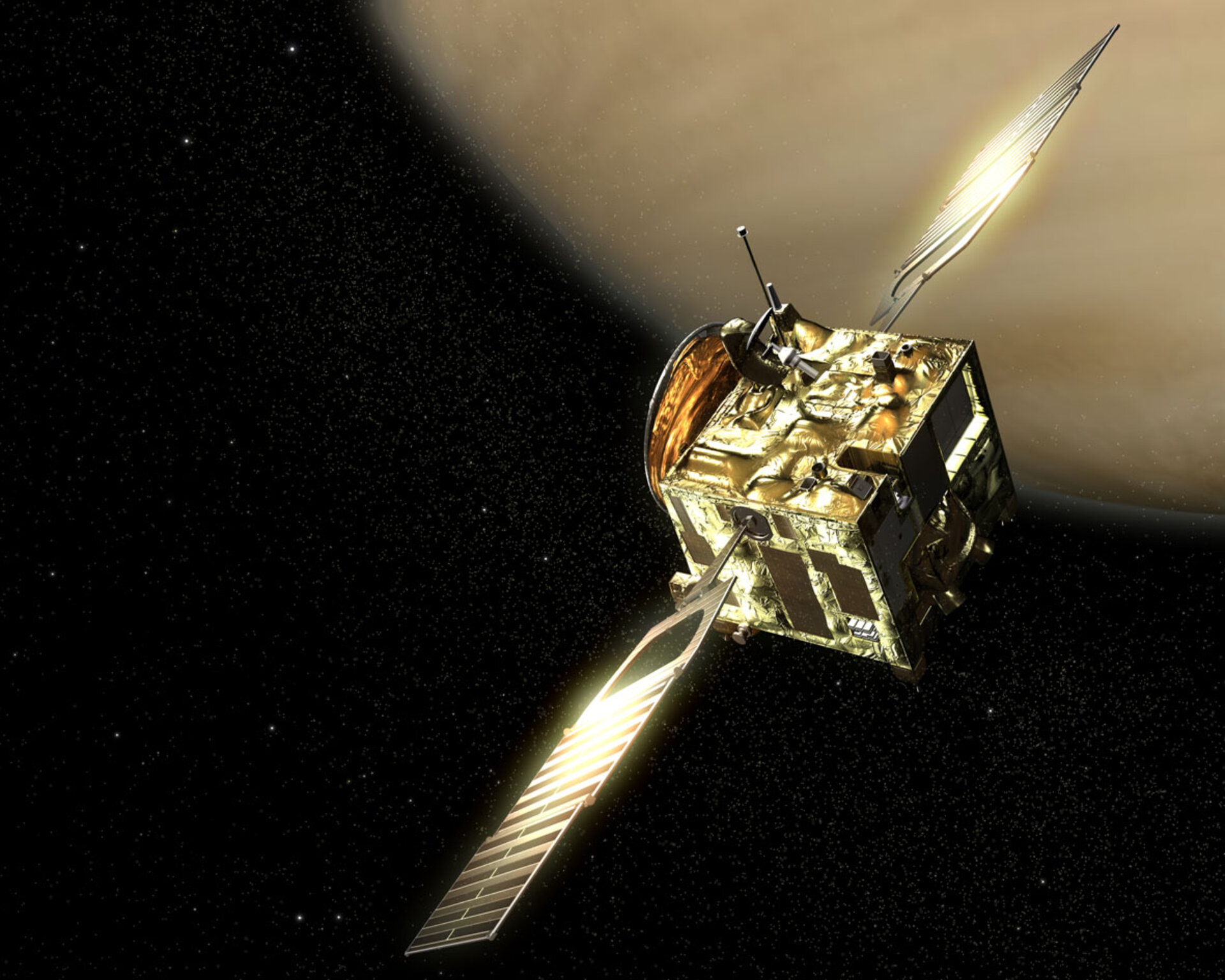
    Artist's impression of Venus Express
    17 July 2008

    Starting this week, spacecraft controllers have been executing a series of manoeuvres to gradually bring Venus Express closer to its host planet. In its modified orbit, the spacecraft will be able to observe unexplored regions and investigate phenomena that were not within its reach before.

    The operational manoeuvres to bring the spacecraft closer will be executed through the month of July, settling it into its new orbit by 4 August.

    Until now, Venus Express has occupied a highly eccentric polar orbit: at its closest point (pericentre), the spacecraft is between 250 km and 400 km from the planet, and at its farthest (apocentre), it is about 66 000 km away. The pericentre is located at 84° north.

    This eccentric orbit was designed to facilitate observation of the southern hemisphere for extended periods, and of the northern hemisphere and the northern polar region at closer distances.

    The altitude of the pericentre will now be lowered to between 185 and 300 km. This modification will enable the following science advantages:

    • Study of the magnetic field in the northern polar region

    • Study of the plasma environment deeper in the ionosphere

    • To indirectly deduce the density of the planet’s atmosphere by measuring the force, or drag, exerted by the planet’s atmosphere on the body of the spacecraft as it moves closer to the planet

    The lowering of the Venus Express orbit is the first step in a more ambitious strategy, yet to be confirmed in its entirety. The intention is to lower the spacecraft's orbit further into the atmosphere, such that the drag on the spacecraft's body can be measured by the on-board accelerometers.


    As the next step, Venus Express may test aerobraking, a technique where a spacecraft uses the force exerted by the planet’s atmosphere to decelerate and so significantly change its orbit in a controlled manner.

    For more information:

    Håkan Svedhem, ESA Venus Express Project Scientist
    Email: Håkan.Svedhem @ esa.int

    Octavio Camino, ESA Venus Express Spacecraft Operations Manager
    Email: Octavio.Camino @ esa.int

    Rate this

    Views

    Share

    • Currently 0 out of 5 Stars.
    • 1
    • 2
    • 3
    • 4
    • 5
    Rating: 0/5 (0 votes cast)

    Thank you for rating!

    You have already rated this page, you can only rate it once!

    Your rating has been changed, thanks for rating!

    65
    Tweet
    • Looking at Venus
    • ESApod: Venus Express
    • Related articles
      • New details on venusian clouds revealed
        • Key molecule discovered in Venus’s atmosphere
          • Two years of spying on Earth’s twin planet
            • Venus Express reboots the search for active volcanoes on Venus
              • The puzzling 'eye of a hurricane' on Venus
                • Mars and Venus are surprisingly similar
                  • The light and dark of Venus
                    • Venus Express seeks out gases below the clouds
                      • Christmas greetings from Venus – with a new educational film
                      • In depth
                      • This article in depth
                      • Venus Express in depth

    Connect with us

    • RSS
    • Youtube
    • Twitter
    • Flickr
    • G+
    • Facebook
    • Livestream
    • Subscribe
    • App Store
    • ESA Operations Twitter

    Follow ESA operations

    • LATEST ARTICLES
    • · Rare merger reveals secrets of gal…
    • · Watching for hazards: ESA opens as…
    • · ESA astronaut Timothy Peake set fo…
    • · Space drives e-mobility
    • · Proba-V opens its eyes
    • FAQ

    • Jobs at ESA

    • Site Map

    • Contacts

    • Terms and conditions