• → European Space Agency

      • Space for Europe
      • Space News
      • Space in Images
      • Space in Videos
    • About Us

      • Welcome to ESA
      • DG's News and Views
      • For Member State Delegations
      • Business with ESA
      • ESA Exhibitions
      • ESA Publications
      • Careers at ESA
    • Our Activities

      • Space News
      • Observing the Earth
      • Human Spaceflight
      • Launchers
      • Navigation
      • Space Science
      • Space Engineering
      • Operations
      • Technology
      • Telecommunications & Integrated Applications
    • For Public

    • For Media

    • For Educators

    • For Kids

    • ESA

    • Space Engineering

    • What we do
    • Directorate of Technical and Quality Management (TEC)
    • Electrical
    • Electrical engineering
    • Control Systems
    • Data Systems
    • Radio Frequency Payload Systems
    • Electromagnetics and Space Environment
    • Power and Energy Conversion
    • Mechanical
    • Mechanical engineering
    • Thermal Control
    • Structures and Mechanisms
    • Mechatronics and Optics, incl. robotics and life support
    • Propulsion and Aerothermodynamics
    • Systems
    • Systems and software engineering
    • Software Systems
    • Systems Engineering, incl. cost engineering
    • Technology programmes
    • Product Assurance
    • Product Assurance
    • Flight Safety
    • Dependability
    • Quality Management and Assurance
    • Materials and Processes
    • Electronic Components
    • Software Product Assurance
    • Standards
    • Requirements and standards
    • European Cooperation for Space Standardization (ECSS)
    • European Space Components Coordination (ESCC)
    • Services
    • ESA calendar of events
    • Subscribe

    ESA > Our Activities > Space Engineering

    ESA’s space radio lab reopens in Valencia

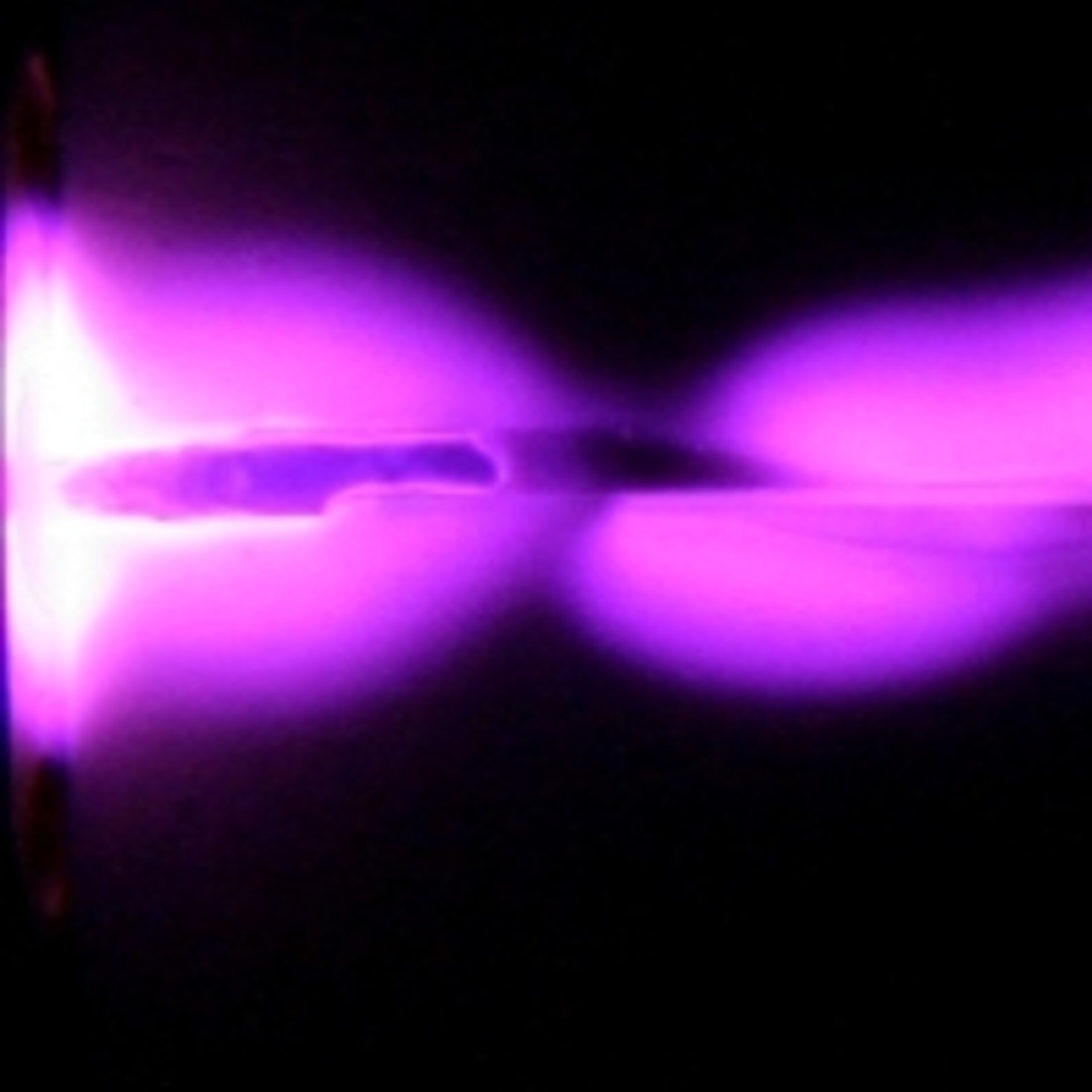
    Corona discharge
    Corona effect studied by lab
    29 June 2010

    ESA’s specialist laboratory exploring the harmful effects of operating powerful radio systems in space has formally reopened at its new home in Valencia, Spain.

    The inauguration ceremony of ESA’s High Power Radio Frequency (RF) Laboratory took place on Monday 28 June at the Technical University of Valencia, with around 200 people in attendance.

    Mayor of Valencia Rita Barbará Nolla, President of Valencia’s regional government Francisco Camps and regional Education Minister Alejandro Font de Mora welcomed ESA’s Director of Technical and Quality Management Michel Courtois among other Agency representatives.
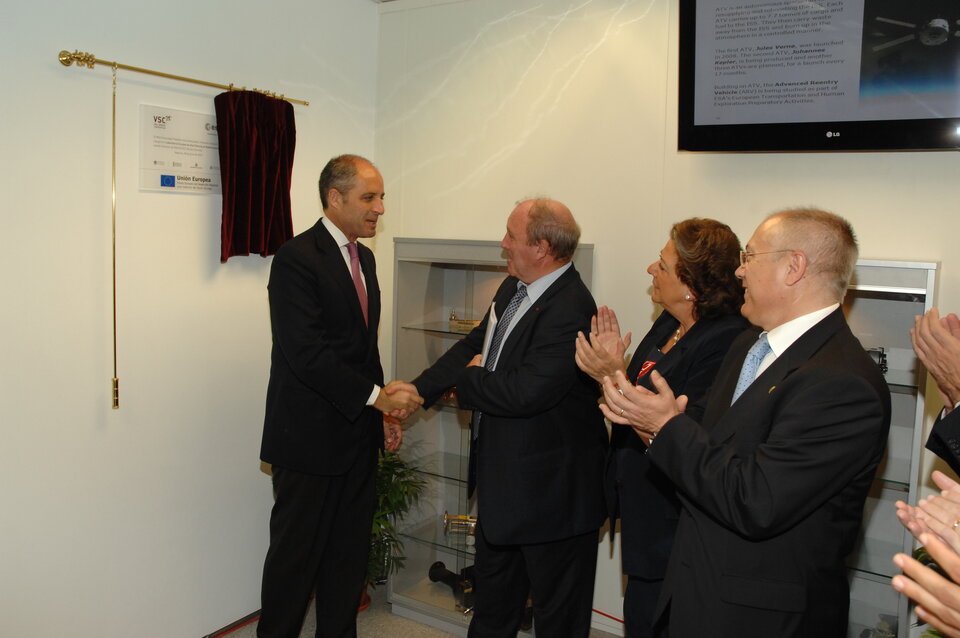
    Inauguration plaque unveiled

    Previously based at ESTEC, ESA’s space technology centre in the Netherlands, the Laboratory is a European centre of excellence for the study of high-powered RF effects in the space environment.

    It is now being hosted by the Valencia Space Consortium (VSC), a non-profit organisation set up by the region’s two universities, the Technical University and general University of Valencia, along with the municipal and regional governments.
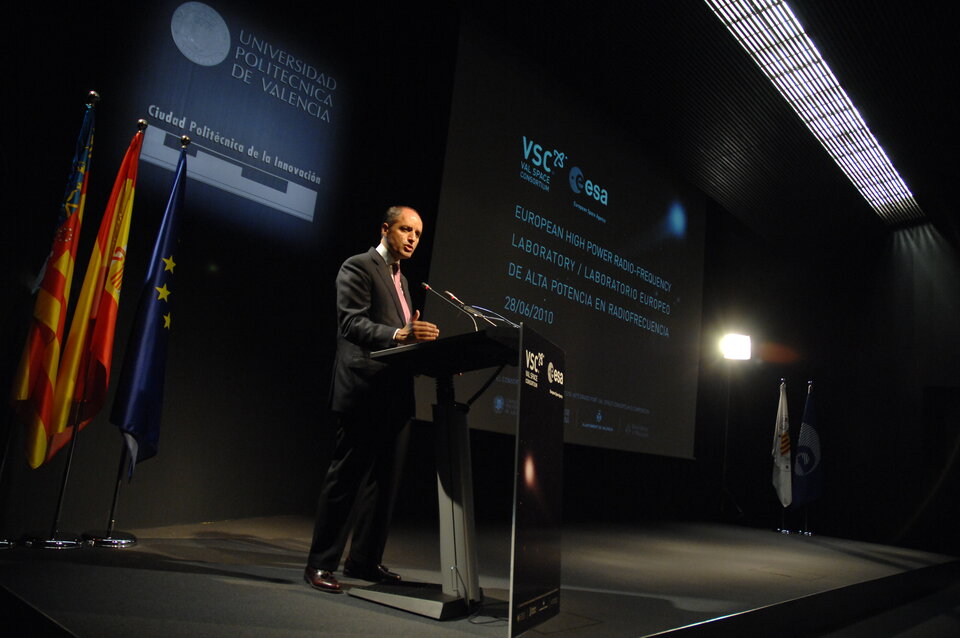

    Moment of inauguration

    "The importance given to the opening of this facility in Valencia denotes how valuable space technology has become for progress and innovation," said Director Courtois. The Valencia Space Consortium (VSC) combines the efficiency, dedication and enthusiasm needed to make this laboratory a reference for the future."

    The main Laboratory is sited at the Technical University of Valencia, along with a small laboratory for materials analysis at the University of Valencia’s Faculty of Physics. The plan is that both laboratories will eventually be merged in a new building dedicated to space.

    "The opening of this laboratory is a very relevant event for Valencia," said Mayor Barbará. "It will bring to the city prestige, opportunities, wealth and qualified job offers."

    President Camps commented: "A great project takes form in our city today, thanks to the European Space Agency".

    Touring the lab

    The Laboratory’s activities will continue as before, with support to ESA missions its first priority, run by a basic team of technicians overseen by its current ESTEC manager. Access to the Laboratory for the needs of Europe’s space industry will still be governed by the same standard rules as any other ESA technical laboratory.

    At the same time, the move will open up new opportunities for related research: facilities including thermal vacuum chambers, an anechoic chamber and specialised RF equipment are being made available to PhDs and research fellows from across Europe.

    “We are a unique facility in Europe, founded in 1985 as ESA was designing its first radar satellite, ERS-1,” said David Raboso, Laboratory Manager.

    “Nobody else is studying these potentially harmful RF phenomena to such a degree. They simply weren’t an issue for the earliest satellites whose RF systems operated at a few watts each but current satellites’ RF communication, navigation or radar systems are sometimes thousands of times more powerful."

    Rate this

    Views

    Share

    • Currently 0 out of 5 Stars.
    • 1
    • 2
    • 3
    • 4
    • 5
    Rating: 0/5 (0 votes cast)

    Thank you for rating!

    You have already rated this page, you can only rate it once!

    Your rating has been changed, thanks for rating!

    73
    Tweet
    • Related links
    • RF Payload Systems Laboratories
    • ESA External Laboratories (Electrical)
    • Selection Campaigns
      • Signature switches ESA lab from Netherlands to Spain
        • ESA’s High Power RF Laboratory transferring to Spain
        • Life support pilot plant paves the way to Moon and beyond

    Connect with us

    • RSS
    • Youtube
    • Twitter
    • Flickr
    • G+
    • Facebook
    • Livestream
    • Subscribe
    • App Store
    • LATEST ARTICLES
    • · Proba-V opens its eyes
    • · First new Galileo satellite arrive…
    • · Next destination: space
    • · Leak repaired on International Spa…
    • · After Chelyabinsk: European expert…
    • FAQ

    • Jobs at ESA

    • Site Map

    • Contacts

    • Terms and conditions