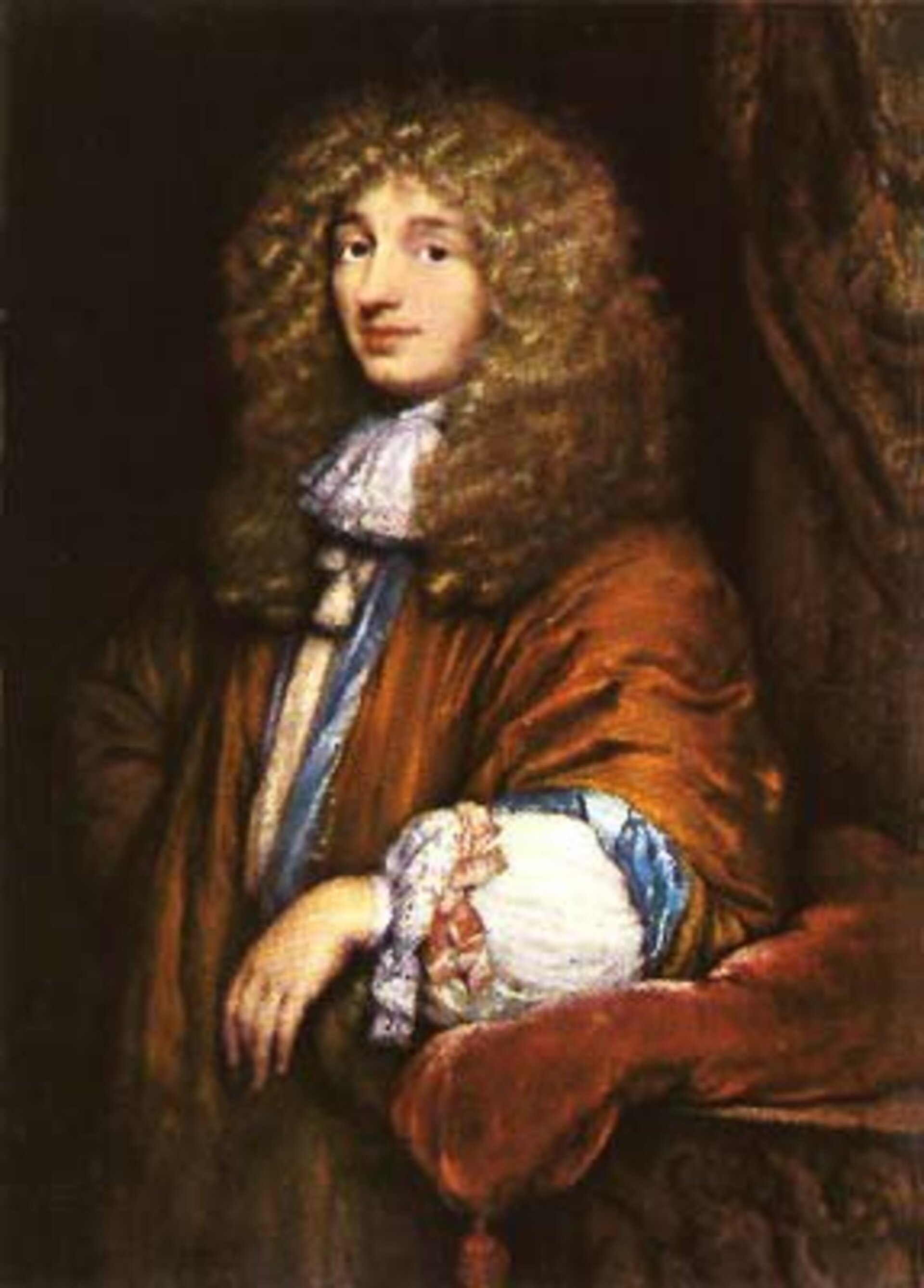
Anniversary of the birth of Christiaan Huygens
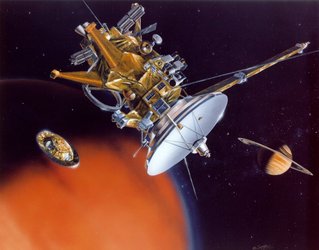
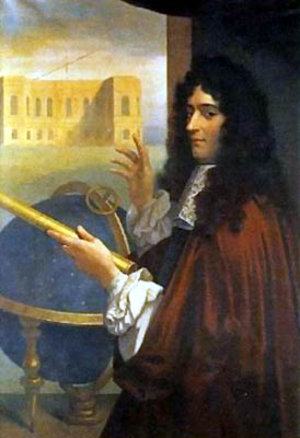
On 14 April 1629, 375 years ago today, the Dutch scientist Christiaan Huygens was born. ESA’s probe on board the NASA/ESA Cassini-Huygens mission to the Saturnian system is named after him, the lens-maker who discovered Titan in 1655.
Huygens came from a wealthy and well-connected Dutch family, who were traditionally in diplomatic service to the House of Orange. As a young boy he already showed promise in mathematics and drawing.
Descartes used to correspond with Huygens's grandfather and, impressed with the boy's early efforts at geometry, he was a great influence on Huygens. In 1645 he went to the University of Leiden to study mathematics and law and two years later he attended the College of Breda.
Shortly after Galileo first used a telescope for astronomical purposes, many other scientists decided to use this new instrument to perform their own studies. Many realised immediately that the improvement of the quality of the telescope could mean the chance to make history in astronomy.
Huygens applied himself to the manufacture of telescopes, together with his brother Constantijn, and soon after developed a theory of the telescope. Huygens discovered the law of refraction to derive the focal distances of lenses. He also realised how to optimise his telescopes by using a new way of grinding and polishing the lenses.

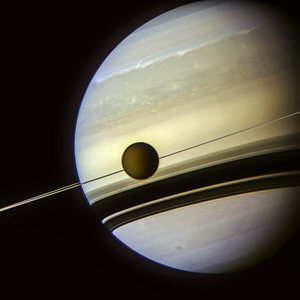
In 1655, he pointed one of his new telescopes, of far better quality than that used by Galileo, towards Saturn with the intention of studying its rings. But he was very surprised to see that, besides the rings, the planet had also a large moon. This is now known as Titan. In 1659 he discovered the true shape of the rings of Saturn.
Another Dutchman, Hans Lippershey, an eyeglass maker, had first offered the invention of the telescope to the Dutch government for military use. The government did not proceed with the idea. From Lippershey, Galileo picked up the idea of building a telescope for astronomical research. Huygens, by his own efforts and too late for Lippershey, demonstrated how important the telescope was.
With his interest in the measurement of time, he then discovered the pendulum could be a regulator of clocks. Huygens became one of the founding members of the French Academy of Sciences in 1666. He stayed in Paris from 1666-81 with only occasional visits to Holland and in 1673 he famously published his work Horologium Oscillatorium.
In 1689 Huygens went to London and met Sir Isaac Newton. He had always considered himself as an outstanding genius, so much so that he refused to collaborate with Newton in finding a better and more elegant mathematical solution for a pendulum clock.
The two great scientists also had other reasons for arguing. Newton was a firm upholder of the corpuscular theory of light. On the contrary Huygens formulated a wave theory of light. Newton’s reputation at the time caused scientists to favour the Englishman's theory. It took more than a century to give the right emphasis to the theory of the Dutch scientist.
In the field of mathematics, Huygens could not challenge Newton, because he had not developed calculus. However, he encouraged the German mathematician Gottfried Leibnitz to publish on this subject. Newton had already developed calculus independently but not yet published. This led to a dispute between Newton and Leibnitz over this important mathematical discovery.

He died in 1695. Although scientific results obtained by Huygens were second only to those obtained by Newton, the Dutch scientist was not really recognised in his time, nor had he influenced the development of science as he could have done, because he preferred solitary contemplation to team efforts.
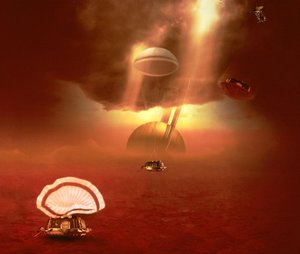
The NASA/ESA Cassini-Huygens mission to Saturn and Titan is now giving back the honour to the Dutch scientist. Over 300 years after Huygens’s discovery of Titan, the largest moon is shortly to be visited by a probe from Earth. In a few years, we will know much more about Titan’s atmosphere, its surface and possibly mystery of the origin of life.