ESA to search for life, but not as we know it
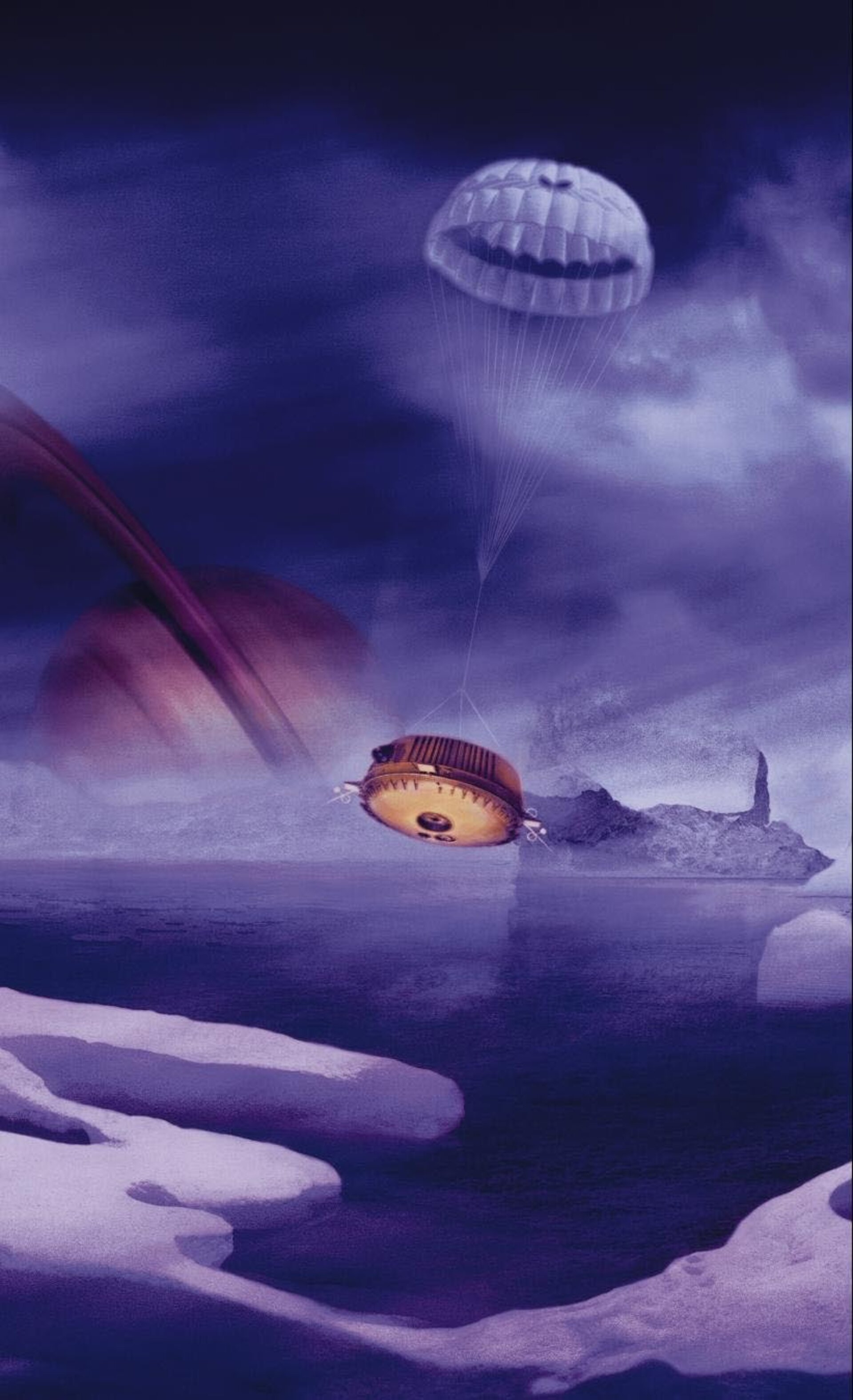
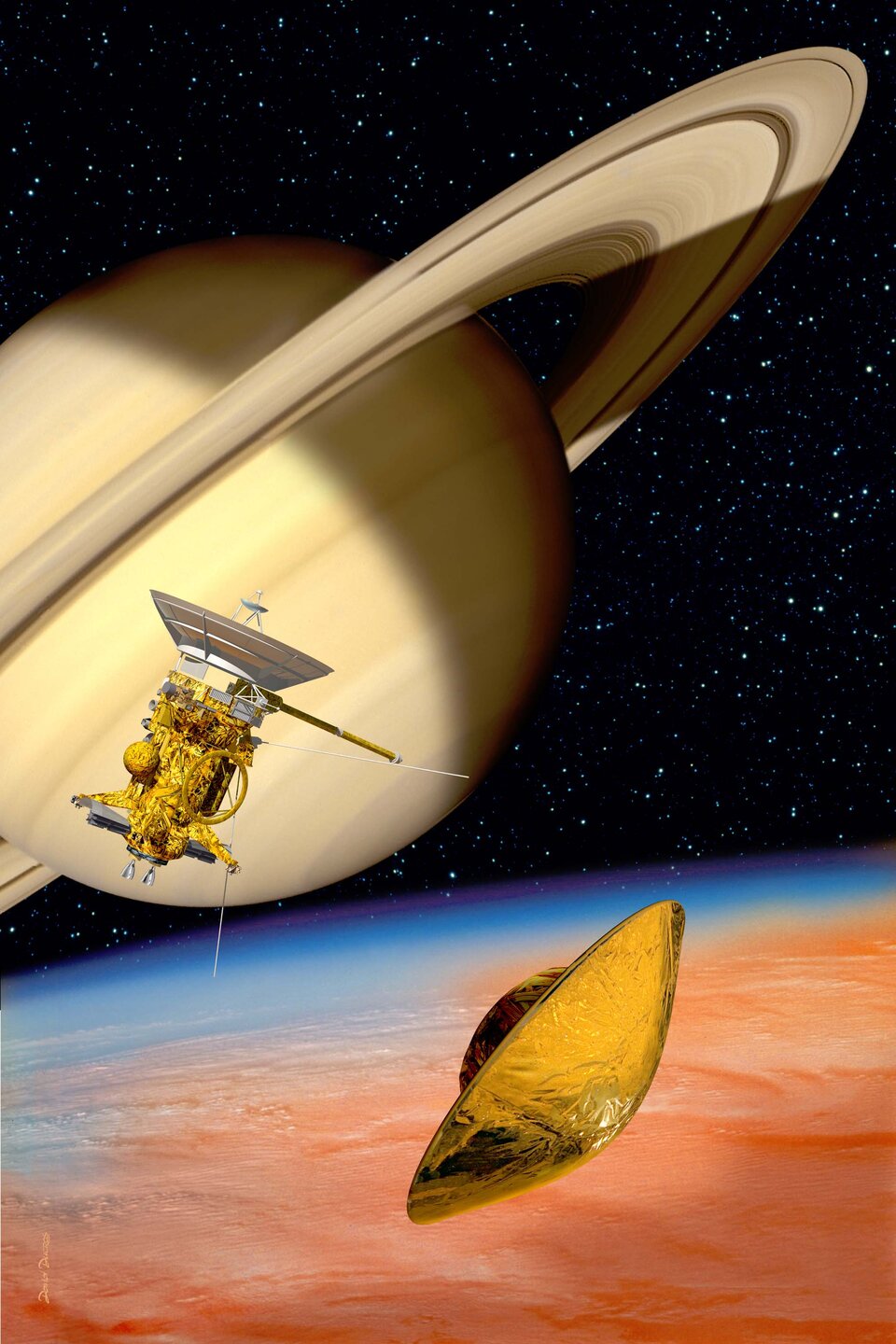
This week, astrobiologists are discussing what ESA's Huygens spaceprobe might discover when it parachutes to the surface of Saturn's mysterious moon, Titan, in 2005. Titan possesses a rich atmosphere of organic molecules, which Huygens will analyse. Recently some scientists have begun to think that, by redefining life, in broader terms, what we may find on Titan may be life. If this is the case, it certainly will not be life as we know it...
Titan is an astrobiologist's dream laboratory. Its atmosphere is composed of nitrogen and methane gas. Ultraviolet light from the Sun can break the methane molecules apart, leading to the formation of complex organic molecules by which scientists mean molecules containing carbon. Carbon compounds are the first step towards life, as we know it on Earth. Life, itself, is based on extremely complicated carbon molecules such as DNA. Some scientists believe the composition of Titan's atmosphere closely resembles that of early Earth, before life began on our planet.
Huygens's investigations may reveal how life began on Earth. Jean-Pierre Lebreton, ESA's Project Scientist for Huygens says, "One of the key questions we hope to address is how complex the organic molecules have grown in Titan's atmosphere."
However, organic molecules are still a long way from life itself. So, what defines life? What is the difference between the living and the non-living? Scientists are still unsure. No satisfactory definition has been found so far. Any attempt to define life's characteristics either excludes some types of life or includes some inanimate objects. When looking for an appropriate definition of life, there is one property all scientists seem to agree on: all life needs energy to sustain its metabolism.
For example, plants use sunlight, while animals extract energy from organic molecules in the food they eat. This happens not only in these higher-level organisms, but also in the simplest forms of life on Earth, microbes. Microbes are single-cell organisms that capture their life-energy from a dizzying array of inorganic chemical reactions. Such chemical metabolisms are so different from those in the animals and plants of Earth, that astrobiologists now wonder if life could arise in any place that can sustain a rich network of chemical reactions, such as on Titan. Moreover, on Earth, microbes have adapted to the extreme environmental conditions. Scientists therefore now ask, "Could life arise on Titan?"
By all standards, Titan is an extreme and hostile environment to life, as we know it. Any life on Titan would have to be totally different from all Earthly forms. Lebreton says, "The conditions on Titan are not adequate for the kind of life we understand today. It is very cold and there is no liquid water but we should be ready for surprises." Identifying life is tricky, especially when you are unsure what to look for. Huygens's geological and environmental investigations, and Cassini's mapping from orbit, might record chemical anomalies or curious geological structures that warrant further investigation as possible life indicators.
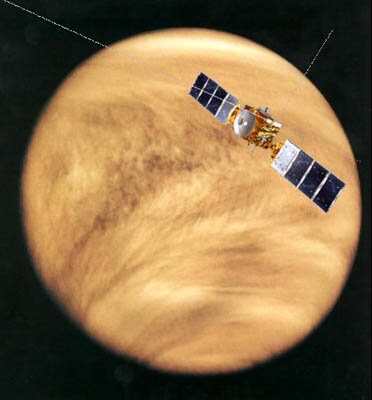
Another chemically puzzling place is the planet Venus. Similarly to Titan, Venus is a world that scientists would traditionally call hostile to life, as we understand it. However, there is something odd in its clouds. Venus's chemically laden atmosphere displays some curious phenomena, such as the planet's ability to absorb ultraviolet radiation. Scientists cannot explain this. Some speculate that perhaps microbes in the atmosphere are responsible. If ESA's Venus Express is given the final go-ahead later this year, it might help solve the mystery.
For centuries, scientists have struggled to define life. Space investigations present the best chance for astrobiologists to find the missing link in our understanding of what separates the living from the non-living. When we know that, we will finally have defined life here on Earth.
Note to editors
There are other European Space Agency missions with strong emphasis on astrobiology coming soon. Rosetta will study organic molecules on Comet Wirtanen, investigating how comets might have seeded the early Earth with such compounds, which possibly favoured the origin of life. Mars Express and its lander, Beagle 2, will scour Mars for environments likely to harbour past or present life.
Huygens
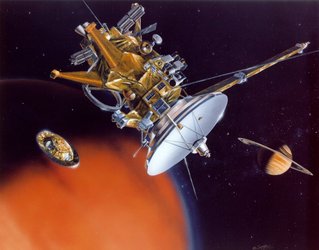
Huygens will be the first spaceprobe to land on a world in the outer Solar System. In early 2005, it will land on the surface of Titan, Saturn's largest moon, and the only moon in the Solar System to possess a thick atmosphere. The Huygens data may offer clues about how life began on Earth. Huygens is currently in space, hitching a ride on NASA's Cassini mission, which was launched by a Titan IVB/Centaur rocket on 15 October 1997.
Venus Express
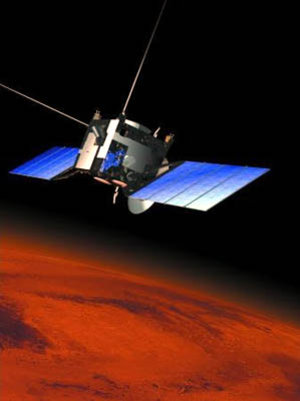
Venus Express is the latest mission to be added to ESA's Cosmic Vision 2020 Science Programme. It is scheduled for launch in November 2005 and will be build around the design of Mars Express, making it quicker and cheaper to develop. It will study the Venusian atmosphere and surface in detail and use radar to conduct the first investigation of the planet's subsurface layers. With Venus Express, Mars Express, and BepiColombo, ESA is the only space agency in the world with current plans to visit each planet in the inner Solar System.
Astrobiologists are gathering this week at the Second European Workshop on Astrobiology in Graz, Austria.
For more information, please contact:
Dr Jean-Pierre Lebreton
ESA Huygens Project Scientist and Venus Express Study Scientist
ESTEC, The Netherlands
Tel: +31 71 565 3600
E-mail: jean-pierre.lebreton@esa.int
ESA Science Programme Communications Service
Tel: +31 71 565 3273
E-mail: irina.bruckner@esa.int