• → European Space Agency

      • Space for Europe
      • Space News
      • Space in Images
      • Space in Videos
    • About Us

      • Welcome to ESA
      • DG's News and Views
      • For Member State Delegations
      • Business with ESA
      • ESA Exhibitions
      • ESA Publications
      • Careers at ESA
    • Our Activities

      • Space News
      • Observing the Earth
      • Human Spaceflight
      • Launchers
      • Navigation
      • Space Science
      • Space Engineering
      • Operations
      • Technology
      • Telecommunications & Integrated Applications
    • For Public

    • For Media

      • Media
      • ESA TV
      • Videos for professionals
      • Photos
    • For Educators

    • For Kids

    • ESA

    • Space Science

    • Our Universe
    • About Space Science
    • ESA's 'Cosmic Vision'
    • Science missions
    • Mission navigator
    • Target groups
    • For Media
    • For Scientists
    • For Kids
    • Multimedia
    • Science images
    • Science videos
    • Animations
    • Downloads
    • Sounds from space
    • Resources
    • Reference section
    • Services
    • FAQs
    • Glossary
    • Help
    • Portal terms of use
    • Comments
    • Follow us
    • RSS feeds
    • ESA Sci on Twitter
    • ESA Space Science Images on Flickr
    • ESA 3D on Flickr

    ESA > Our Activities > Space Science

    Christiaan Huygens: Discoverer of Titan

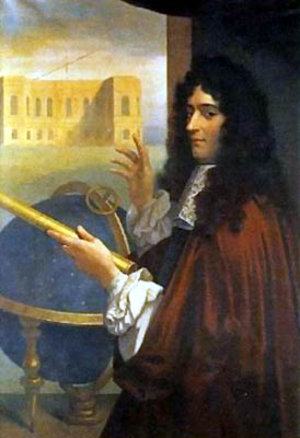
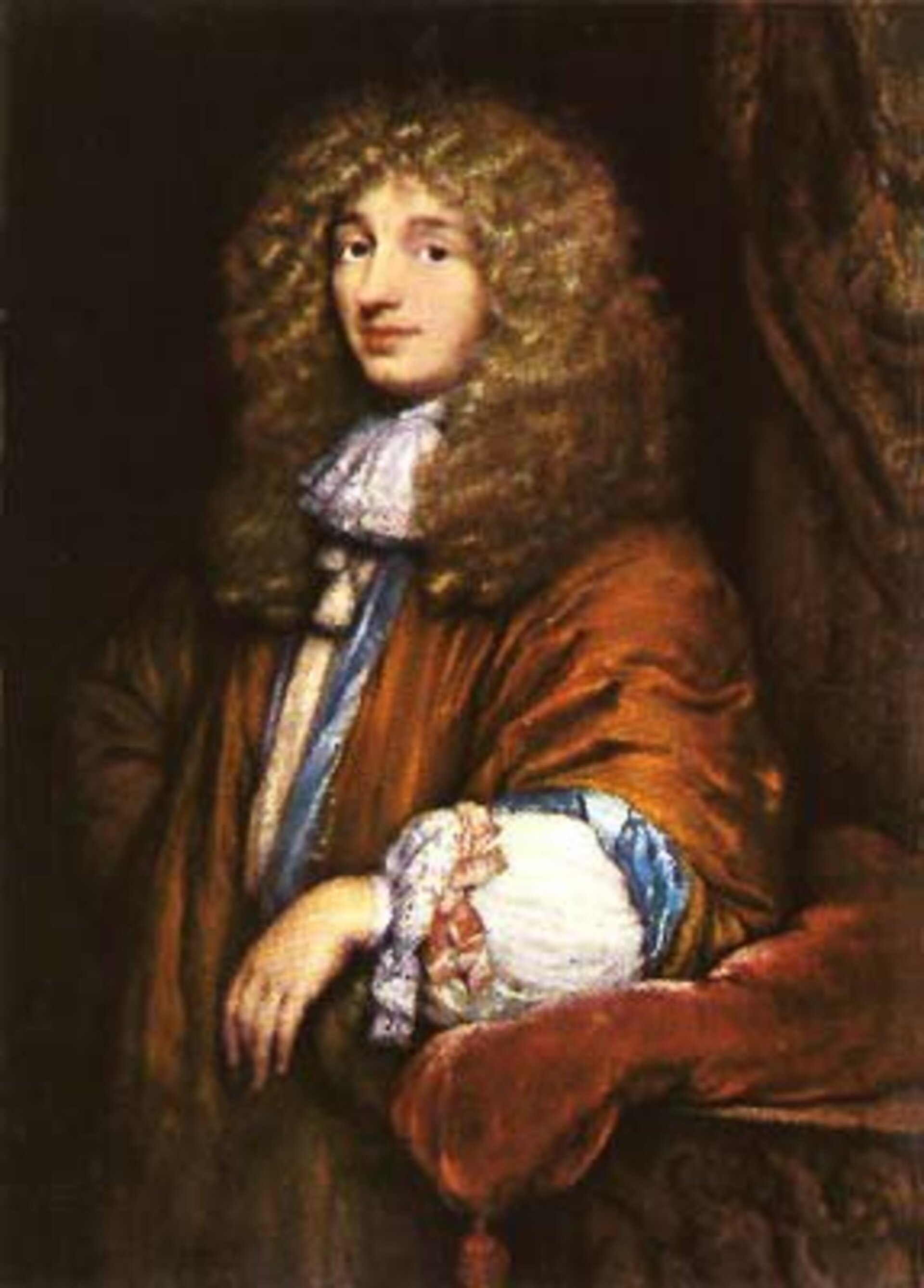
    Christiaan Huygens
    Christiaan Huygens, 1629-1695

    Born in 1629, Huygens came from a wealthy and well-connected Dutch family, who served in the diplomatic service to the House of Orange. As a young boy he showed promise in mathematics and drawing. In 1645 he went to the University of Leiden to study mathematics and law. Two years later he went to the College of Breda.

    Together with his brother Constantijn, Christiaan applied himself to the manufacture of telescopes, and soon after developed a theory of the telescope. Huygens discovered the law of refraction to derive the focal distance of lenses. He also realised how to optimise his telescopes by using a new way of grinding and polishing the lenses.

    Saturn's rings contain ice and dust

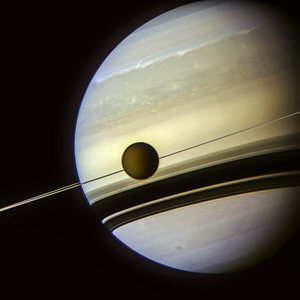
    In 1655, he pointed one of his new telescopes towards Saturn with the intention of studying its rings. But he was very surprised to see that, besides the rings, the planet also had a large moon, now known as Titan.

    Interested in the measurement of time, Huygens discovered the pendulum could be a regulator of clocks. He became one of the founding members of the Acadèmie Royale des Sciences in 1666, publishing his work Horologium Oscillatorium In 1673. He stayed in Paris until 1681, only occasionally visiting Holland during that time.


    In 1689 Huygens went to London and met Isaac Newton. The two men respected each other even if they did not agree on all matters of science. Newton was a firm upholder of the corpuscular theory of light: that light moves in packets. Huygens formulated an alternative wave theory of light but unfortunately Newton’s reputation at the time resulted in scientists favouring the Englishman's idea. It took more than a century before investigators gave credence to the Dutch scientist‘s wave theory.

    Huygens probe is mated with the Cassini orbiter
    Technicians join Huygens to Cassini

    Huygens died in 1695. Although the scientific results he obtained throughout his life were second only to Newton’s, the Dutch scientist was not really recognised during his time. Due to the fact that he preferred solitary contemplation to collaboration, he had not influenced the development of science to the extent he could have done while he was still living.

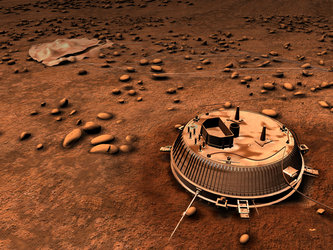
    Now, more than 300 years after Huygens’s discovery of Titan, Saturn’s largest moon has been visited by a probe from Earth. Appropriately called Huygens, it landed on 14th January 2005 as part of the NASA/ESA/ASI Cassini-Huygens mission to Saturn and Titan. Now, the Huygens team on Earth are working hard, deciphering the millions of bits of information sent back by the probe so that they can unveil Titan’s surface.
    Rate this

    Views

    Share

    • Currently 3.5 out of 5 Stars.
    • 1
    • 2
    • 3
    • 4
    • 5
    Rating: 3.4/5 (5 votes cast)

    Thank you for rating!

    You have already rated this page, you can only rate it once!

    Your rating has been changed, thanks for rating!

    1686
    Tweet
    • At Saturn and Titan
    • More about...
      • Cassini-Huygens factsheet
      • Related ESA publications
      • Titan: From Discovery to Encounter
      • Related articles
        • Far-off cousin of part-time African lake found on Titan
          • Rings, Titan and Enceladus
            • Saturn and Titan
              • Saturn's Rings and Enceladus
                • Jean-Dominique Cassini: Astrology to astronomy
                • Related links
                • NASA JPL Cassini-Huygens site
                • Italian Space Agency (ASI)

    Connect with us

    • RSS
    • Youtube
    • Twitter
    • Flickr
    • G+
    • Facebook
    • Livestream
    • Subscribe
    • App Store
    • ESA Science Twitter

    Follow ESA science

    • LATEST ARTICLES
    • · Rare merger reveals secrets of gal…
    • · Watching for hazards: ESA opens as…
    • · ESA astronaut Timothy Peake set fo…
    • · Space drives e-mobility
    • · Proba-V opens its eyes
    • FAQ

    • Jobs at ESA

    • Site Map

    • Contacts

    • Terms and conditions