• → European Space Agency

      • Space for Europe
      • Space News
      • Space in Images
      • Space in Videos
    • About Us

      • Welcome to ESA
      • DG's News and Views
      • For Member State Delegations
      • Business with ESA
      • ESA Exhibitions
      • ESA Publications
      • Careers at ESA
    • Our Activities

      • Space News
      • Observing the Earth
      • Human Spaceflight
      • Launchers
      • Navigation
      • Space Science
      • Space Engineering
      • Operations
      • Technology
      • Telecommunications & Integrated Applications
    • For Public

    • For Media

      • Media
      • ESA TV
      • Videos for professionals
      • Photos
    • For Educators

    • For Kids

    • ESA

    • Space Science

    • Our Universe
    • About Space Science
    • ESA's 'Cosmic Vision'
    • Science missions
    • Mission navigator
    • Target groups
    • For Media
    • For Scientists
    • For Kids
    • Multimedia
    • Science images
    • Science videos
    • Animations
    • Downloads
    • Sounds from space
    • Resources
    • Reference section
    • Services
    • FAQs
    • Glossary
    • Help
    • Portal terms of use
    • Comments
    • Follow us
    • RSS feeds
    • ESA Sci on Twitter
    • ESA Space Science Images on Flickr
    • ESA 3D on Flickr

    ESA > Our Activities > Space Science

    Gaia to lift off from Europe’s Spaceport on a Soyuz launcher

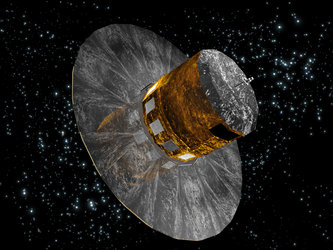
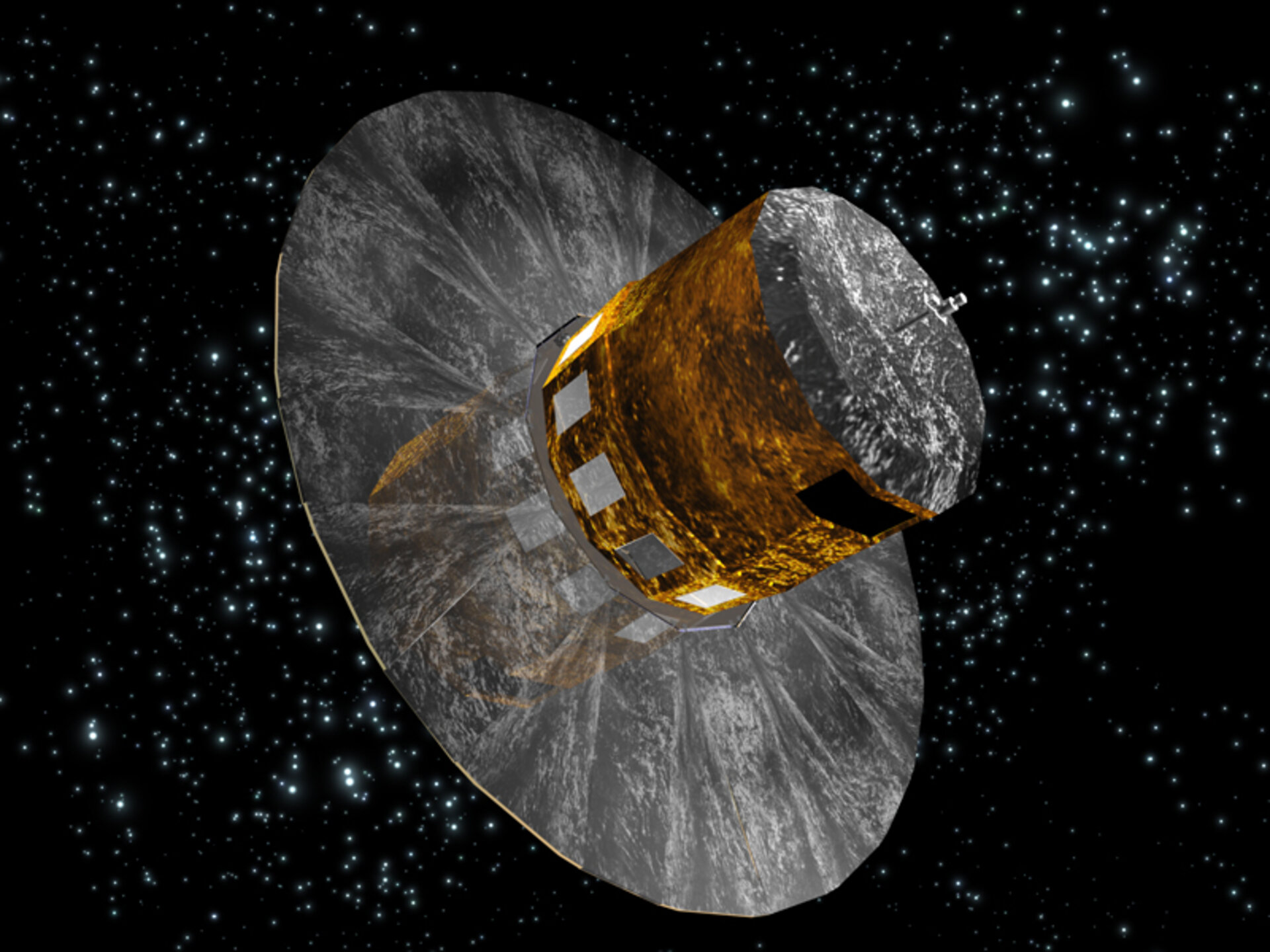
    Artist's impression of the Gaia satellite
    16 December 2009

    Gaia, ESA’s next-generation star mapper, will be carried into space by a Soyuz-STB/Fregat launch vehicle from Europe’s Spaceport in French Guiana. David Southwood, ESA’s Director of Science and Robotic Exploration, signed the contract for the launch with Jean-Yves LeGall, Chairman and CEO of Arianespace, at ESA Headquarters in Paris yesterday.

    The mission builds upon the heritage of precision stellar mapping exemplified by ESA's now- completed Hipparcos mission. Gaia will map 1000 million stars at unprecedented levels of precision, with the objective to use its census of stars to clarify the history and origins of our Galaxy.
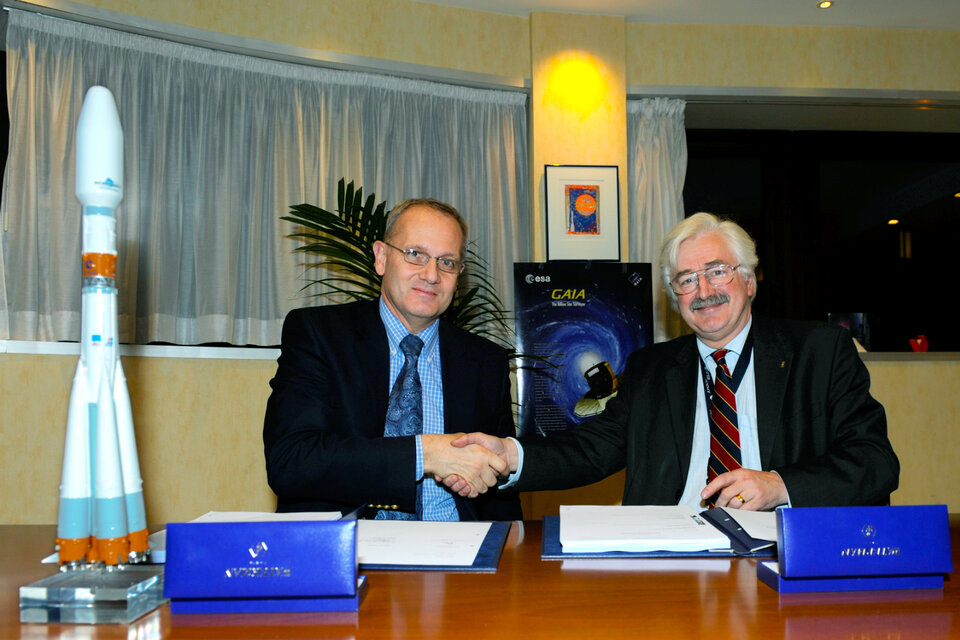
    Contract signing
    Contract signing

    Prof. Southwood remarked, "Gaia is a grand challenge to understanding our Galaxy, to find out what it is made of and, thus, where we have come from. Europe alone has taken up the challenge. We therefore are very pleased to be launched by Arianespace."


    "Arianespace is especially proud of contributing to scientific knowledge by launching Gaia," added Jean-Yves Le Gall. "Like Hipparcos, it will revolutionise our understanding of the Universe. This latest contract, the fifth we have signed in 2009 for a Soyuz launch from the Guiana Space Centre, is clear recognition of the quality and competitiveness of our launch service and solutions. It also largely illustrates the advantages of the European family of launch vehicles developed by ESA and operated by Arianespace."

    Rate this

    Views

    Share

    • Currently 0 out of 5 Stars.
    • 1
    • 2
    • 3
    • 4
    • 5
    Rating: 0/5 (0 votes cast)

    Thank you for rating!

    You have already rated this page, you can only rate it once!

    Your rating has been changed, thanks for rating!

    105
    Tweet
    • More about...
      • Gaia overview
        • Gaia factsheet
        • Related articles
          • ESA selects prime contractor for Gaia astrometry mission
            • Most extensive mapping of Milky Way a step closer
              • Keeping ESA’s ‘lady of space’ cool
                • The billion-pixel camera
                  • Mapping the Galaxy, and watching our backyard
                  • Read more
                    • Why are things in space the shape that they are?
                      • How many stars are there in the Universe?
                      • Related links
                      • The Interactive Books of Gaia

    Connect with us

    • RSS
    • Youtube
    • Twitter
    • Flickr
    • G+
    • Facebook
    • Livestream
    • Subscribe
    • App Store
    • ESA Science Twitter

    Follow ESA science

    • LATEST ARTICLES
    • · Rare merger reveals secrets of gal…
    • · Watching for hazards: ESA opens as…
    • · ESA astronaut Timothy Peake set fo…
    • · Space drives e-mobility
    • · Proba-V opens its eyes
    • FAQ

    • Jobs at ESA

    • Site Map

    • Contacts

    • Terms and conditions