Everyone wants gamma-ray eyes!
Even before ESA's Integral gamma-ray observatory was launched, astronomers were competing to win time to use this state-of-the-art observatory.
The Integral Science Operations Centre in Noordwijk, The Netherlands, received hundreds of excellent proposals. ESA expects Integral to revolutionise the way we think about the violent Universe. Understandably, everyone wants to play a part in that process.
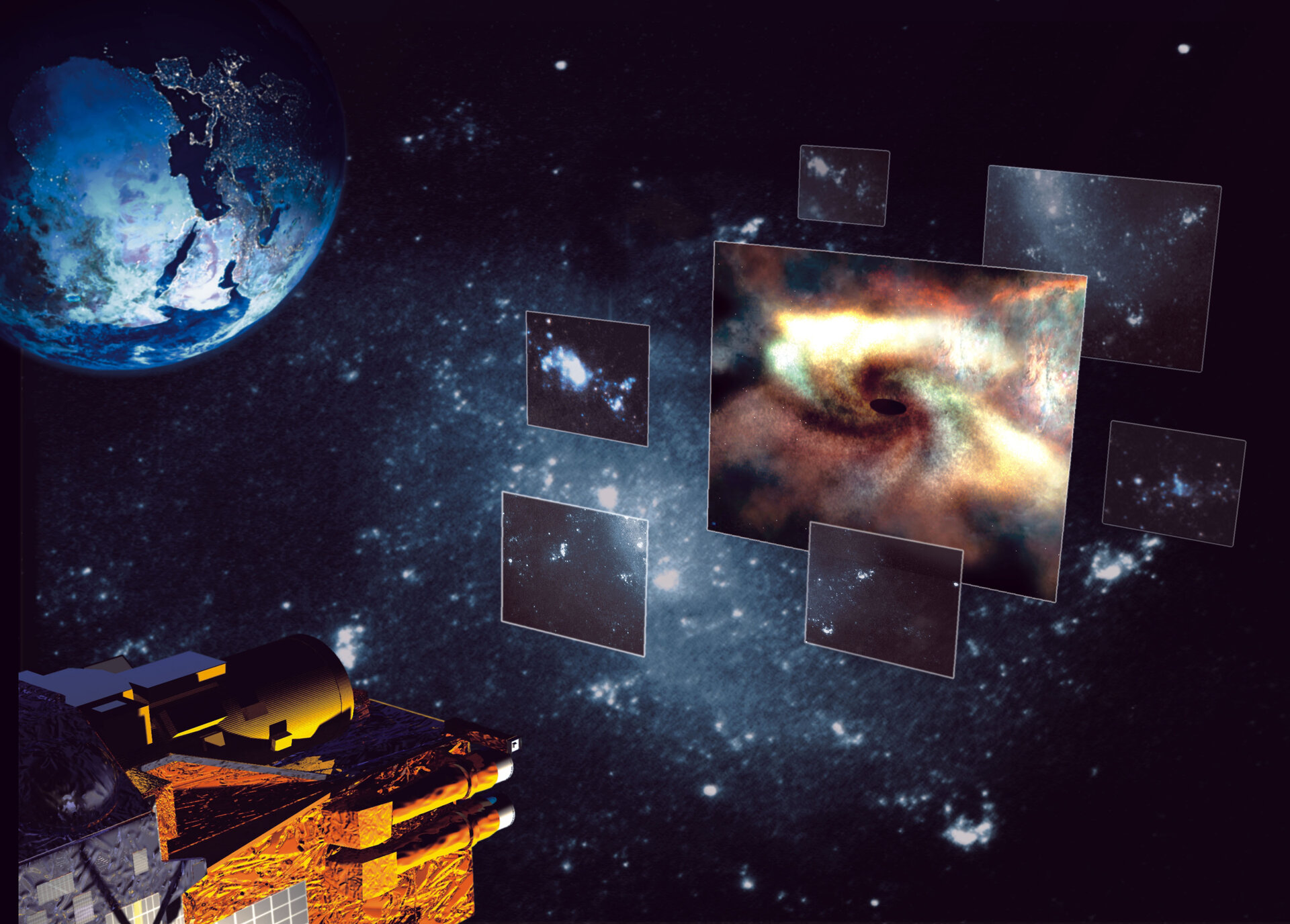
Unlike the serene beauty of the night sky that we see with our eyes, gamma rays reveal the violent activity of a hostile cosmos. Integral will help us to understand more about this extreme side of the Universe. Enthusiastic astronomers asked Integral's team for 19 times more observations than the first year would allow. Sifting through this mountain of proposals was therefore no easy task for the Integral team.
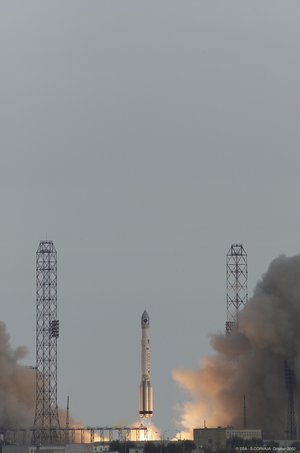
"It took three months," says Arvind Parmar, Integral's Acting Project Scientist. "The 291 submitted proposals were first sorted into four categories, depending on the type of object to be observed, and forwarded to panels of external experts. They were read and marked and the final marks were thrashed out over a few days of intense meetings." Eventually a full year's work was scheduled. Integral is now safely in orbit, but the first year's observations cannot start just yet.

"The science observations begin in earnest at the beginning of 2003. Until then, there will be a few observations but these are to evaluate the performance and tune the instrument. We have to proceed slowly and carefully," says Parmar. When the schedule does start, Integral will cast its gamma-ray eyes over a rich and varied tapestry of astronomical investigations.
It takes time to test your instruments to get the best performance. One proposal, for example, is to search for hidden supernovae. These supernova were titanic explosions that are often concealed by blankets of dust lying between them and the Earth. However, gamma rays, given off by the decay of radioactive elements produced in the supernovae, such as titanium, can travel through this dust. Integral will search for radioactive titanium, which can be a sign of previously undiscovered supernovae.
Our Galaxy contains an unknown number of black holes. Occasionally, one erupts in a burst of violent radiation as it swallows matter from a companion star. Using Integral, astronomers want to find out how many black holes there are in our Galaxy. Integral will also probe the nature of the cosmic powerhouses at the centres of so-called active galaxies. These may contain extremely massive black holes the size of our Solar System.

Other proposals aim to investigate total mysteries. For example, Carina is a region of the southern sky, which is pumping out vast amounts of gamma rays. Astronomers cannot understand precisely where these gamma rays come from. With Integral, however, they hope to search out those elusive 'missing' gamma-ray sources, whatever and wherever they may be.
Another observation will study the gamma-ray source 2CG 135+01. Previous observations have failed to discover much about it but Integral's superior vision promises to tell us more. When asked what will be Integral's greatest contribution to astronomy, Parmar replies, "This is difficult to answer right now because the major contribution may well be completely unexpected. This often happens in astronomy, so ask me the same question in a few years time!"