• → European Space Agency

      • Space for Europe
      • Space News
      • Space in Images
      • Space in Videos
    • About Us

      • Welcome to ESA
      • DG's News and Views
      • For Member State Delegations
      • Business with ESA
      • ESA Exhibitions
      • ESA Publications
      • Careers at ESA
    • Our Activities

      • Space News
      • Observing the Earth
      • Human Spaceflight
      • Launchers
      • Navigation
      • Space Science
      • Space Engineering
      • Operations
      • Technology
      • Telecommunications & Integrated Applications
    • For Public

    • For Media

      • Media
      • ESA TV
      • Videos for professionals
      • Photos
    • For Educators

    • For Kids

    • ESA

    • Space Science

    • Our Universe
    • About Space Science
    • ESA's 'Cosmic Vision'
    • Science missions
    • Mission navigator
    • Target groups
    • For Media
    • For Scientists
    • For Kids
    • Multimedia
    • Science images
    • Science videos
    • Animations
    • Downloads
    • Sounds from space
    • Resources
    • Reference section
    • Services
    • FAQs
    • Glossary
    • Help
    • Portal terms of use
    • Comments
    • Follow us
    • RSS feeds
    • ESA Sci on Twitter
    • ESA Space Science Images on Flickr
    • ESA 3D on Flickr

    ESA > Our Activities > Space Science

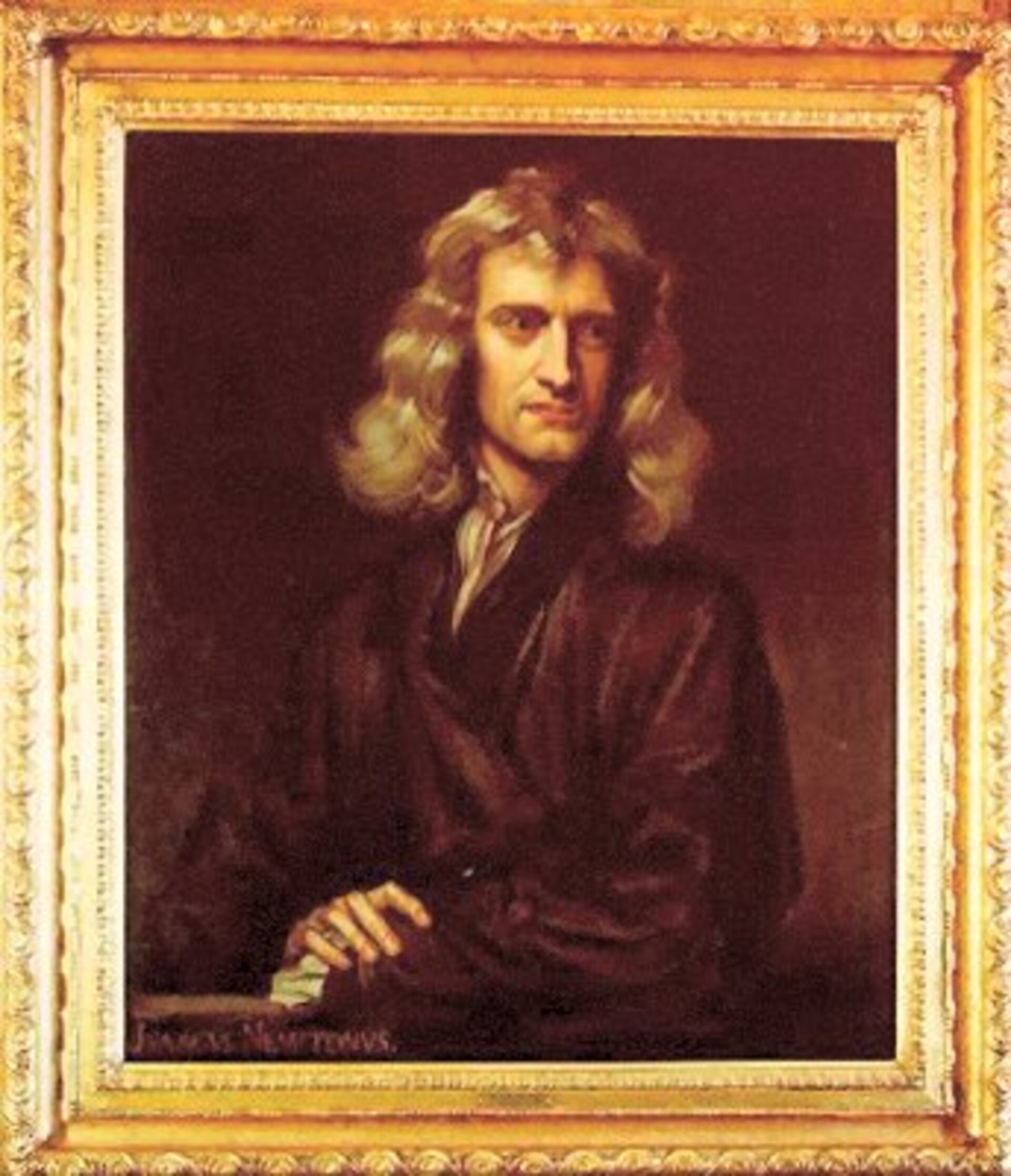
    Isaac Newton and our XMM mission

    Sir Isaac Newton, 1642 - 1727
    Sir Isaac Newton, 1642-1727

    Isaac Newton was born on 25 December 1642 in Woolsthorpe, England, within a year of Galileo’s death in Italy. Newton’s work in the field of mathematics, optics, and physics laid the foundations for modern science. He made a huge impact on theoretical and practical astronomy.

    One of his first great achievements was the invention of 'fluxions' or integral calculus, providing him with the mathematical tools he required for the rest of his work.

    His second breakthrough was the discovery of the law of the composition of light, described much later in Opticks, published in 1704. His demonstration that light can be split with a prism into its different colours forms the basis of spectroscopy, which is a powerful method for deducing the physical conditions of the body emitting the light.

    Newton was one of the first to make a reflecting telescope. However, his most profound contribution to science is the formulation of three Laws of Motion, described in Philosophiae Naturalis Principia Mathematica in 1687, which also lays the foundation for the principle of universal gravitation. In Principia he states, "There is a power of gravity pertaining to all bodies, proportional to the several quantities of matter which they contain."

    With this, Newton proposed that all objects in the Universe pulled on each other through gravity. It was the reason why planets move in orbits and why objects fall to the Earth. However, this new knowledge brought difficulties since if each object affected every other, the resulting calculations of their motion were extremely complex. Newton admitted to being unable to calculate the orbits of the planets in the Solar System other than in a general way, though his results were better than his predecessors. He thought that the planets would gradually pull each other from their orbits and that God would have to intervene to re-order them.

    Before Newton, the nascent investigation of nature that we now call science was a mixture of isolated facts and laws, capable of describing and predicting some phenomena. By applying a rigorous approach to his investigations, Newton gave science a unified system of laws that could be applied to a wide range of physical phenomena. He died in 1727 and was buried in Westminster Abbey, London, the first scientist to be honoured in this way.

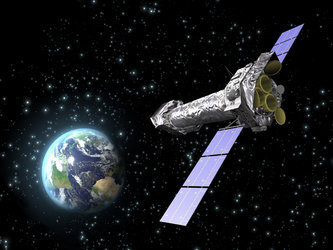
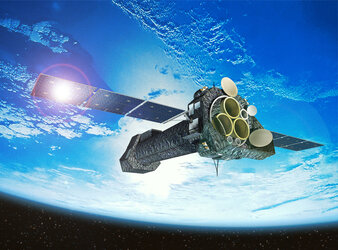
    ESA honoured him by adding his name to its XMM mission. The X-ray space telescope, launched on 10 December 1999, is known as XMM-Newton. The name was chosen because XMM is primarily a spectroscopy mission, even if it works at X-ray wavelengths rather than visible light.

    Rate this

    Views

    Share

    • Currently 1 out of 5 Stars.
    • 1
    • 2
    • 3
    • 4
    • 5
    Rating: 1/5 (1 votes cast)

    Thank you for rating!

    You have already rated this page, you can only rate it once!

    Your rating has been changed, thanks for rating!

    170
    Tweet
    • More about
      • XMM-Newton overview
        • XMM-Newton factsheet
          • XMM-Newton operations
          • Related articles
            • A magnetic monster’s dual personality
              • X-raying the beating heart of a newborn star
                • The dark heart of a cosmic collision
                  • XMM-Newton uncovers a celestial Rosetta stone
                    • XMM-Newton discovers a new class of black holes
                      • Giant eruption reveals 'dead' star
                        • XMM-Newton exclusive photo: Messier 82
                        • In depth
                        • XMM-Newton in-depth

    Connect with us

    • RSS
    • Youtube
    • Twitter
    • Flickr
    • G+
    • Facebook
    • Livestream
    • Subscribe
    • App Store
    • ESA Science Twitter

    Follow ESA science

    • LATEST ARTICLES
    • · Rare merger reveals secrets of gal…
    • · Watching for hazards: ESA opens as…
    • · ESA astronaut Timothy Peake set fo…
    • · Space drives e-mobility
    • · Proba-V opens its eyes
    • FAQ

    • Jobs at ESA

    • Site Map

    • Contacts

    • Terms and conditions