• → European Space Agency

      • Space for Europe
      • Space News
      • Space in Images
      • Space in Videos
    • About Us

      • Welcome to ESA
      • DG's News and Views
      • For Member State Delegations
      • Business with ESA
      • ESA Exhibitions
      • ESA Publications
      • Careers at ESA
    • Our Activities

      • Space News
      • Observing the Earth
      • Human Spaceflight
      • Launchers
      • Navigation
      • Space Science
      • Space Engineering
      • Operations
      • Technology
      • Telecommunications & Integrated Applications
    • For Public

    • For Media

      • Media
      • ESA TV
      • Videos for professionals
      • Photos
    • For Educators

    • For Kids

    • ESA

    • Space Science

    • Our Universe
    • About Space Science
    • ESA's 'Cosmic Vision'
    • Science missions
    • Mission navigator
    • Target groups
    • For Media
    • For Scientists
    • For Kids
    • Multimedia
    • Science images
    • Science videos
    • Animations
    • Downloads
    • Sounds from space
    • Resources
    • Reference section
    • Services
    • FAQs
    • Glossary
    • Help
    • Portal terms of use
    • Comments
    • Follow us
    • RSS feeds
    • ESA Sci on Twitter
    • ESA Space Science Images on Flickr
    • ESA 3D on Flickr

    ESA > Our Activities > Space Science

    Mare Serenitatis: crater statistics and lunar chronology

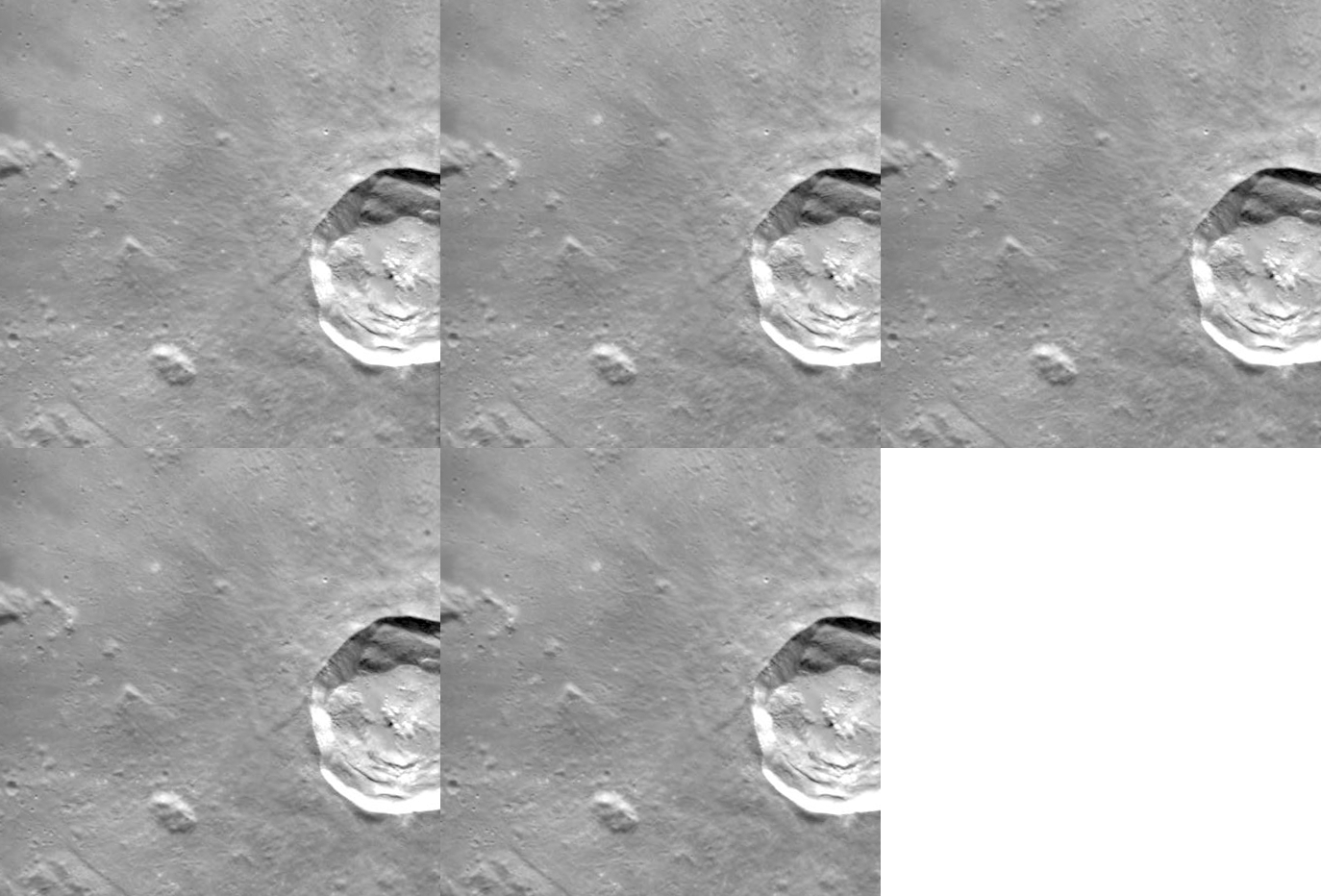
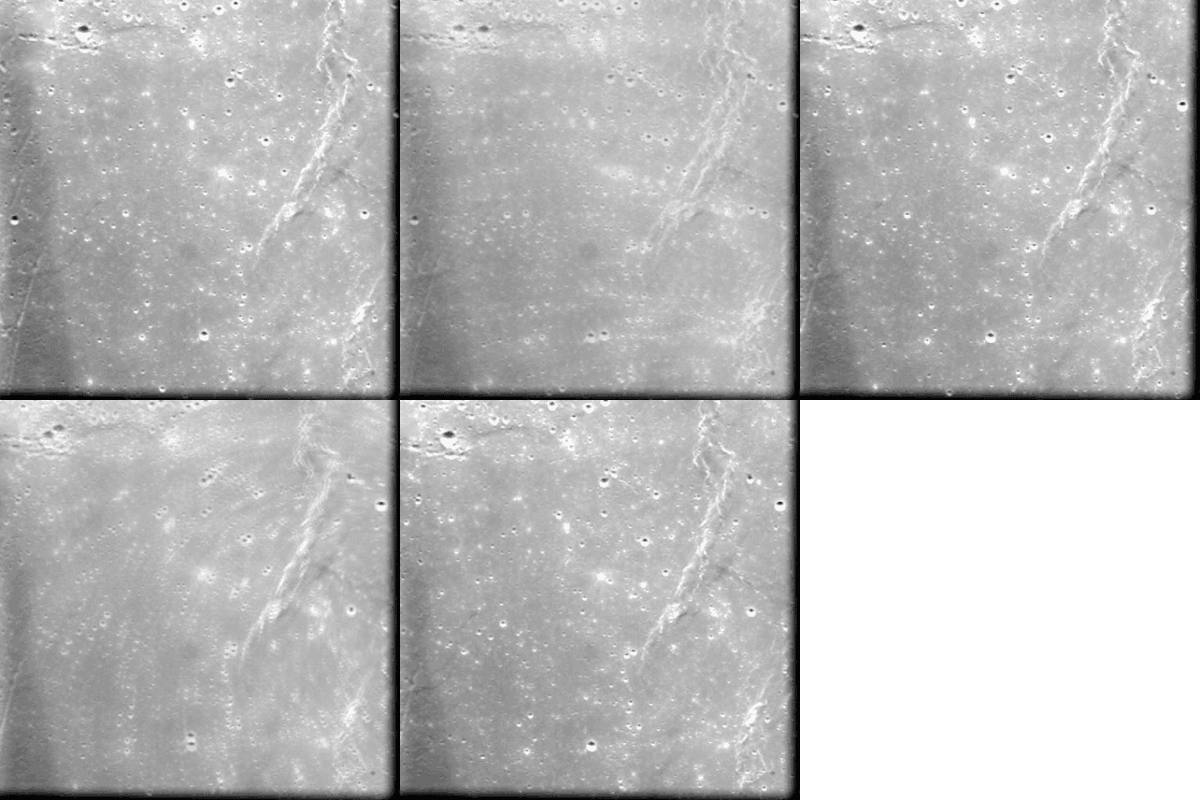
    Mare Serenitatis as seen by SMART-1
    Mare Serenitatis as seen by SMART-1
    31 July 2006

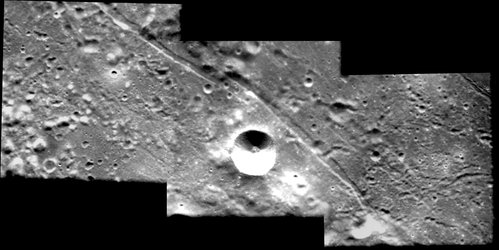
    This animated sequence, composed of three images taken by the advanced Moon Imaging Experiment (AMIE) on board ESA’s SMART-1 spacecraft, shows a portion of Mare Serenitatis on the Moon.

    AMIE obtained the images on 18 March 2006 from distances between 1257 and 1213 kilometres from the surface, with a ground resolution ranging between 114 and 110 metres per pixel. The imaged area is centred at about 21º East longitude and 18º North latitude, with a lunar field of view of 57 km. The Sun was on the West direction (top of this image) at about 50 degrees elevation.

    Mare Serenitatis is one of the lunar maria, that are vast lava plains on the lunar surface. It formed between 3.9 and 3.8 thousand million years ago, a period in which the Moon was heavily bombarded by asteroids and the major impact basins on the Moon were formed. This was followed by an episode of lunar volcanism that flooded the basin with basalt creating a fresh and flat surface.

    To its southeast border, Mare Serenitatis lies close to Mare Tranquillitatis. Both maria were visited by previous lunar landers. In particular, Luna 21 and Apollo 17 (the last manned lunar mission to land on the Moon so far), landed on Mare Serenitatis in January 1973 and December 1972, respectively.

    "Thanks to the solar elevation and SMART-1 camera resolution, the statistics of the sizes of the craters can be well determined in different units," says SMART-1 Project scientist Bernard Foing. "This permits us to establish a chronology, calibrated on absolute ages from isotopic measurements on returned lunar samples."


    For more information

    Bernard H. Foing, ESA SMART-1 Project Scientist
    Email: bernard.foing @ esa.int

    Jean-Luc Josset
    AMIE Principal Investigator
    SPACE-X Space Exploration Institute
    Email: jean-luc.josset @ space-x.ch
    Rate this

    Views

    Share

    • Currently 4 out of 5 Stars.
    • 1
    • 2
    • 3
    • 4
    • 5
    Rating: 4/5 (1 votes cast)

    Thank you for rating!

    You have already rated this page, you can only rate it once!

    Your rating has been changed, thanks for rating!

    172
    Tweet
    • SMART-1
    • More about...
      • Mersenius crater – wrinkles between Humorum and Procellarum
        • Lomonosov – a large crater filled by lava
          • SMART-1 birthday postcard of Apollo 11 landing site
            • Gruithuisen: non-mare volcanism in Procellarum
              • Landscapes from the ancient and eroded lunar far side
                • SMART-1 view of crater Sulpicius Gallus
                  • The SMART-1 way - giving the Moon some great new looks
                    • Mare Humorum: where craters tell the story of basalt
                      • Gassendi crater - clue on the thermal history of Mare Humorum
                        • Kepler Crater as seen by SMART-1
                          • Lunar West Side Story - the SMART-1 Movie
                            • SMART-1 close-up on Zucchius crater's central peaks
                              • Highlands and Mare landscapes on the Moon
                                • SMART-1’s view of Crater Hopmann: on the shoulder of a giant
                                  • SMART-1’s view of craters Mayer and Bond
                                    • Tectonic ‘wrinkles’ in Crater De Gasparis
                                    • Related links
                                    • Space-X
                                    • Advanced Moon micro-Imager Experiment (AMIE)

    Connect with us

    • RSS
    • Youtube
    • Twitter
    • Flickr
    • G+
    • Facebook
    • Livestream
    • Subscribe
    • App Store
    • ESA Science Twitter

    Follow ESA science

    • LATEST ARTICLES
    • · Banking on satellites in Africa
    • · Earth Explorers take centre stage …
    • · The fast winds of Venus are gettin…
    • · ExoMars 2016 set to complete const…
    • · Herschel ends operations as orbiti…
    • FAQ

    • Jobs at ESA

    • Site Map

    • Contacts

    • Terms and conditions