• → European Space Agency

      • Space for Europe
      • Space News
      • Space in Images
      • Space in Videos
    • About Us

      • Welcome to ESA
      • DG's News and Views
      • For Member State Delegations
      • Business with ESA
      • ESA Exhibitions
      • ESA Publications
      • Careers at ESA
    • Our Activities

      • Space News
      • Observing the Earth
      • Human Spaceflight
      • Launchers
      • Navigation
      • Space Science
      • Space Engineering
      • Operations
      • Technology
      • Telecommunications & Integrated Applications
    • For Public

    • For Media

      • Media
      • ESA TV
      • Videos for professionals
      • Photos
    • For Educators

    • For Kids

    • ESA

    • Space Science

    • Our Universe
    • About Space Science
    • ESA's 'Cosmic Vision'
    • Science missions
    • Mission navigator
    • Target groups
    • For Media
    • For Scientists
    • For Kids
    • Multimedia
    • Science images
    • Science videos
    • Animations
    • Downloads
    • Sounds from space
    • Resources
    • Reference section
    • Services
    • FAQs
    • Glossary
    • Help
    • Portal terms of use
    • Comments
    • Follow us
    • RSS feeds
    • ESA Sci on Twitter
    • ESA Space Science Images on Flickr
    • ESA 3D on Flickr

    ESA > Our Activities > Space Science

    Observations: Seeing in microwave wavelengths

    Artist's impression of Planck

    The Universe in microwave wavelengths is a place of unfamiliar brightness. If our eyes could see microwaves, the entire sky would radiate. Most peculiar of all, however, is that the brightness would be the same across the entire sky. Unlike any other waveband, in which diffuse emission is punctuated by bright objects, the entire sky glows uniformly with microwaves.

    The astronomers who first detected this microwave 'background' signal were using a special telescope, similar to a radio telescope, and at first thought the all-pervading signal was static caused by a fault in the machinery. It did not vary, regardless of where they pointed the telescope.

    The microwave glow is nothing less than the afterglow of the Big Bang, the fireball from which the Universe was created. It is known as the 'Cosmic Microwave Background' (CMB) radiation and was released into space around 12 000 million years ago.

    At that moment, it was a searing mass of X-rays and it represents the first light – in the form of X-rays rather than visible light – to be released in the Universe. Since that moment, the constant expansion of the Universe has stretched these rays into the microwaves observed today.


    Although the microwave background appeared initially featureless, careful analysis of the radiation has shown that its intensity varies by around 0.0005% from place to place. These tiny variations were caused by slight differences in the density of the hydrogen/helium gas that was spread across the entire Universe at the time the radiation was released. As such, they are the seeds from which galaxies and clusters of galaxies grew. They are the blueprints from which the Universe was made.

    ESA's 'first light' mapper Planck will study the microwave Universe, making the most precise map ever of this cosmic blueprint. Planck’s investigations are also designed to give scientists new insight into the force of gravity and how it relates to the other forces in the Universe.
    Last update: 9 May 2008

    Rate this

    Views

    Share

    • Currently 0 out of 5 Stars.
    • 1
    • 2
    • 3
    • 4
    • 5
    Rating: 0/5 (0 votes cast)

    Thank you for rating!

    You have already rated this page, you can only rate it once!

    Your rating has been changed, thanks for rating!

    379
    Tweet
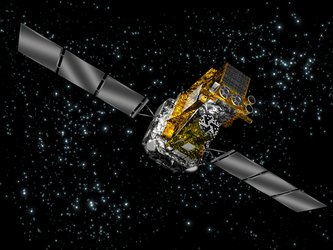
    • Artist's view of Integral
      Artist's view of Integral
      ESA's gamma-ray astronomy mission
    • More about...
      • Herschel overview
        • Planck overview
          • XMM-Newton overview
          • Related articles
            • The electromagnetic spectrum
              • Why do we observe gamma rays?
                • Why infrared astronomy is a hot topic
                  • Cosmic Microwave Background (CMB) radiation
                    • Observations: Seeing in X-ray wavelengths
                      • Observations: Seeing in microwave wavelengths
                        • Observations: Seeing in ultraviolet wavelengths
                          • Observations: Seeing in radio wavelengths
                            • Observations: Seeing in infrared wavelengths
                              • Observations: Seeing in visible wavelengths
                                • Observations: Seeing in the gamma-ray wavelengths

    Connect with us

    • RSS
    • Youtube
    • Twitter
    • Flickr
    • G+
    • Facebook
    • Livestream
    • Subscribe
    • App Store
    • ESA Science Twitter

    Follow ESA science

    • LATEST ARTICLES
    • · The fast winds of Venus are gettin…
    • · ExoMars 2016 set to complete const…
    • · Herschel ends operations as orbiti…
    • · Europe’s largest spaceship reache…
    • · ATV ready to nose up to Station
    • FAQ

    • Jobs at ESA

    • Site Map

    • Contacts

    • Terms and conditions