• → European Space Agency

      • Space for Europe
      • Space News
      • Space in Images
      • Space in Videos
    • About Us

      • Welcome to ESA
      • DG's News and Views
      • For Member State Delegations
      • Business with ESA
      • ESA Exhibitions
      • ESA Publications
      • Careers at ESA
    • Our Activities

      • Space News
      • Observing the Earth
      • Human Spaceflight
      • Launchers
      • Navigation
      • Space Science
      • Space Engineering
      • Operations
      • Technology
      • Telecommunications & Integrated Applications
    • For Public

    • For Media

    • For Educators

    • For Kids

    • ESA

    • Rosetta

    • ESA Science

    • About Rosetta

      • Europe's comet chaser
      • Why 'Rosetta'?
    • About the spacecraft

      • The Rosetta orbiter
      • Orbiter: Instruments
      • The Rosetta lander
      • Lander: Instruments
    • About the journey

      • The long trek
      • Debris of the Solar System: Asteroids
      • Asteroid (2867) Steins: a portrait
      • Life and survival in deep space
      • Long-distance communication
      • The Rosetta ground segment
    • About the arrival

      • Comets - an introduction
      • Comet 67P/Churyumov- Gerasimenko
      • Comet rendezvous
      • Giotto - ESA's first comet mission
    • Meet the team
    • Mission Manager
    • Project Scientist
    • Multimedia
    • VideoTalk
    • 3D Flash 'model'
    • Rosetta images
    • Rosetta videos
    • Rosetta Animations
    • Rosetta wallpaper
    • Life of a comet
    • Services
    • Frequently asked questions
    • Comments

    ESA > Our Activities > Space Science > Rosetta

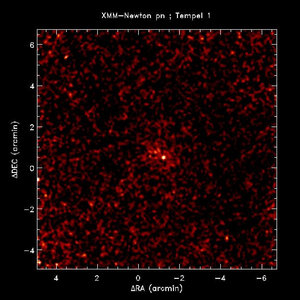
    Animation the first XMM-Newton images of impact

    First XMM-Newton images of impact

    4 July 2005

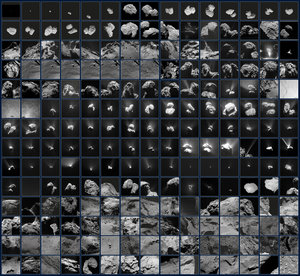
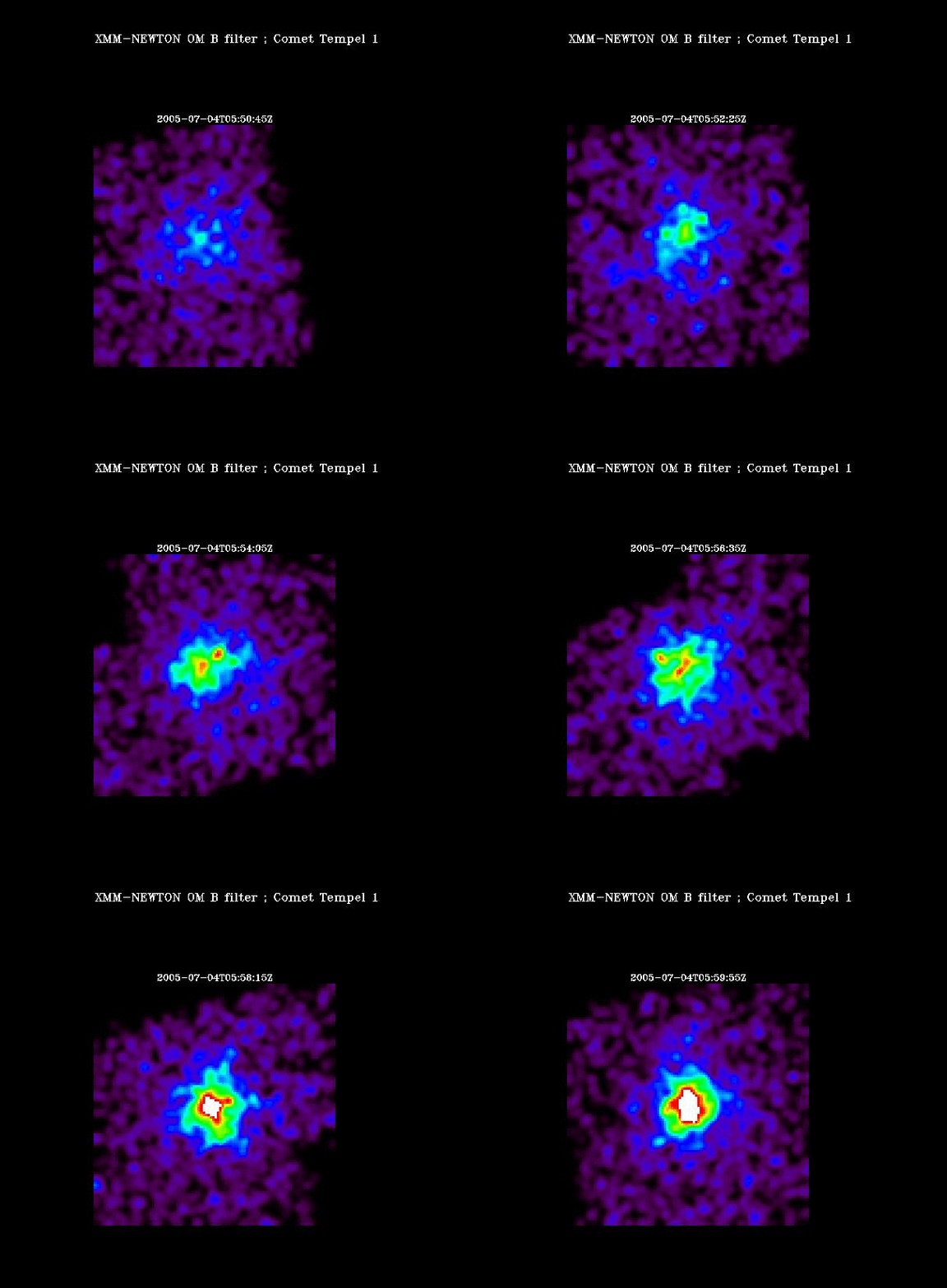
    Images of Comet 9P/Tempel 1 taken by the Optical Monitor on ESA's XMM-Newton observatory, from two minutes before impact and until seven minutes after impact.

    The first two images were taken just before impact, and in the following images the brightening due to impact is visible.

    Collage of the XMM-Newton images

    These images were taken with the Optical Monitor blue filter, with which it is possible to measure the outcoming gas and dust. More images from the Optical Monitor are expected in the next hours.

    Measurements with other XMM-Newton instruments should provide information about the chemical composition of the outcoming material.


    For more information:

    Rita Schulz, Principal Investigator for XMM-Newton Tempel 1 observations, ESA-ESTEC (The Netherlands)
    E-mail: rita.schulz @ esa.int

    Norbert Schartel, ESA XMM-Newton Project Scientist, ESAC (Spain)
    E-mail: norbert.schartel @ sciops.esa.int

    Rate this

    Views

    Share

    • Currently 0 out of 5 Stars.
    • 1
    • 2
    • 3
    • 4
    • 5
    Rating: 0/5 (0 votes cast)

    Thank you for rating!

    You have already rated this page, you can only rate it once!

    Your rating has been changed, thanks for rating!

    19
    Tweet
    • ESA's comet chaser
    • More about...
      • Rosetta factsheet
        • XMM-Newton factsheet
          • Hubble factsheet
          • NASA Deep Impact
          • ESO Deep Impact news
          • Related articles
            • Life of a comet
              • Tempel 1: Biography of a comet
                • Rosetta monitors Deep Impact
                  • XMM-Newton to observe Deep Impact
                    • Hubble sees outburst from Deep Impact comet
                      • ESA observes Deep Impact from Earth
                        • Dust and gas from Comet 9P/Tempel 1 seen by ESA OGS
                          • Tempel 1 is weak X-ray source, XMM-Newton confirms

    Connect with us

    • RSS
    • Youtube
    • Twitter
    • Flickr
    • G+
    • Facebook
    • Livestream
    • Subscribe
    • App Store
    • LATEST ARTICLES
    • · Proba-V opens its eyes
    • · First new Galileo satellite arrive…
    • · Next destination: space
    • · Leak repaired on International Spa…
    • · After Chelyabinsk: European expert…
    • FAQ

    • Jobs at ESA

    • Site Map

    • Contacts

    • Terms and conditions