• → European Space Agency

      • Space for Europe
      • Space News
      • Space in Images
      • Space in Videos
    • About Us

      • Welcome to ESA
      • DG's News and Views
      • For Member State Delegations
      • Business with ESA
      • ESA Exhibitions
      • ESA Publications
      • Careers at ESA
    • Our Activities

      • Space News
      • Observing the Earth
      • Human Spaceflight
      • Launchers
      • Navigation
      • Space Science
      • Space Engineering
      • Operations
      • Technology
      • Telecommunications & Integrated Applications
    • For Public

    • For Media

    • For Educators

    • For Kids

    • ESA

    • Rosetta

    • ESA Science

    • About Rosetta

      • Europe's comet chaser
      • Why 'Rosetta'?
    • About the spacecraft

      • The Rosetta orbiter
      • Orbiter: Instruments
      • The Rosetta lander
      • Lander: Instruments
    • About the journey

      • The long trek
      • Debris of the Solar System: Asteroids
      • Asteroid (2867) Steins: a portrait
      • Life and survival in deep space
      • Long-distance communication
      • The Rosetta ground segment
    • About the arrival

      • Comets - an introduction
      • Comet 67P/Churyumov- Gerasimenko
      • Comet rendezvous
      • Giotto - ESA's first comet mission
    • Meet the team
    • Mission Manager
    • Project Scientist
    • Multimedia
    • VideoTalk
    • 3D Flash 'model'
    • Rosetta images
    • Rosetta videos
    • Rosetta Animations
    • Rosetta wallpaper
    • Life of a comet
    • Services
    • Frequently asked questions
    • Comments

    ESA > Our Activities > Space Science > Rosetta

    Giotto’s comet results

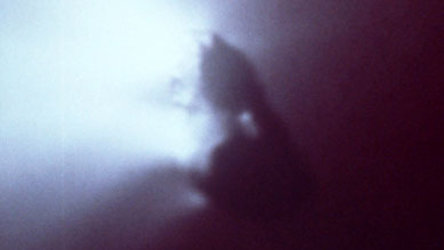
    Comet Halley's nucleus as seen by Giotto
    Comet Halley's nucleus as seen by Giotto
    10 March 2006

    The most striking results from Giotto were the images from the Halley Multicolour Camera. These revealed that the comet had a single nucleus with an elongated ‘potato’ shape, being about 15 km long and 9 km across, and was larger than previously anticipated.

    The fact that scientists could determine the comet’s albedo directly for the first time led to the discovery that only 2-4% of the incident light was reflected, which means that comets are among the darkest objects in the Solar System.

    Two major bright ‘jets’ emanated from the sunward side of the nucleus and it appeared – and this was one of the big surprises – that only a relatively small fraction of the nucleus was active. Combined with other observations, it was possible to establish that the nucleus had a fairly low density, at less than 0.6 grams per cubic cm.

    Giotto images of Comet Halley

    Giotto’s Neutral and Ion Mass Spectrometer provided a wealth of data on the composition of the comet’s molecular structure, including detailed information about the abundances of the various species as a function of distance from the nucleus.

    From the analysis of the dust spectra, scientists learned that most of the dust particles were rich in hydrogen, carbon, nitrogen and oxygen, with minerals and most probably organic components present, which is characteristic overall of a very complex chemistry.

    The first dust-particle impact on the Giotto spacecraft was recorded by the Dust Impact Dectection System when still 290 000 km from the comet’s nucleus, which was much further away than predicted by the dust models. More than 12 000 dust-particle impacts were recorded during the fly-by.

    The interaction between the solar wind and the comet’s ionosphere can be characterised by two distinct boundaries, the bow shock and the contact surface, and several additional sharp transition regions, which indicate a multi-layered interaction region. The Giotto data are textbook examples for these interaction regions.

    The spacecraft crossed the bow-shock region when 1.15 million km from the nucleus, and crossed the contact surface when 4700 km away. Inside this region, the magnetic field dropped essentially to zero, as had been theoretically predicted and had been expected by analogy with Venus and the ‘artificial’ comet of the AMPTE mission.

    These first results from the encounters with Comet Halley were published in the scientific journal Nature.


    For more information:

    Gerhard Schwehm, ESA Rosetta Project Scientist
    E-mail: gerhard.schwehm @ esa.int

    Rate this

    Views

    Share

    • Currently 0 out of 5 Stars.
    • 1
    • 2
    • 3
    • 4
    • 5
    Rating: 0/5 (0 votes cast)

    Thank you for rating!

    You have already rated this page, you can only rate it once!

    Your rating has been changed, thanks for rating!

    57
    Tweet
    • ESA's comet chaser
    • More about...
      • Giotto overview
        • Rosetta factsheet
        • Related articles
          • Giotto’s brief encounter
            • Giotto’s second comet encounter
              • The birth of Giotto
                • Giotto’s comet results
                  • The post-Halley era
                    • Life of a comet
                      • ESA observes Deep Impact from Earth
                        • Dust and gas from Comet 9P/Tempel 1 seen by ESA OGS
                        • Related links
                        • NASA Stardust
                        • video  20 years of GIOTTO

    Connect with us

    • RSS
    • Youtube
    • Twitter
    • Flickr
    • G+
    • Facebook
    • Livestream
    • Subscribe
    • App Store
    • LATEST ARTICLES
    • · Proba-V opens its eyes
    • · First new Galileo satellite arrive…
    • · Next destination: space
    • · Leak repaired on International Spa…
    • · After Chelyabinsk: European expert…
    • FAQ

    • Jobs at ESA

    • Site Map

    • Contacts

    • Terms and conditions