• → European Space Agency

      • Space for Europe
      • Space News
      • Space in Images
      • Space in Videos
    • About Us

      • Welcome to ESA
      • DG's News and Views
      • For Member State Delegations
      • Business with ESA
      • ESA Exhibitions
      • ESA Publications
      • Careers at ESA
    • Our Activities

      • Space News
      • Observing the Earth
      • Human Spaceflight
      • Launchers
      • Navigation
      • Space Science
      • Space Engineering
      • Operations
      • Technology
      • Telecommunications & Integrated Applications
    • For Public

    • For Media

      • Media
      • ESA TV
      • Videos for professionals
      • Photos
    • For Educators

    • For Kids

    • ESA

    • SMART-1

    • ESA Science

    • About SMART-1
    • SMART-1 factsheet
    • Towards final impact
    • Approaching the mission end
    • Frequently Asked Questions
    • Ask about the SMART-1 impact
    • Join the SMART-1 impact observation campaign
    • About the journey

      • The magic of ion engines
      • The SMART way to travel
      • A spiral pathway to the Moon
    • About the mission

      • Masterpieces of miniaturisation
      • What do all the instruments do?
    • About the Moon

      • Welcome to the double planet
      • Lunar science - still plenty left to do!
      • Where did the Moon come from?
    • Multimedia
    • SMART-1 images
    • SMART-1 videos
    • SMART-1 animations
    • 3D Flash 'model'
    • SMART-1 wallpaper
    • Launch replay
    • Services
    • Comments

    ESA > Our Activities > Space Science > SMART-1

    SMART-1's bridge to the future exploration of the Moon

    SMART-1 mission at the Moon
    9 March 2007

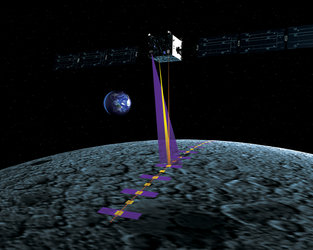
    ESA's SMART-1 moon mission has become a bridge to the future of lunar science and exploration.

    "SMART-1 data are helping to choose future landing sites for robotic and possible manned missions, and its instruments are upgraded and being flown again on the next generation of lunar satellites," says Bernard Foing, ESA SMART-1 Project scientist. "Even its spectacular impact campaign is helping NASA to plan their own moon crash."
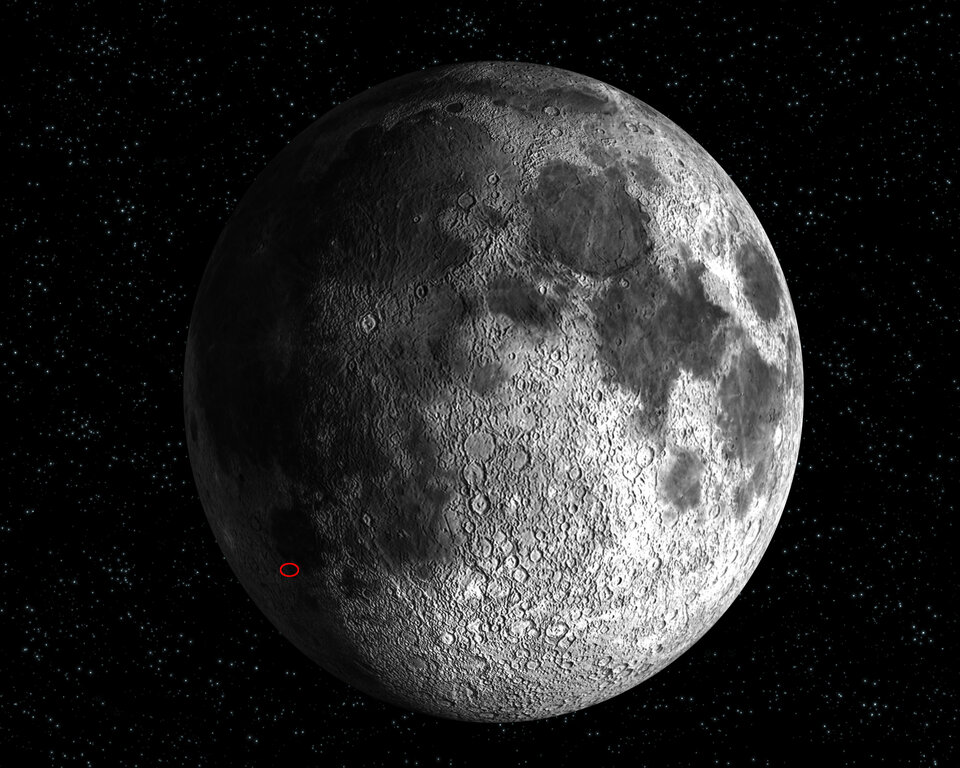
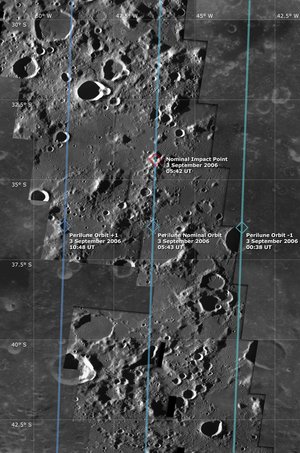
    Location of SMART-1 impact
    Location of SMART-1 impact

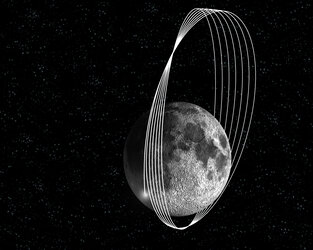
    SMART-1's mission lasted from launch on 27 September 2003, to its controlled impact on the Moon on 3 September 2006. During that time, the mission’s innovative approach to technology and science created new solutions to old problems that are now being carried forward to the next generation of lunar missions, in line with the recommendations of the International Lunar Exploration Working Group (ILEWG).

    The miniature camera, AMIE, weighed just 2 kilograms yet the images it returned are being used to choose possible landing sites for future missions. The choice of landing sites depends upon criteria such as the scientific importance of the area, the ease of landing and operation and, if it is to become a human base, the availability of lunar resources. SMART-1 has imaged Apollo and Luna landing sites, and potential possible landing sites for humans at the lunar poles.


    To follow up the technological breakthroughs of SMART-1, ESA is providing three instruments for the Indian Moon mission Chandrayaan-1. Two are direct descendents from SMART-1: the infrared spectrometer, SIR2, and the X-ray spectrometer, C1XS. The third (SARA) is a precursor to an instrument that will fly on ESA's Bepi-Colombo mission to Mercury.

    ESA and European scientists are also collaborating with the Japanese, who are currently preparing the large lunar spacecraft, Selene, which will launch this year carrying two subsatellites and 300 kilograms of sophisticated instruments.

    During SMART-1's mission, ESA provided the Chinese with details of the spacecraft's position and transmission frequencies, so that the Chinese could test their tracking stations and ground operations by following it. This was part of their preparation for Chang'E 1, an orbiter due to be launched in October 2007.

    SMART-1 experts are collaborating with NASA to prepare for Lunar Reconnaissance Orbiter (LRO) that will provide new imaging, radar and other key measurements needed for future exploration of the Moon. LRO is due to be launched at the end of 2008. ESA is sharing the experience of SMART-1's impact campaign to help prepare the Lunar Crater Observation and Sensing Satellite (LCROSS), which will be launched with LRO. The LCROSS shepherd spacecraft will watch the spent upper-stage of its rocket crash into a dark lunar crater, hopefully releasing water vapour and thus proving that ice exists on the lunar surface.

    "Having flown SMART-1, we have now established collaborations with other countries that will help to take us into the future of lunar exploration," says Foing.

    Bernard Foing explained SMART-1's legacy to the Symposium: "Why the Moon?" at the International Space University at Strasbourg, France, on 22 February 2007.

    For more information

    Bernard Foing, ESA SMART-1 Project Scientist
    Bernard.Foing @ esa.int
    Rate this

    Views

    Share

    • Currently 0 out of 5 Stars.
    • 1
    • 2
    • 3
    • 4
    • 5
    Rating: 0/5 (0 votes cast)

    Thank you for rating!

    You have already rated this page, you can only rate it once!

    Your rating has been changed, thanks for rating!

    105
    Tweet
    • SMART-1
    • Related articles
      • SMART-1 diagnoses wrinkles and excess weight on the Moon
        • How SMART-1 has made European space exploration smarter
          • SMART-1 impact simulated in a laboratory sand-box
            • SMART-1 impact flash and debris: crash scene investigation
              • SMART-1 swan song: valuable data until final moments
                • SMART-1 impact update
                  • SMART-1 impacts Moon
                    • Impact landing ends SMART-1 mission to the Moon
                      • SMART-1 star tracker views the Moon in earthshine (UPDATED)
                        • Amateur observers prepare to watch SMART-1 impact
                          • Intense final hours for SMART-1
                            • Low altitude flying with coarse maps – determining the time of SMART-1 impact
                            • Related links
                            • ILEWG International Lunar Exploration Working Group
                            • ISU International Space University
                            • Lunar Reconnaissance Orbiter (LRO)
                            • Chandrayaan-1
                            • ESA Bulletin
                            • SMART-1

    Connect with us

    • RSS
    • Youtube
    • Twitter
    • Flickr
    • G+
    • Facebook
    • Livestream
    • Subscribe
    • App Store
    • LATEST ARTICLES
    • · Rare merger reveals secrets of gal…
    • · Watching for hazards: ESA opens as…
    • · ESA astronaut Timothy Peake set fo…
    • · Space drives e-mobility
    • · Proba-V opens its eyes
    • FAQ

    • Jobs at ESA

    • Site Map

    • Contacts

    • Terms and conditions