• → European Space Agency

      • Space for Europe
      • Space News
      • Space in Images
      • Space in Videos
    • About Us

      • Welcome to ESA
      • DG's News and Views
      • For Member State Delegations
      • Business with ESA
      • ESA Exhibitions
      • ESA Publications
      • Careers at ESA
    • Our Activities

      • Space News
      • Observing the Earth
      • Human Spaceflight
      • Launchers
      • Navigation
      • Space Science
      • Space Engineering
      • Operations
      • Technology
      • Telecommunications & Integrated Applications
    • For Public

    • For Media

      • Media
      • ESA TV
      • Videos for professionals
      • Photos
    • For Educators

    • For Kids

    • ESA

    • Space Science

    • Our Universe
    • About Space Science
    • ESA's 'Cosmic Vision'
    • Science missions
    • Mission navigator
    • Target groups
    • For Media
    • For Scientists
    • For Kids
    • Multimedia
    • Science images
    • Science videos
    • Animations
    • Downloads
    • Sounds from space
    • Resources
    • Reference section
    • Services
    • FAQs
    • Glossary
    • Help
    • Portal terms of use
    • Comments
    • Follow us
    • RSS feeds
    • ESA Sci on Twitter
    • ESA Space Science Images on Flickr
    • ESA 3D on Flickr

    ESA > Our Activities > Space Science > Space sensations

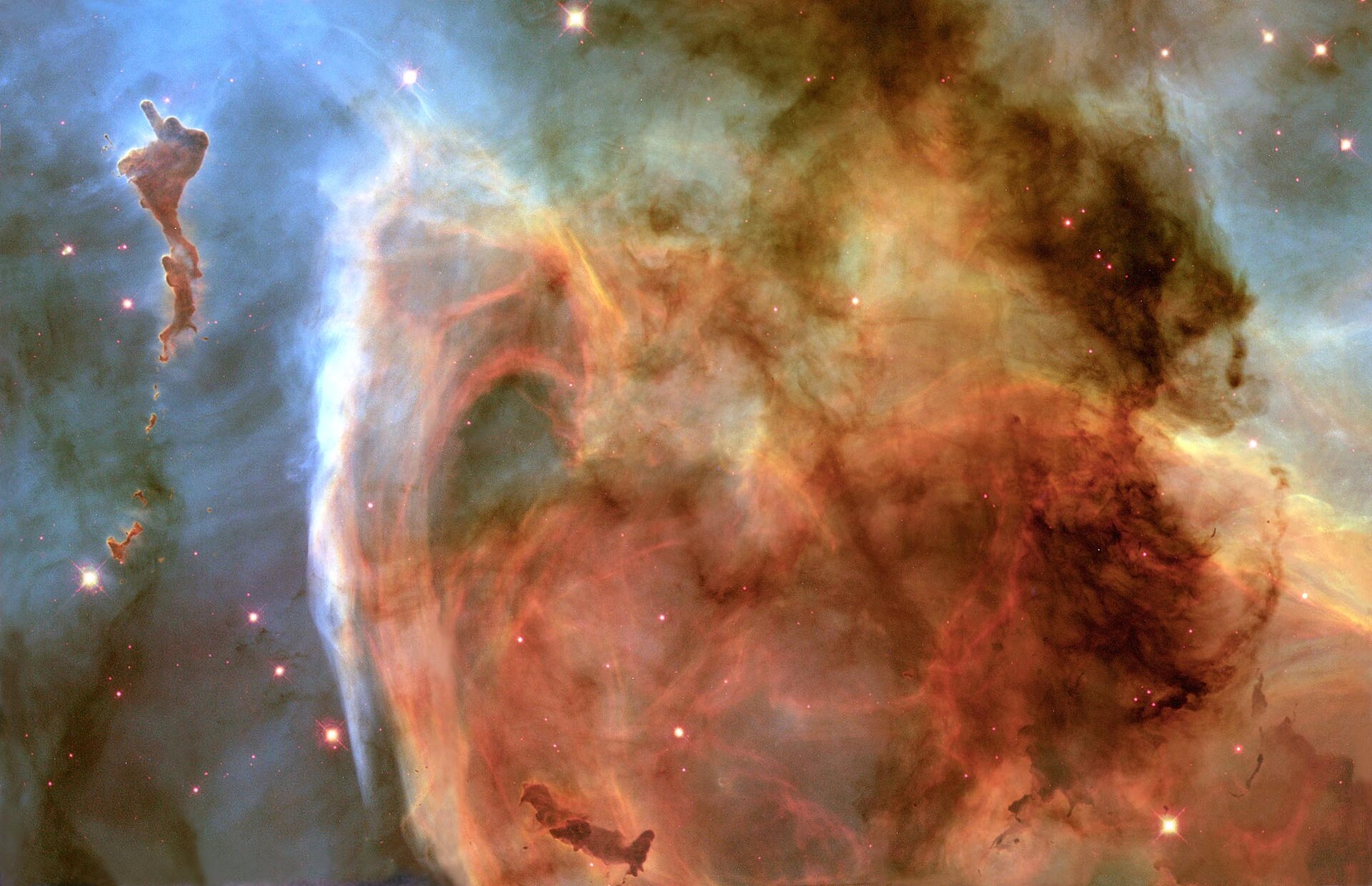
    NGC 3372, Carina Nebula

    Carina Nebula (NGC 3372)

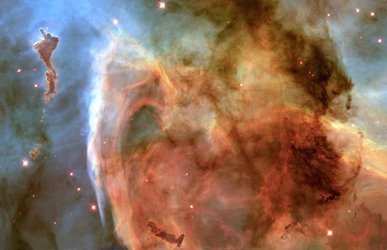
    Previously unseen details of a mysterious, complex structure within the Carina Nebula (NGC 3372), also called the 'Keyhole Nebula', are revealed by this image obtained with the NASA/ESA Hubble Space Telescope.

    The picture is a montage assembled from four different April 1999 telescope pointings with Hubble's Wide Field Planetary Camera 2, which used six different colour filters.

    The picture is dominated by a large, approximately circular feature, about 7 light-years across, which is part of the Keyhole Nebula, named in the 19th century by British astronomer Sir John Herschel. This region, about 8000 light-years from Earth, is located near to the famous explosive variable star Eta Carinae, which lies just outside the field of view toward the upper right.

    The Carina Nebula also contains several other stars that are among the hottest and most massive known, each about 10 times as hot, and 100 times as massive, as our Sun.

    The circular 'keyhole' structure contains both bright filaments of hot gas and dark silhouetted clouds of cold molecules and dust, all of which are in rapid, chaotic motion. Two striking large, sharp-edged dust clouds are located near the bottom centre and upper-left edges of the image. These large dark clouds may eventually evaporate or, if there are sufficiently dense condensations within them, give birth to small star clusters.

    The Carina Nebula, with an overall diameter of more than 200 light-years, is one of the outstanding features of the southern-hemisphere part of the Milky Way.

    Last update: 14 January 2004

    Rate this

    Views

    Share

    • Currently 0 out of 5 Stars.
    • 1
    • 2
    • 3
    • 4
    • 5
    Rating: 0/5 (0 votes cast)

    Thank you for rating!

    You have already rated this page, you can only rate it once!

    Your rating has been changed, thanks for rating!

    101
    Tweet
    • Related links
      • Hubble overview
      • More about...
        • Edwin Hubble: The man who discovered the Cosmos
          • Hubble watches light echo from mysterious erupting star
            • A perfect storm of turbulent gases
              • Eye-catching celestial helix
                • The Hourglass Nebula (MyCn-18)
                  • Carina Nebula (NGC 3372)

    Connect with us

    • RSS
    • Youtube
    • Twitter
    • Flickr
    • G+
    • Facebook
    • Livestream
    • Subscribe
    • App Store
    • LATEST ARTICLES
    • · Rare merger reveals secrets of gal…
    • · Watching for hazards: ESA opens as…
    • · ESA astronaut Timothy Peake set fo…
    • · Space drives e-mobility
    • · Proba-V opens its eyes
    • FAQ

    • Jobs at ESA

    • Site Map

    • Contacts

    • Terms and conditions