Ulysses mission coming to a natural end
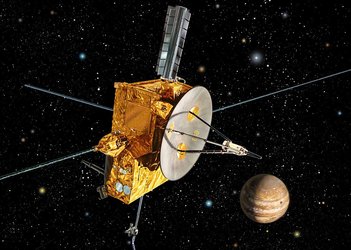
Ulysses, the mission to study the Sun’s poles and the influence of our star on surrounding space is coming to an end. After more than 17 years in space – almost four times its expected lifetime – the mission is finally succumbing to its harsh environment and is likely to finish sometime in the next month or two.
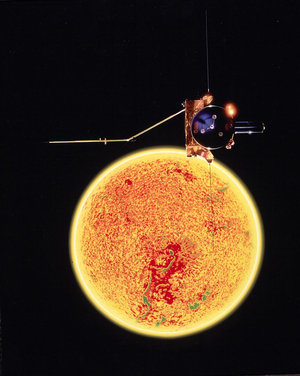
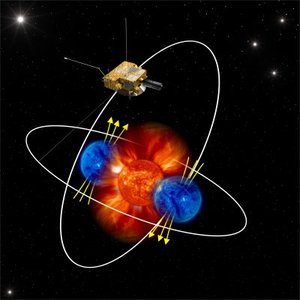
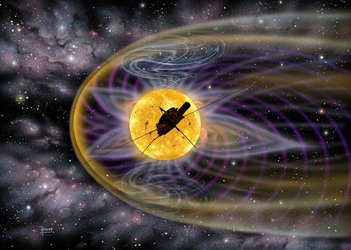
Ulysses is a joint mission between ESA and NASA. It was launched in 1990 from a space shuttle and was the first mission to study the environment of space above and below the poles of the Sun. Originally designed for a lifetime of five years, the mission has surpassed all expectations. The reams of data Ulysses has returned have forever changed the way scientists view the Sun and its effect on the space surrounding it.
Ulysses is in a six-year orbit around the Sun. Its long path through space carries it out to Jupiter’s orbit and back again. The further it ventures from the Sun, the colder the spacecraft becomes. If it drops to 2ºC, the spacecraft’s hydrazine fuel will freeze.
This has not been a problem in the past because Ulysses carries heaters to maintain a workable on-board temperature. The spacecraft is powered by the decay of a radioactive isotope and over the 17-plus years, the power it has been supplying has been steadily dropping. Now, the spacecraft no longer has enough power to run all of its communications, heating and scientific equipment simultaneously.
‘We expect certain parts of the spacecraft to reach 2ºC pretty soon,” says Richard Marsden, ESA’s Ulysses Project Scientist and Mission Manager. This will block the fuel pipes, making the spacecraft impossible to manoeuvre.
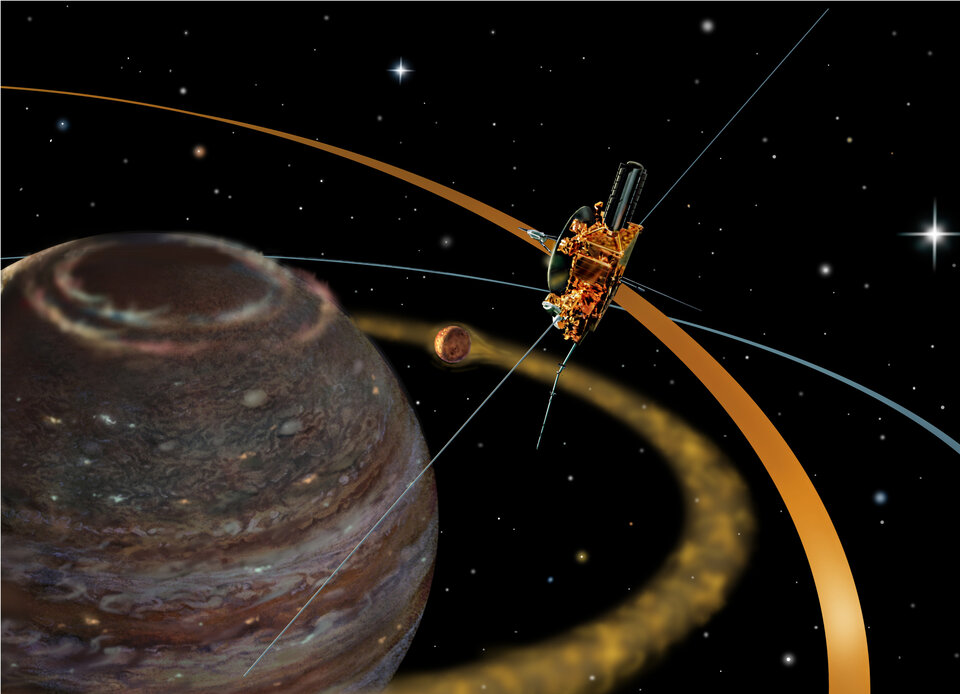
In an attempt to solve this problem, the ESA-NASA project team approved a plan to temporarily shut off the main spacecraft transmitter. This would release 60 watts of power that could be channelled to the science instruments and the heater. When data was to be transmitted back to Earth, the team planned to turn the transmitter back on. Unfortunately, during the first test of this method in January, the power supply to the radio transmitter failed to turn back on.
“The decision to switch the transmitter off was not taken lightly. It was the only way to continue the science mission,” says Marsden, who is a 30-year veteran of the project, having worked on it for 12 years before the spacecraft was launched.
After many attempts, the Ulysses project team now consider it highly unlikely that the X-band transmitter will be recovered. They believe the fault can be traced to the power supply, meaning that the extra energy they hoped to gain cannot be routed to the heater and science instruments after all.
So, the spacecraft has lost its ability to send large quantities of scientific data back to Earth and is facing the gradual freezing of its fuel lines. This spells the end of this highly successful mission. “Ulysses is a terrific old workhorse. It has produced great science and lasted much longer than we ever thought it would,” says Marsden. “This was going to happen in the next year or two, it has just taken place a little sooner than we hoped.”
The team plan to continue operating the spacecraft in its reduced capacity for as long as they can over the next few weeks. “We will squeeze the very last drops of science out of it,” says Marsden.
For more information:
Richard Marsden, ESA Ulysses Project Scientist and Mission Manager
Email: Richard.Marsden @ esa.int