ATV: post-docking procedures
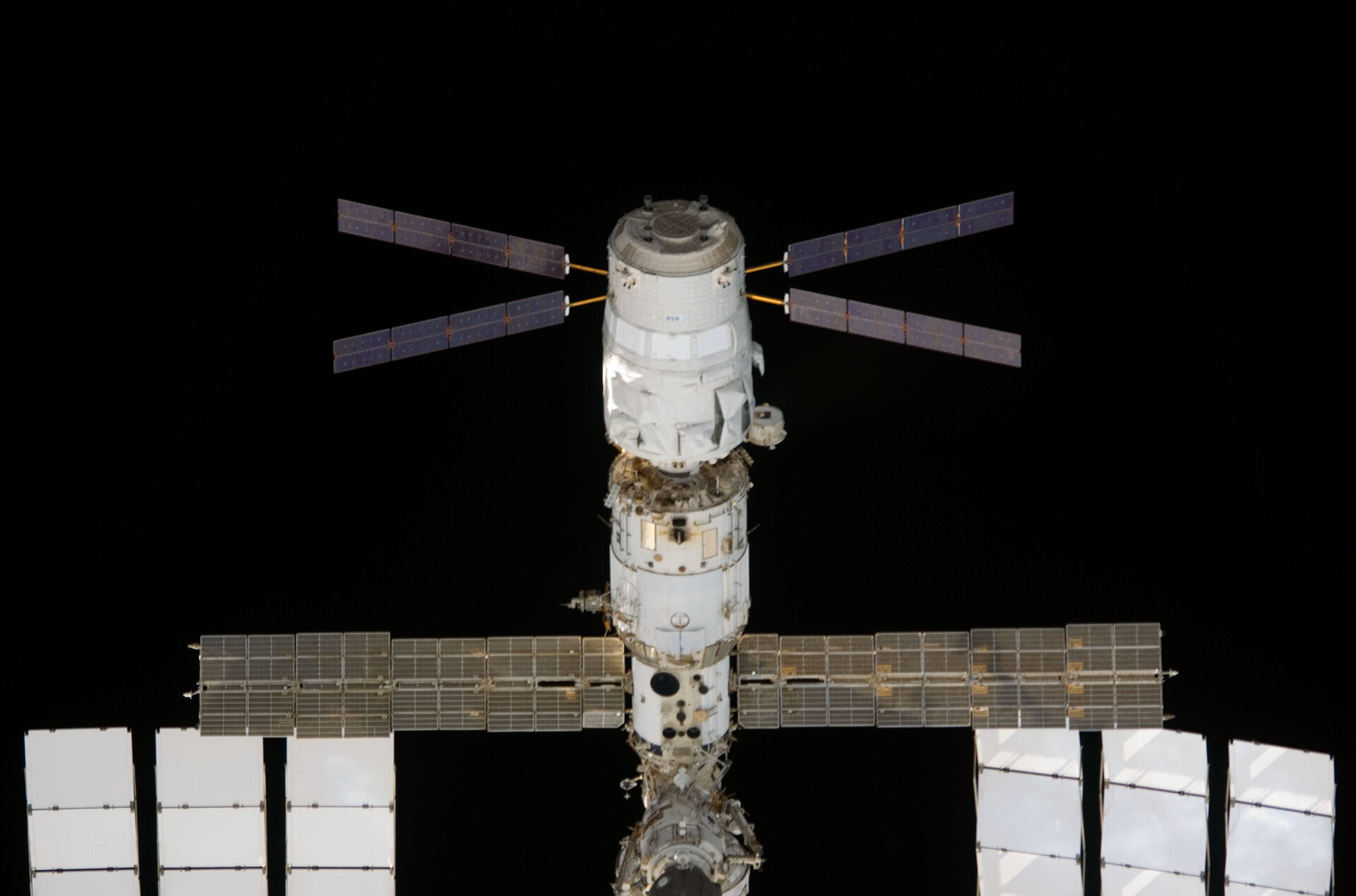
A week of crew training is devoted to rendezvous and docking, the reminder being spent on the post-docking phase. “It is just like a cargo truck,” Mr Clervoy explained. “You open the back door and access whatever you want – clothing, food, supplies in racks like luggage bags, while you open taps as in your bathroom for water and oxygen.”
Propellant resupply on the other hand takes place automatically, refilling the ISS propellant tanks. Another plus for the crew was the availability of some extra living and sleeping space while it remained docked to ISS.
While not designed as living quarters, the crewmen liked its low noise levels and good lighting, and it was, of course, fully equipped with micrometeoroid shielding.
Intelligent piloting needs clever engineering
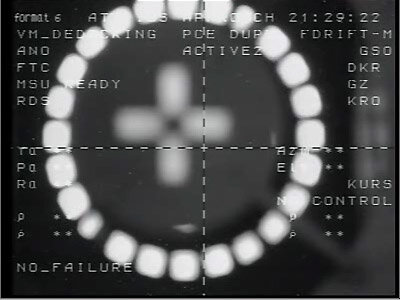
After five months in orbit, the ATV's automatic pilot had one last job to do: separating from the ISS and performing a destructive deorbit over an uninhabited area of the South Pacific, taking 2.5 tonnes of Station rubbish with it as it burnt up in the atmosphere. Once again, the ATV performed its suicide mission in exemplary fashion.
“This is the first time in spaceflight you have a man-rated vehicle with no manual piloting capability," added Mr Clervoy. “So while I am an astronaut, when I see ATV flying automatically to the Station with high precision and stability I don't see a piece of hardware doing a good job, I see thousands of engineers on the ground who invented the hardware and wrote the software that runs it, having put their intelligence into something that flies perfectly.
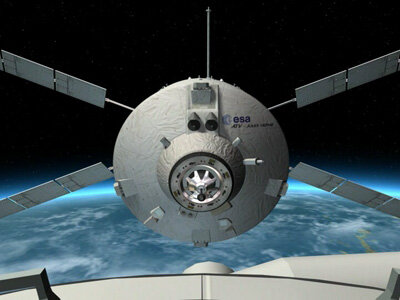
“Rendezvous in space is a far from straightforward task, because you have two vehicles flying at 28 000 km/h flying in close formation at precise orientation with a precise closing speed. There are six separate degrees of freedom which need to be controlled, all of them with a high level of precision. At the high velocities involved even the smallest of bumps – let alone a collision – could do serious damage."
In order to ensure the colossal achievement of the ATV's auto-docking, hundreds if not thousands of simulations were conducted, involving the flight software, the real rendezvous sensors, and a high fidelity simulation of both the Station and the ATV trajectories.
These simulations covered not only the expected behaviour but also many possible contingencies, allowing to refine the "intelligent" control system and to prepare the flight control team and crew for any eventuality.
“Mastering rendezvous is indispensable for exploring space," concluded Mr Clervoy. "It is needed to get explorers to the Moon, and it will be needed to carry out a sample return mission on Mars, when a vessel must divide into two separate elements to retrieve samples before linking up again for the return home, too distant from Earth for any human guidance.”
Kepler on the way
The first ATV, Jules Verne, flew a flawless mission to the ISS in April–September 2008, while the second, Johannes Kepler, is due to reach the Station at the end of 2010 and stay until mid-2011.
The ATV will become the primary heavy lift transporter for the ISS following the scheduled retirement of the Space Shuttle. At least three further ATVs are planned to fly to the Station.