Proba-V keeps its cool in space simulation
Proba-V is taking shape. A test model of ESA’s small satellite has proved it can keep its cool while performing its demanding mission of tracking vegetation growth across the world on a daily basis.
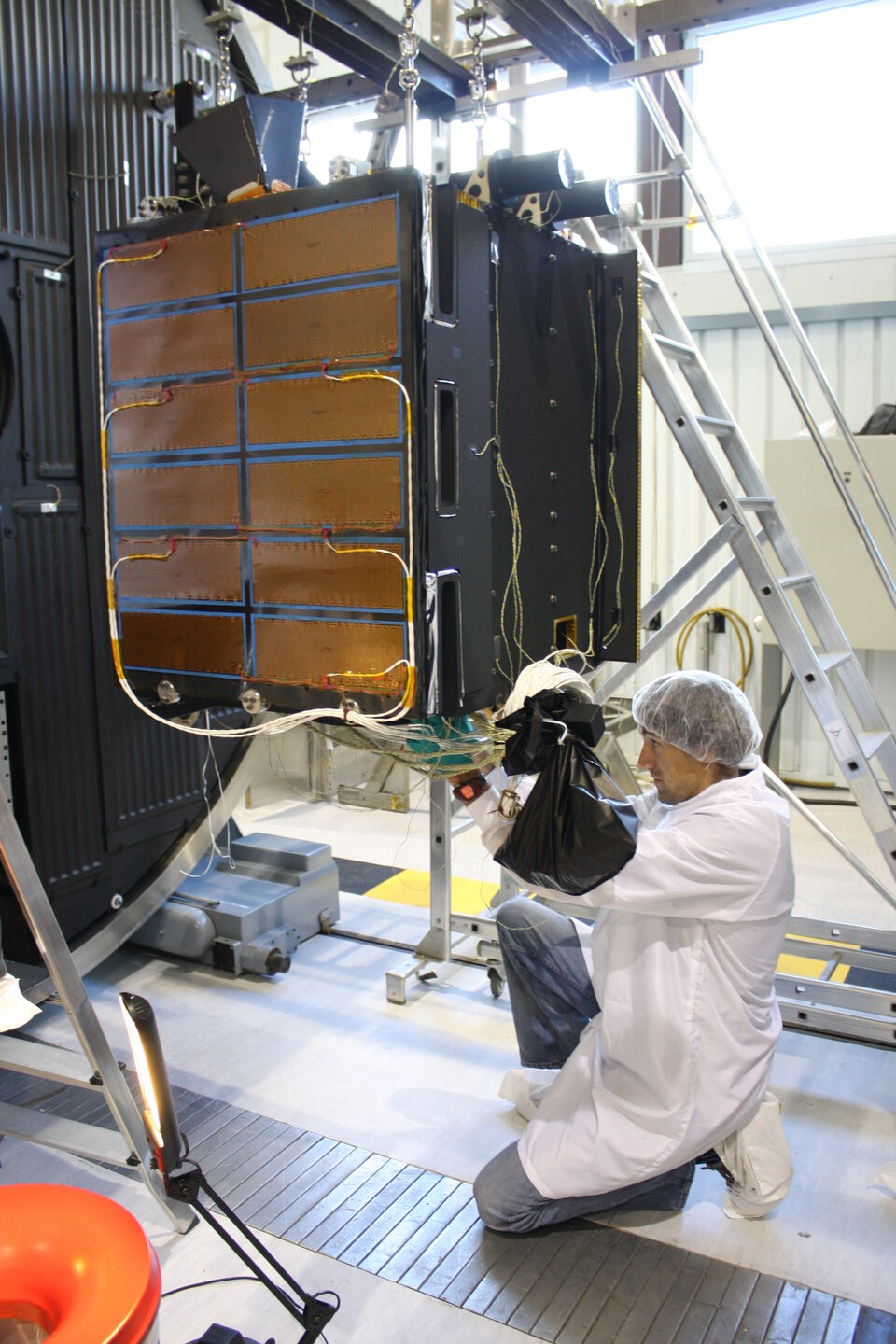
The Proba-V replica, known as the Structural and Thermal Model (STM), went through a gamut of tests this summer at Intespace in Toulouse, France. The aim was to test that the compact design could endure the harsh conditions of Earth orbit – not to mention the rocket ride to get there.
Success keeps the mission on its tight schedule: Proba-V must be launched by 2012 to continue the work of the Vegetation instrument on France’s Spot-5 satellite. If that mission ends without a successor in orbit then a valuable decade-long record of environmental data will be interrupted.
“Proba-V will carry a miniaturised version of the current Vegetation sensor, which carries out multispectral surface monitoring across an extremely wide 2250 km swath,” explained Karim Mellab, ESA’s Proba-V project manager.
“Vegetation’s ability to cover virtually all Earth’s land masses in a day makes it useful to a broad group of scientific users.”

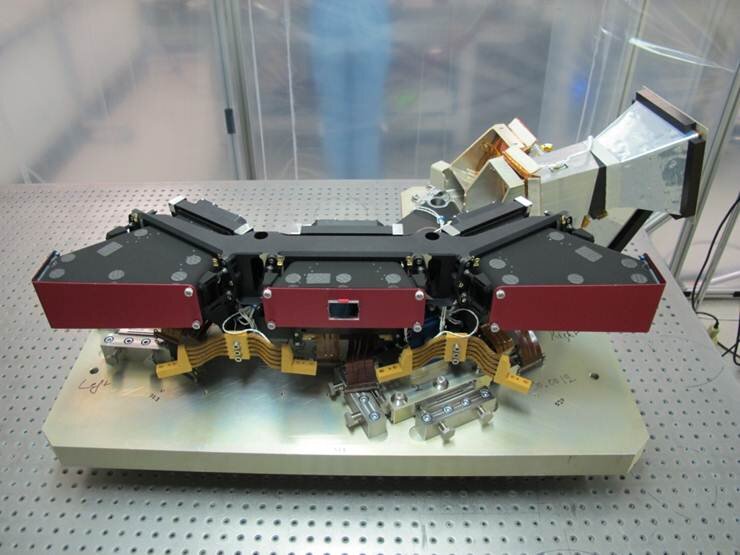
Re-engineering the complex Vegetation instrument to fit within a Proba platform was extremely difficult. The only way it could be done was to do without the active cooling system that chilled Vegetation’s detectors to sharpen its sensitivity.
Instead, the instrument has to be coolled passively, by careful design.
“The three-day thermal vacuum test at Intespace confirmed that Proba-V maintained its desired temperature boundaries within simulated space conditions,” explained Karim.
“Thermal management is tough for any satellite, because its sunlit face might reach 100°C while the side facing deep space can drop to –50°C or lower.
“Bigger satellites have the spare mass and power to incorporate electrically powered thermal systems, like coolers or heaters. We haven’t.”
Instead, Proba-V’s Vegetation sensor is shrouded in a dozen layers of Christmas-wrapping-like multi-layer insulation, while also sheltering behind sunshield baffles. Titanium isolators, especially chosen for their poor conductivity, attach it to the rest of the satellite.
A model of the instrument had already undergone thermal vacuum testing by itself, but this time it had been integrated within the satellite’s STM.
“The tests turned out to match our thermal models – there were no unwelcome surprises,” added Karim.
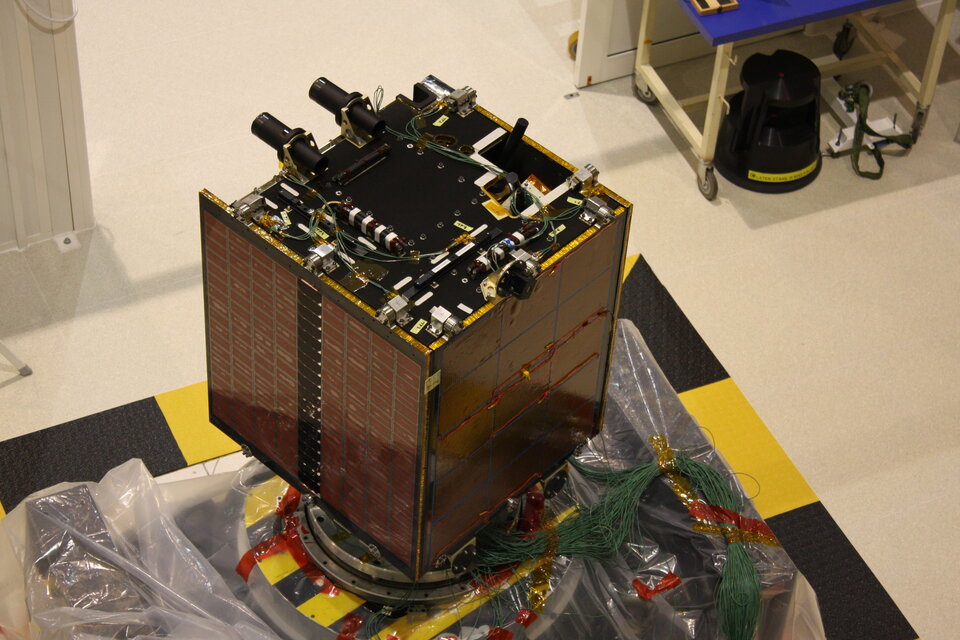
“The same was true of the follow-up vibration and acoustic testing, during which the STM was mated to a standard launcher interface.
“The vibration tests in particular were impressive to observe, standing close enough to the satellite to feel it shake. At particular frequencies its structure would resonate, matching our predictions.”
“The next step for Proba-V is its Critical Design Review, scheduled for this month,” concluded Karim.
“By early next year, we will start assembling the Flight Model ready for testing, with a view for the launch by mid-2012.”