• → European Space Agency

      • Space for Europe
      • Space News
      • Space in Images
      • Space in Videos
    • About Us

      • Welcome to ESA
      • DG's News and Views
      • For Member State Delegations
      • Business with ESA
      • ESA Exhibitions
      • ESA Publications
      • Careers at ESA
    • Our Activities

      • Space News
      • Observing the Earth
      • Human Spaceflight
      • Launchers
      • Navigation
      • Space Science
      • Space Engineering
      • Operations
      • Technology
      • Telecommunications & Integrated Applications
    • For Public

    • For Media

    • For Educators

    • For Kids

    • ESA

    • Technology

    • Technology Transfer

    • About technology
    • Foundation of innovation
    • A solid investment
    • Going up
    • Competitive edge
    • Supporting science
    • Giant leaps
    • Cross-Cutting Initiatives
    • Strategy and harmonisation
    • About strategy and harmonisation
    • Generic technology programmes
    • Basic Technology Research Programme (TRP)
    • General Support Technology Programme (GSTP)
    • Technology Transfer Programme (TTP)
    • European Components Initiative (ECI)
    • Technology in domain programmes
    • Technology in Domain programmes
    • Services
    • ESA Conferences
    • RSS feeds
    • Subscribe

    ESA > Our Activities > Technology

    Quest for the corona

    Two-spacecraft coronagraph
    27 April 2010

    Early astronomers proposed the corona sighted during total solar eclipses was actually the Moon’s atmosphere illuminated by sunlight.

    The realisation that the corona was associated with the Sun only came later, and in 1931 astronomer Bernard Lyot first imaged the corona by blanking out the Sun.

    The view was faint due to Earth’s atmosphere, but allowed Lyot to make the startling discovery that the corona was millions of degrees hotter than the Sun’s surface. The precise reason why remains mysterious to this day.

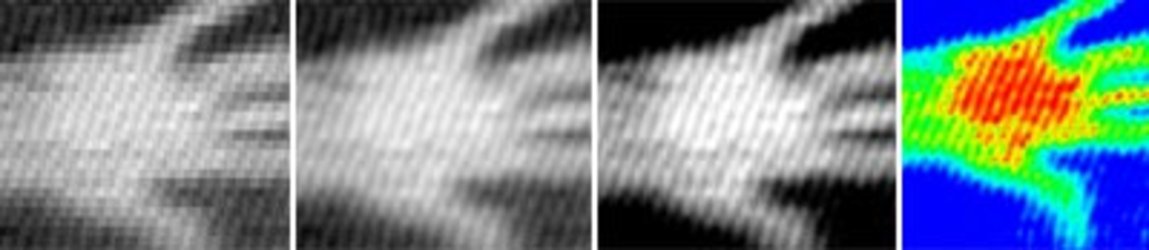
    SOHO image
    SOHO uses an internal occulting disk

    Solar-observing satellites such as SOHO incorporate internal Sun-shades called occulters for coronal observations, but their closeness to the instrument causes diffraction of stray light.

    This means SOHO, for example, can only observe the corona beyond two solar radii – StarTiger’s ‘external coronagraph’ should get that figure down to 1.05 solar radii, or even lower.


    Apollo artificial solar eclipse
    Artificial eclipse produced by US Apollo spacecraft

    The first artificial solar eclipse in space was achieved in 1975 during the Apollo-Soyuz Test Project: a cylindrical Apollo capsule flew in front of the Sun while the corona was viewed from a Soyuz spacecraft. Results were disappointing due to sunlight scattering through the spacecraft’s thruster exhaust.

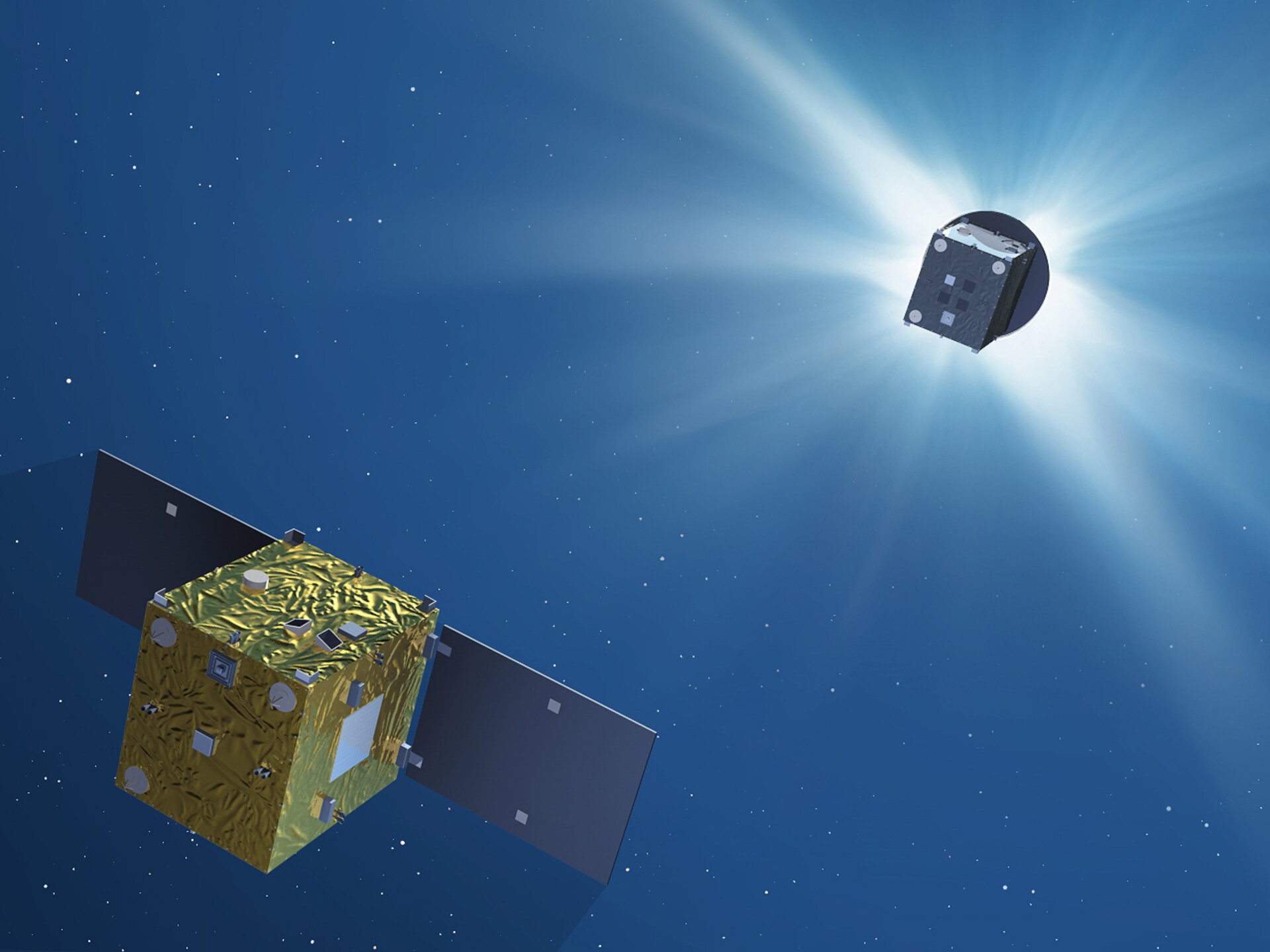
    ESA is due to operate its own external coronagraph during the Proba-3 dual-satellite formation flying mission.

    Rate this

    Views

    Share

    • Currently 0 out of 5 Stars.
    • 1
    • 2
    • 3
    • 4
    • 5
    Rating: 0/5 (0 votes cast)

    Thank you for rating!

    You have already rated this page, you can only rate it once!

    Your rating has been changed, thanks for rating!

    14
    Tweet
    • Related news
    • Note to editors: Quest for the corona
      • ESA’s StarTiger seeks new ideas for rapid R&D
        • ESA’s Tigers on prowl for solar corona’s secrets
          • Star Tiger to unveil submillimetre wave secrets
            • Space camera blazes new terahertz trails
            • Tiger Team in the CDF
            • Related links
            • Technology Research Programme (TRP)
              • About StarTiger
              • Proba
              • Laboratoire d’Astrophysique de Marseille
              • ThruVision

    Connect with us

    • RSS
    • Youtube
    • Twitter
    • Flickr
    • G+
    • Facebook
    • Livestream
    • Subscribe
    • App Store
    • LATEST ARTICLES
    • · ESA astronaut Timothy Peake set fo…
    • · Space drives e-mobility
    • · Proba-V opens its eyes
    • · First new Galileo satellite arrive…
    • · Next destination: space
    • FAQ

    • Jobs at ESA

    • Site Map

    • Contacts

    • Terms and conditions