• → European Space Agency

      • Space for Europe
      • Space News
      • Space in Images
      • Space in Videos
    • About Us

      • Welcome to ESA
      • DG's News and Views
      • For Member State Delegations
      • Business with ESA
      • ESA Exhibitions
      • ESA Publications
      • Careers at ESA
    • Our Activities

      • Space News
      • Observing the Earth
      • Human Spaceflight
      • Launchers
      • Navigation
      • Space Science
      • Space Engineering
      • Operations
      • Technology
      • Telecommunications & Integrated Applications
    • For Public

    • For Media

    • For Educators

    • For Kids

    • ESA

    • Telecommunications & Integrated Applications

    • TIA - About Telecommunications
    • About ESA's TIA Directorate
    • Telecommunications satellites
    • Orbits
    • The Satcom market
    • Historical overview
    • Artemis
    • Hylas-1
    • ESA's Telecommunication Programmes
    • ARTES programme overview
    • Alphabus/Alphasat
    • SmallGEO
    • EDRS
    • Iris
    • Integrated Applications Promotion (IAP)
    • Partner Programme: Electra
    • Multimedia
    • Image gallery
    • Video gallery
    • Services
    • Subscribe
    • RSS feeds

    ESA > Our Activities > Telecommunications & Integrated Applications

    ESA enables video-conference between arctic explorers and Dutch State Secretary

    Videoconferencing with Greenland
    Videoconferencing with Greenland
    11 May 2006

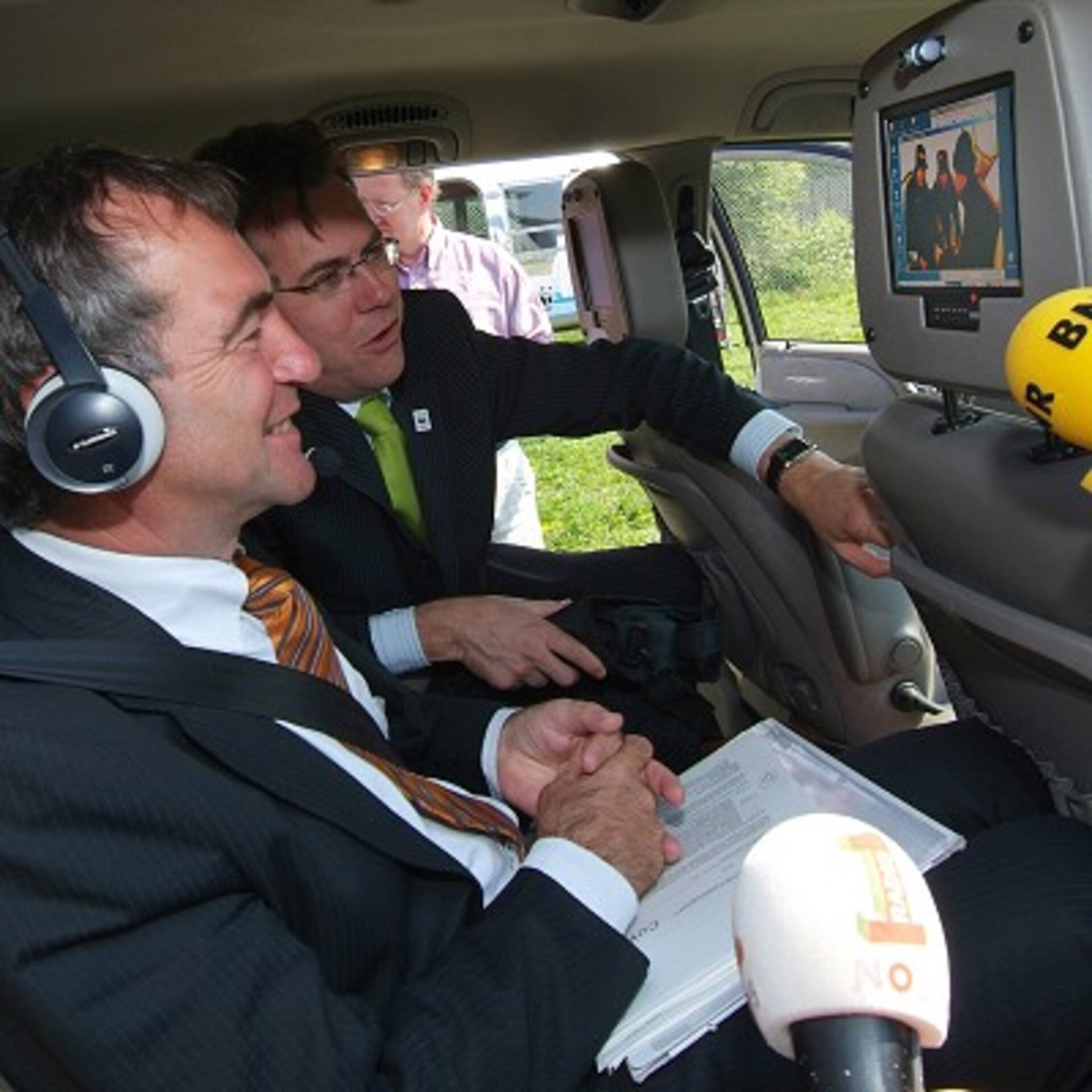
    A mobile video conference on 9 May allowed communication between an arctic exploration team, led by Marc Cornelissen in Greenland, and the Dutch State Secretary for the Environment, Mr Pieter van Geel, in the Netherlands. Two video-conferencing sessions took place, both via the ESA Multimedia Van.

    The first session was a 'mobile link' while Mr Van Geel was travelling in the ESA Multimedia Van en-route from the Dutch Parliament to ESTEC. He and Mr Marc van den Tweel, Marketing and Communication Director for the World Wildlife Fund (WWF) in Europe spoke directly with Cornelissen and his team in their tents for 30 minutes. They discussed climate issues and the progress of the expedition.

    The students and Cornellissen told the minister of their experiences on the Greenland Ice Cap, meeting the local Inuit people and performing scientific research in difficult weather conditions. When the group returns from their expedition later in May, the 'real' climate campaign for the students will begin as they speak and write about what they have seen; explaining that the climate is changing and mankind is influencing that change.

    Before going on to attend an international conference on climate issues at the United Nations in New York City, Mr Van Geel visited the Space Expo adjacent to ESA’s European Space Research and Technology Centre (ESTEC) at Noordwijk, in The Netherlands. Here, a second video-conferencing session took place between journalists from the Dutch media and the polar expedition team. During this 'video-press conference,' journalists were able to pose questions to Cornellissen and his team on the progress of their expedition and the results of the scientific research.

    ESA Multimedia Van

    Mobile S-UMTS multimedia van

    The ESA Multimedia Van is a prototype vehicle designed to demonstrate a wide array of multimedia communications technologies, most notably satellite-based UMTS (Universal Mobile Telecommunications System) services.

    Critical to this link was Inmarsat's recently launched I-4 satellite which was connected with terrestrial UMTS into a hybrid network, enabling a bi-directional link from the van to Greenland. These kinds of hybrid satcom/UMTS networks will become more prevalent in the future as applications such as mobile television gain popularity.
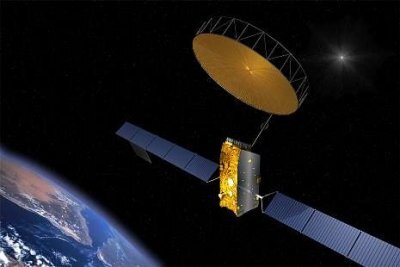

    Inmarsat I-4 satellite
    Inmarsat I-4 satellite

    The Inmarsat 4 satellite was developed by Astrium of the United Kingdom and its Broadband Global Area Network (BGAN) payload was based on research and development activities supported by ESA. The BGAN payload is one of the most advanced in operation, utilising on-board processing techniques.

    Rate this

    Views

    Share

    • Currently 0 out of 5 Stars.
    • 1
    • 2
    • 3
    • 4
    • 5
    Rating: 0/5 (0 votes cast)

    Thank you for rating!

    You have already rated this page, you can only rate it once!

    Your rating has been changed, thanks for rating!

    33
    Tweet
    • Story in pictures
    • Related news
    • Via broadband from the Arctic
      • Climate Change students help CryoSat-2 Arctic campaign
        • ESA confirms CryoSat recovery mission
          • Polar explorer delivers rare snow-depth data to ESA for CryoSat validation
          • Related links
          • ESA Telecommunications for specialists
          • Advanced Multimedia Van
          • BGAN extension
          • Living Planet Programme
          • Climate Change College
          • Inmarsat

    Connect with us

    • RSS
    • Youtube
    • Twitter
    • Flickr
    • G+
    • Facebook
    • Livestream
    • Subscribe
    • App Store
    • LATEST ARTICLES
    • · ESA astronaut Timothy Peake set fo…
    • · Space drives e-mobility
    • · Proba-V opens its eyes
    • · First new Galileo satellite arrive…
    • · Next destination: space
    • FAQ

    • Jobs at ESA

    • Site Map

    • Contacts

    • Terms and conditions