• → European Space Agency

      • Space for Europe
      • Space News
      • Space in Images
      • Space in Videos
    • About Us

      • Welcome to ESA
      • DG's News and Views
      • For Member State Delegations
      • Business with ESA
      • ESA Exhibitions
      • ESA Publications
      • Careers at ESA
    • Our Activities

      • Space News
      • Observing the Earth
      • Human Spaceflight
      • Launchers
      • Navigation
      • Space Science
      • Space Engineering
      • Operations
      • Technology
      • Telecommunications & Integrated Applications
    • For Public

    • For Media

    • For Educators

    • For Kids

    • ESA

    • Home

    • Telecommunications & Integrated Applications

    • Hylas-1 at a glance
    • Overview
    • Objectives
    • About Hylas-1 mission
    • Platform
    • Payload
    • Generic Flexible Payload technology
    • Ground segment
    • About the launch
    • Launcher
    • Launch site
    • Meet the team
    • Hylas-1 Project Manager
    • Hylas-1 Payload Manager
    • Hylas-1 System Engineering Manager
    • Multimedia
    • Hylas-1 video
    • Hylas-1 images
    • Documents
    • Hylas-1 factsheet (PDF)
    • Hylas-1 brochure (PDF)

    ESA > Our Activities > Telecommunications & Integrated Applications > Hylas

    Hylas-1 satellite readied for launch from Europe’s Spaceport

    Hylas-1 landed
    20 October 2010

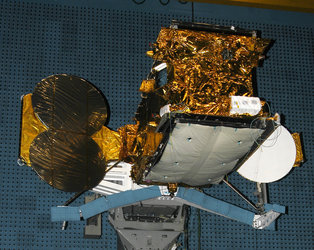
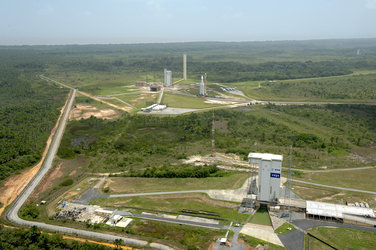
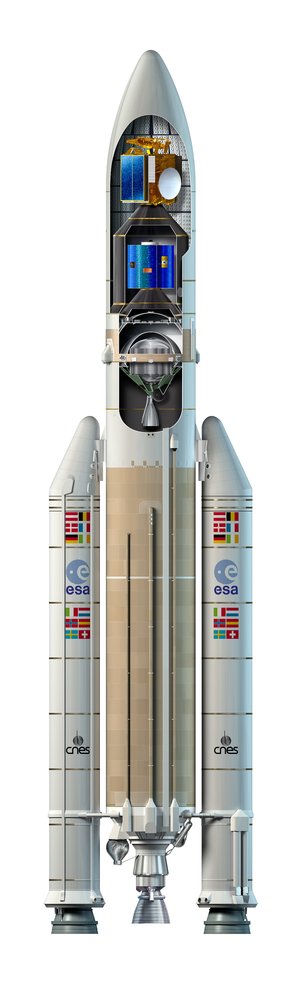
    The Hylas-1 telecommunications satellite has arrived at Europe’s Spaceport in French Guiana. Its next journey will be to space, on an Ariane 5 launcher towards its operational orbit nearly 36 000 km up.

    The Antonov An-124 cargo jetliner bringing Hylas-1 from Bangalore, India, touched down at Rochambeau airport near the capital Cayenne late in the evening of 11 October.

    The satellite was then moved by road to the Guiana Space Centre, where it was taken into the S1B satellite preparation facility.

    Hylas-1 is now undergoing a final series of health checks before being fuelled, encapsulated within its payload fairing and mated to its Ariane 5 vehicle.

    Hylas-1 artwork
    Hylas-1

    The satellite will be launched on 26 November onboard Ariane flight V198, which will be the fifth of six Ariane 5 launches planned for this year.

    This first ‘Highly Adaptable Satellite’ will provide broadband Internet access to consumers and businesses across Europe as well as supporting a range of conventional telecommunications services.


    While its advanced communications payload was developed in Europe, Hylas-1’s flight-proven I-2K satellite platform was procured by prime contractor EADS Astrium from Antrix Corporation in India, the commercial arm of the Indian Space Research Organisation (ISRO).

    The satellite was assembled and tested at ISRO’s facility in Bangalore, before being flown more than halfway round the world to French Guiana.

    Hylas-1 is an innovative project in more ways than one: this is the first satellite to be developed through a public–private partnership between ESA and a commercial satellite operator. Avanti Communications of London will own and operate the satellite from its geostationary orbital location of 33.5°W.

    Rate this

    Views

    Share

    • Currently 0 out of 5 Stars.
    • 1
    • 2
    • 3
    • 4
    • 5
    Rating: 0/5 (0 votes cast)

    Thank you for rating!

    You have already rated this page, you can only rate it once!

    Your rating has been changed, thanks for rating!

    45
    Tweet
    • Telecommunications
      Telecommunications
      Telecommunications
    • Related articles
      • Hylas-1 gets green light for spaceport trip
        • Europe's Spaceport
          • Ariane 5 ECA
          • Related links
          • Avanti Communications

    Connect with us

    • RSS
    • Youtube
    • Twitter
    • Flickr
    • G+
    • Facebook
    • Livestream
    • Subscribe
    • App Store
    • LATEST ARTICLES
    • · Proba-V opens its eyes
    • · First new Galileo satellite arrive…
    • · Next destination: space
    • · Leak repaired on International Spa…
    • · After Chelyabinsk: European expert…
    • FAQ

    • Jobs at ESA

    • Site Map

    • Contacts

    • Terms and conditions