


Satellite systems to warn of health threats
Satellite solutions can make all the difference to the efficiency of telemedicine. With this in mind, ESA is preparing a European telemedicine via satellite programme which will be of direct benefit to the healthcare community.
In this area of satellite telecommunications, where a user driven approach is required, another step was taken this week with the signature in Paris of a contract for ‘SAtellites For Epidemiology- SAFE’. This contract for health early warning was signed between ESA and the French Institut de Médecine et de Physiologie Spatiales (MEDES), representing a consortium of nine partners. The total contract value is € 800 000.
This project, developed in close partnership with experts from the World Health Organisation, will identify and describe scenarios for health early warning and set up a pre-operational demonstration which may request specific satellite telecommunications services. This will enable the demonstration of satellite applications in situations varying from epidemiological crisis management to biological threats, radiological risks, natural disasters or terrorist attacks. In all these cases it is intended to develop a full demonstration system for outbreak management and to implement several example instances, either for post disaster monitoring or as an on-demand showcase.
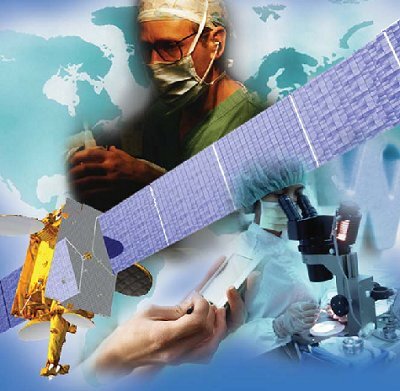
For example, a mobile unit providing ‘epidemiological intelligence’ will be deployed in remote areas, or in locations where the communications infrastructure has been destroyed. It will consist of a mobile communications facility, restoring high bandwidth communications using satellites, linked to a field laboratory, enabling in situ analyses. The demonstration systems will include elements that can be marketed separately, with the intention of offering a bundle of services for healthcare, which will reinforce the economical sustainability of the satellite telecommunication services.
Within this project it has been decided to focus on two particular situations: an earthquake and a terrorist attack scenario. It has also been decided to study diseases like the recent avian flu issues.
The SAFE consortium is a European initiative and an interoperable system with MEDES as prime contractor and partners in France, Spain, Greece and Italy. This project is part of the current telemedicine transition phase following the recommendations from the Telemedicine Working Group (TWG), set up by ESA.
The TWG assessed the user’s needs and identified a number of areas where satellite technology could play a significant role: management of emergencies, disasters and trauma, mobility of patients, health early warning systems, healthcare at home and eHealth education.
The early warning systems that will soon be demonstrated should ultimately become useful and sustainable tools for the healthcare community.

