• → European Space Agency

      • Space for Europe
      • Space News
      • Space in Images
      • Space in Videos
    • About Us

      • Welcome to ESA
      • DG's News and Views
      • For Member State Delegations
      • Business with ESA
      • ESA Exhibitions
      • ESA Publications
      • Careers at ESA
    • Our Activities

      • Space News
      • Observing the Earth
      • Human Spaceflight
      • Launchers
      • Navigation
      • Space Science
      • Space Engineering
      • Operations
      • Technology
      • Telecommunications & Integrated Applications
    • For Public

    • For Media

    • For Educators

    • For Kids

    • ESA

    • Telecommunications & Integrated Applications

    • TIA - About Telecommunications
    • About ESA's TIA Directorate
    • Telecommunications satellites
    • Orbits
    • The Satcom market
    • Historical overview
    • Artemis
    • Hylas-1
    • ESA's Telecommunication Programmes
    • ARTES programme overview
    • Alphabus/Alphasat
    • SmallGEO
    • EDRS
    • Iris
    • Integrated Applications Promotion (IAP)
    • Partner Programme: Electra
    • Multimedia
    • Image gallery
    • Video gallery
    • Services
    • Subscribe
    • RSS feeds

    ESA > Our Activities > Telecommunications & Integrated Applications

    Using Artemis

    Galileo constellation
    Galileo

    Precision navigation for everyone

    America and Russia have been using satellites for accurate navigation for many years. The US GPS and Russian GLONASS systems track, target, or pinpoint moving objects in the air on land or sea with military precision. But until now, it is the military that has been almost the sole beneficiary of such technology, with civilian use of these systems restricted.

    Now, Europe is bringing advanced satellite navigation to the civilian population for the first time with Galileo, a future European global satellite navigation system set to transform our land and sea transport and revolutionise air traffic control world-wide.

    The first stepping stone in this ambitious programme is the European Geostationary Navigation Overlay Service (EGNOS) - a joint programme between ESA, Eurocontrol and the European Commission.

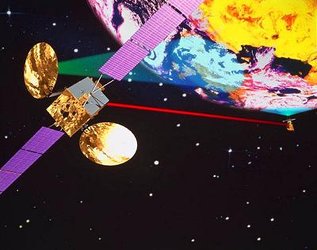
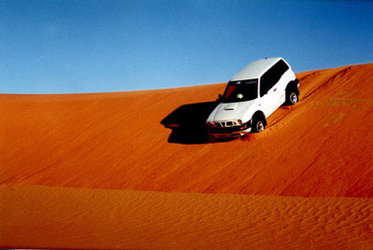
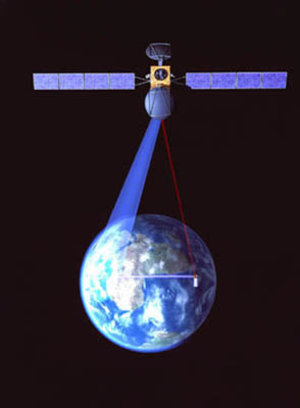
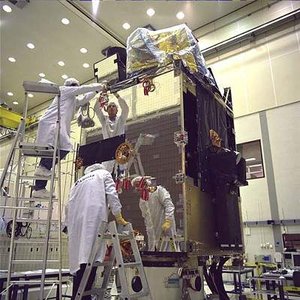
    The first orbital element built by ESA is the navigation payload onboard Artemis. Positioned over Africa and working alongside Inmarsat-3, AOR-E and IOR telecommunications satellites, Artemis' navigation transponder will broadcast the navigation signals from the EGNOS Master Control Centre (MCC). This data, which carries integrity and differential correction information applicable to the GPS and GLONASS satellites will ultimately allow safety critical users like aircraft, ships or emergency vehicles to rely solely on satellite navigation.

    In the future this could mean the redundancy of many terrestrial systems, particularly in the air industry, where management of traffic is operated via separate national control centres. Aeroplanes will be able to take off and land in fog with confidence and ships will be able to manoeuvre in and out of ports without having to contact shore-based services. It will be a common occurrence for trucks, and other land-based transport particularly in remote areas to find their way around via satellite links and even our own cars will be equipped with 'personal' systems to help us plan our routes and get around more easily.

    Next: Industrial participation »

    Last update: 21 October 2004

    Rate this

    Views

    Share

    • Currently 0 out of 5 Stars.
    • 1
    • 2
    • 3
    • 4
    • 5
    Rating: 0/5 (0 votes cast)

    Thank you for rating!

    You have already rated this page, you can only rate it once!

    Your rating has been changed, thanks for rating!

    27
    Tweet
    • About Artemis
      • Communicating with the world
        • What is special about Artemis
          • Mobile communications
            • Technological breakthrough with Artemis
              • On the ground
                • Industrial participation
                  • Artemis vital statistics
                  • Related links
                  • Navigation

    Connect with us

    • RSS
    • Youtube
    • Twitter
    • Flickr
    • G+
    • Facebook
    • Livestream
    • Subscribe
    • App Store
    • LATEST ARTICLES
    • · ESA astronaut Timothy Peake set fo…
    • · Space drives e-mobility
    • · Proba-V opens its eyes
    • · First new Galileo satellite arrive…
    • · Next destination: space
    • FAQ

    • Jobs at ESA

    • Site Map

    • Contacts

    • Terms and conditions