Jules Verne on track for long journey to ISS
Following an overnight recovery operation, Jules Verne ATV's propulsion system has successfully been restored to full robustness. The spacecraft has since performed the first orbital manoeuvres necessary to set up phasing with the International Space Station.
Flight control and engineering support teams analysed the data coming from the Automated Transfer Vehicle's on board computers which, after activation of the propulsion system following Sunday's launch, had detected a significant difference in pressure between the oxidiser and the fuel that compose the propellant and had disabled part of the propulsion system. A course of action was implemented overnight to resume the nominal mission.
In a complex operation, commands to re-integrate an electronics box which drives that part of the propulsion system were up-linked to the spacecraft from within the ATV Control Centre in Toulouse, France. After the entire propulsion system was disabled, all four propulsion chains were progressively enabled, thereby restoring full failure tolerance.
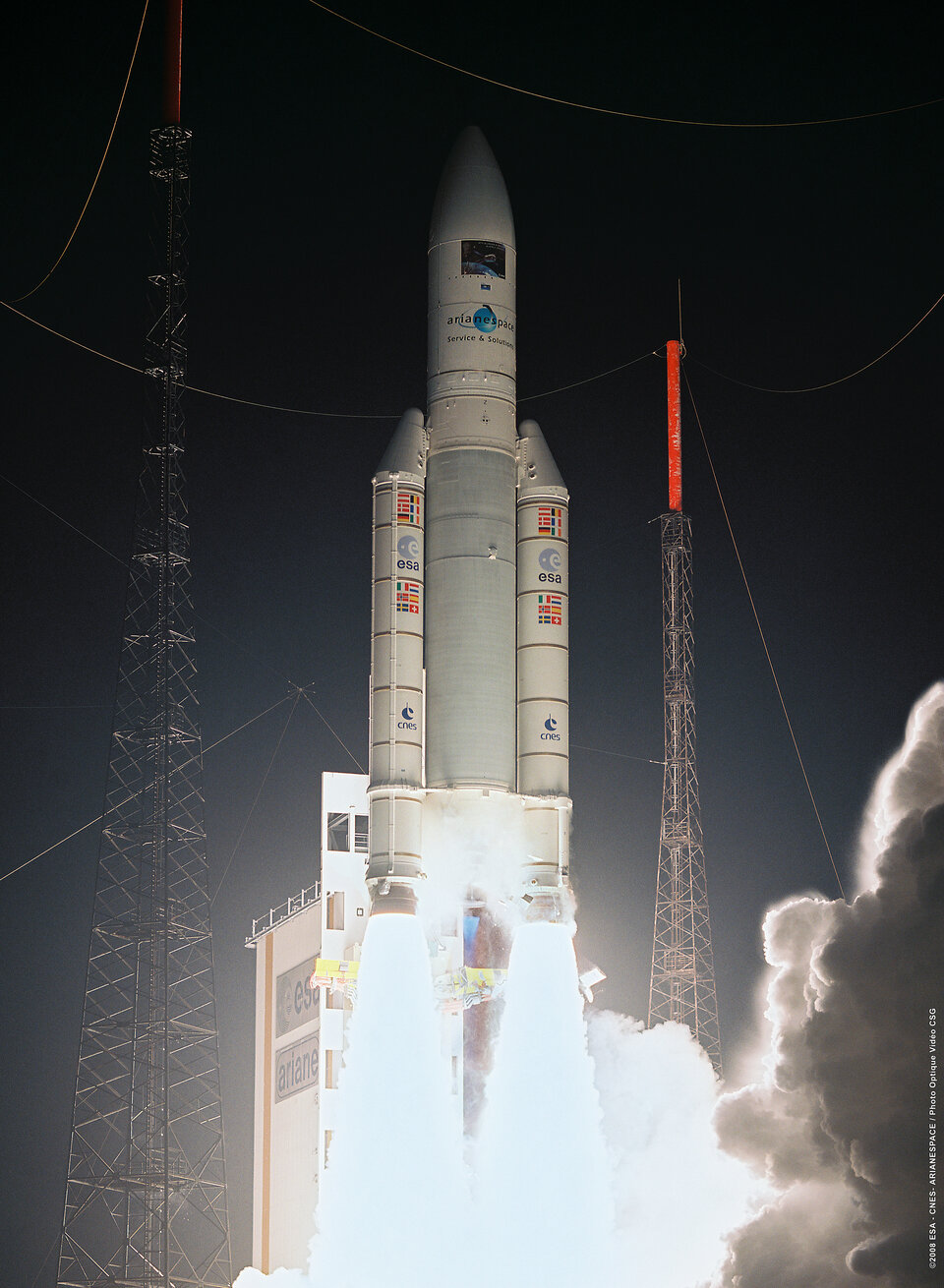
Jules Verne ATV successfully performed a series of orbital manoeuvres earlier this afternoon. The two manoeuvres using the main engines, which occurred at 15:54 CET (14:54 UT) and 17:06 CET (16:06 UT), initiated the orbital phasing. Two additional orbit manoeuvres tomorrow afternoon will complete the phasing boost.
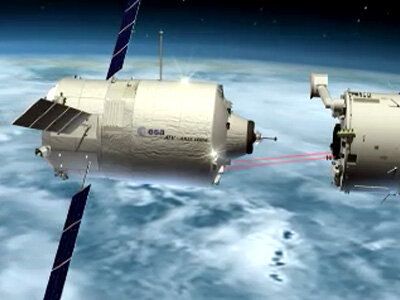
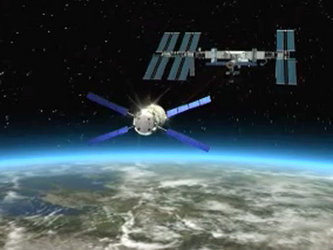
Mission controllers in Toulouse are now rescheduling activities to take Jules Verne ATV to its parking orbit in front of the ISS, including a demonstration of the spacecraft's Collision Avoidance Manoeuvre capability. Once in the parking orbit, Jules Verne ATV will wait for the completion of the STS-123 Shuttle mission at the Space Station, before proceeding with the rendezvous demonstration manoeuvres and the final rendezvous and docking.
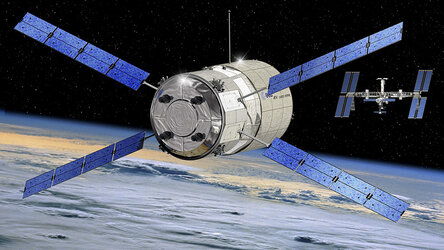
Jules Verne ATV remains on schedule for docking with the ISS on 3 April.